The post How AI is Changing the Game for Hotel Pricing & Revenue Optimization appeared first on PriceLabs .
]]>What is AI in Hotel Pricing?
At its core, AI refers to computer systems that learn from data, adapting and improving over time without human intervention. In terms of hotel pricing, AI is like having a super-intelligent assistant that helps you predict demand, set the right room prices, and ultimately maximize your revenues.
Imagine during peak tourist season, when you’re trying to balance occupancy rates with optimal pricing. Traditional methods might have you manually adjusting rates and relying on intuition. However, with AI, you can automate dynamic pricing for your hotel by analyzing market trends, competitor rates, and historical booking data all at once. This allows you to set room prices that attract guests while boosting your revenue.
For Example, an AI system could identify a spike in demand due to a local event and automatically adjust your rates to capture more value without driving away potential customers. By doing so, you’re not just filling rooms but filling them at the best possible price point.
Benefits of AI for Hotels

Dynamic Pricing: Adjusts Room Rates in Real Time
Imagine being able to adjust your room rates instantly based on market demand, competitor pricing, and guest booking behavior. With dynamic pricing for hotels, AI enables you to do just that. This technology analyzes real-time data to ensure your prices are always competitive and aligned with market trends.
Pro Tip: Implement an AI-powered dynamic pricing tool to automatically update your rates daily, ensuring you’re always offering the best price while maximizing revenue.
Better Forecasting: AI Predicts Busy vs. Slow Days
Understanding when your hotel will be bustling versus when it might experience a lull is crucial for planning and pricing. AI excels at forecasting these patterns by analyzing historical data and current market conditions, allowing you to make informed decisions.
Pro Tip: Use AI-driven forecasting tools to adjust staffing levels and marketing efforts based on predicted occupancy, ensuring you’re prepared for both busy and slow periods.
Personalized Offers: Tailors Discounts or Packages for Specific Guests
AI can analyze guest preferences and behaviors, allowing you to tailor specific offers that cater to individual needs. Whether it’s a discount on spa services for frequent visitors or a custom package for families, personalized offers can significantly enhance guest satisfaction and loyalty.
Pro Tip: Use guest data from past stays to design personalized offers that make each guest feel valued and encourage repeat bookings.
Revenue Growth: More Accurate Pricing = Higher Profits
Ultimately, the goal is revenue growth. By leveraging AI for more accurate hotel pricing, you can ensure that every room is priced optimally. This precision not only boosts occupancy rates but also enhances overall profitability.
Pro Tip: Regularly review your pricing strategies with your AI tools’ insights to identify new opportunities for revenue optimization in different market conditions.
How Small and Medium-Scale Hotels are Utilizing AI?

1. Adaptive Weekend Rates
Imagine having the ability to adjust your prices automatically for weekends or special events without constant manual intervention. Hotels are using AI to do just that, ensuring they capture increased demand while maximizing revenue.
2. Optimizing Low-Demand Days
On slower days, AI can help you identify opportunities to attract more guests by recommending special offers or discounts, effectively filling rooms that might otherwise remain empty.
3. Revenue Management Platforms’ Algorithmic Power
Many hotels are now integrated with revenue management platforms that harness powerful algorithms to recommend the best price points. These platforms analyze market trends and competitor pricing, delivering insights directly to your dashboard.
Platforms like PriceLabs are gaining popularity among hoteliers for their user-friendly interface and robust analytics capabilities. With PriceLabs, you can effortlessly manage your pricing strategy, tapping into AI’s full potential to enhance your hotel’s revenue optimization efforts.
Hotels like Gateway Accommodation have successfully harnessed PriceLabs to adjust prices for weekends, events, or low-demand days. By using this dynamic pricing strategy, they’ve seen significant growth in their revenue.
Why Consider PriceLabs?
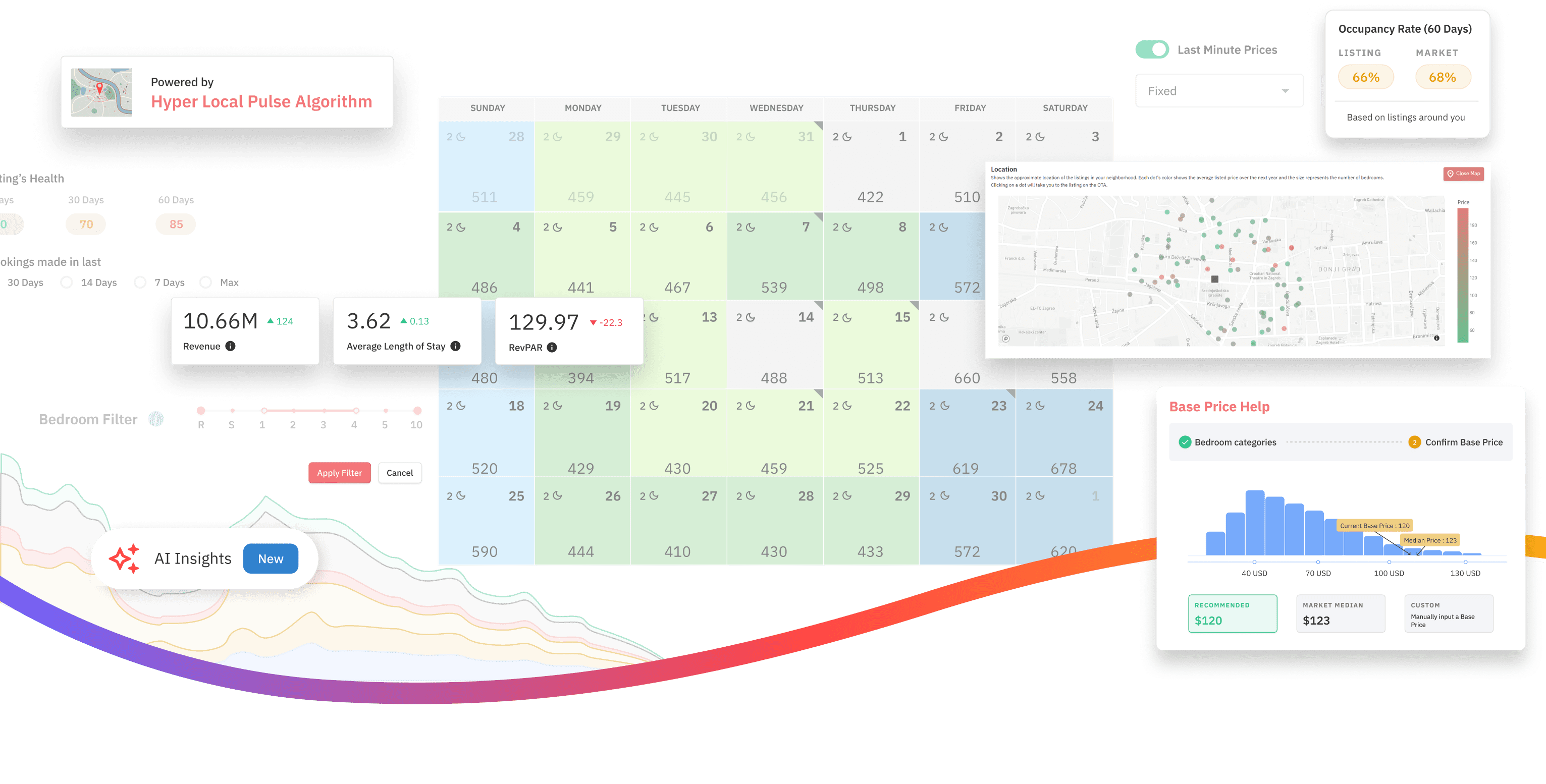
PriceLabs helps independent hotels automate pricing, stay ahead of competitors, and optimize revenue all the while generating automated reports—without the complexity of an enterprise RMS.
Here’s how:
- Rates update automatically based on your hotel’s occupancy, competitor pricing, and market demand—no guesswork needed.
- See the latest competitor pricing, booking trends, and seasonal demand shifts without manual tracking.
- Set pricing by room type, season, and booking window to match your strategy.
- Automatically apply discounts for last-minute bookings, early reservations, or peak demand without lifting a finger.
- Works with over 150 property management systems and Channel Managers to update rates across all platforms.
- Get real-time updates on occupancy, revenue, and pricing performance – delivered straight to your dashboard.
Transform your hospitality approach today
Discover actionable strategies tailored for small hotel owners and managers creating unforgettable stays for your guests & expanding revenues for your hotel!
Start your 30-day FREE trial now!Challenges in Adopting AI for Hotel Pricing
While the potential benefits are significant, several challenges must be considered.
Data Quality Matters: Bad Data = Wrong Predictions
The accuracy of your AI predictions hinges on the quality of your data. Poor data can lead to incorrect pricing strategies that harm your revenue rather than help it. It’s crucial to ensure your data sources are reliable and up-to-date. This requires a commitment to continuous monitoring and refinement of data inputs.
Staff Training and Trust in AI Are Essential
Integrating AI into your operations isn’t just about technology; it’s also about people. Your team requires comprehensive training to grasp how AI operates and its benefits. Building trust in these systems is essential for successful implementation. Encourage open dialogue about concerns and provide ongoing support as your staff adjusts to these new tools.
The Future Ahead
Imagine a world where AI gets even smarter, continuously learning from real-time market trends. This isn’t just a distant possibility—it’s an imminent reality. As AI technology evolves, you’ll find yourself equipped with tools that provide even more accurate insights, allowing you to adjust hotel pricing with unprecedented precision. This means you can anticipate changes in demand and adapt swiftly, keeping your occupancy rates high and your guests satisfied.
But it’s not just about crunching numbers. The focus will increasingly shift toward enhancing guest experience alongside pricing optimization. With AI’s ability to analyze guest preferences and behaviors, you’ll be able to offer personalized experiences that resonate with each visitor. This not only boosts satisfaction but also encourages repeat bookings and positive reviews.
Wrapping Up
By integrating artificial intelligence (AI) into your hotel’s pricing strategy, you’re not only adapting to the future of the industry but also positioning yourself for success. You’ll find that AI offers powerful solutions that enhance decision-making, improve guest satisfaction, and ultimately drive your bottom line. So why not consider leveraging this technology to revolutionize your hotel’s pricing approach today?
Frequently Asked Questions (FAQs)
1. How does AI enhance revenue optimization in the hotel industry?
AI revolutionizes revenue optimization by analyzing vast amounts of data to predict demand, set competitive prices, and maximize occupancy rates. By leveraging machine learning algorithms, AI can identify patterns and trends that traditional methods might overlook, enabling hotel owners and managers to make informed pricing decisions.
2. What role does dynamic pricing play in hotel pricing strategies?
Dynamic pricing is a key component of modern hotel pricing strategies, allowing hotels to adjust their rates in real-time based on current market demand, competitor pricing, and other relevant factors. By implementing dynamic pricing, hotels can optimize revenue by ensuring their prices reflect the most up-to-date market conditions, ultimately leading to higher profitability.
3. How is AI transforming the hotel industry beyond revenue optimization?
AI is making significant strides beyond revenue optimization in the hotel industry by enhancing guest experiences, streamlining operations, and improving marketing efforts. From personalized guest interactions and automated check-ins to predictive maintenance and targeted marketing campaigns, AI helps hotel owners and managers deliver superior service while optimizing costs.
The post How AI is Changing the Game for Hotel Pricing & Revenue Optimization appeared first on PriceLabs .
]]>The post Hotel Technology Trends 2025: What You Need to Stay Competitive appeared first on PriceLabs .
]]>What Do We Mean by Hotel Technology?
Hotel technology refers to the innovative tools and systems that enhance the guest experience and streamline hotel operations. In today’s fast-paced world, staying competitive in the hospitality industry requires adopting the latest hotel technology. This includes everything from advanced booking systems to smart room controls, which not only improve efficiency but also cater to modern travelers’ expectations.
For example, consider the implementation of mobile check-in and check-out systems. These allow guests to bypass the front desk, offering a seamless and efficient experience. Another example is the use of AI-driven chatbots for customer service, providing instant responses to guest inquiries around the clock.
Looking ahead to hotel technology trends 2025, we anticipate further advancements in personalized guest experiences through data analytics. Hotels will leverage big data to tailor services to individual preferences, enhancing guest satisfaction. Additionally, contactless payment systems and virtual reality tours are set to become standard offerings.
Hotel Technology Trends in 2025

In the rapidly evolving hospitality industry, staying competitive requires being at the forefront of the latest hotel technology trends. By 2025, several key advancements will redefine guest experiences and operational efficiencies. Here’s what you should pay attention to:
1. AI and Automation
AI and automation are revolutionizing hotel operations by streamlining processes and enhancing guest interactions. From chatbots handling reservations to AI-driven analytics predicting customer preferences, automation is becoming indispensable.
For example, platforms like Zingle use AI to personalize guest communications, improving satisfaction and loyalty.
2. Mobile/Contactless Technology
The demand for mobile and contactless technology continues to rise, providing guests with seamless check-ins, room access, and payments through their smartphones. This trend not only enhances convenience but also aligns with health and safety protocols that were put in place during COVID.
For Example, OpenKey offers a mobile key solution that allows guests to bypass the front desk entirely.
3. Smart/IoT Rooms
Smart rooms equipped with IoT devices offer personalized experiences through voice-activated controls and automated settings for lighting, temperature, and entertainment. This technology elevates comfort and efficiency in managing energy usage.
For Example, Roomie is a tool that enables hoteliers to integrate smart room features effortlessly.
4. Core Platforms (PMS/RMS)
Property Management Systems (PMS) and Revenue Management Systems (RMS) are critical for optimizing hotel operations and maximizing revenue.
Especially when it comes to revenue management, there are specific pain points that hoteliers face:
- Uncertainty about pricing decisions – Sets rates based on intuition, risking underpricing or lost revenue opportunities.
- Missing peak demand opportunities – Lacks the ability to adapt pricing for high-demand events and seasons quickly.
- Balancing guest loyalty & revenue – Long-time guests expect consistent pricing, making it hard to raise rates.
- No clear competitive benchmarking – Struggles to track nearby hotel rates and adjust accordingly.
- Lack of forecasting insights – Needs better tools to predict demand and plan room rates proactively.
How Pricelabs Pitches In

PriceLabs helps independent hotels optimize pricing with data-driven automation. With easy setup, seamless PMS integration, and full pricing control, you get more revenue with less effort.
Here’s how:
- See what competitors are charging so you can price smarter.
- Automate rate updates based on demand, seasonality, and occupancy.
- Easily adjust prices in bulk across all units in seconds.
5. Enhanced Security Measures
As digital transactions increase, robust security measures become paramount in protecting guest information and maintaining trust. Enhanced cybersecurity protocols and biometric authentication are essential components of modern hotel security systems.
For Example, Beekeeper offers secure communication tools that safeguard sensitive data.
6. Virtual Reality (VR) and Augmented Reality (AR)
VR and AR technologies offer immersive experiences that enhance marketing efforts and guest engagement. From virtual tours of hotel facilities to augmented reality guides for local attractions, these technologies captivate potential guests from the comfort of their homes.
For Example, platforms like Oculus Quest are being used by hotels to create virtual walkthroughs.
7. Advanced Payments/Biometrics
Biometric payment systems are gaining popularity due to their speed and security, offering a frictionless transaction experience for guests. This trend not only expedites the payment process but also reduces fraud risks significantly.
For Example, Clear is a tool that integrates biometric technology into payment gateways.
8. Sustainability Initiatives
Sustainability is no longer optional; it has become a core component of hotel operations as eco-conscious travelers demand greener practices. Implementing energy-efficient systems and reducing waste through technology can appeal to this growing market segment.
For Example, Green Key Global helps hotels assess and improve their sustainability efforts.
Transform your hospitality approach today
Discover actionable strategies tailored for small hotel owners and managers creating unforgettable stays for your guests & expanding revenues for your hotel!
Start your 30-day FREE trial now!Hotel Technology 2025 & PriceLabs
The hotel industry is evolving rapidly, and staying competitive requires adapting to new trends, particularly in revenue streams.
1️. Dynamic Pricing is No Longer Optional – Static rates = lost revenue. Hotels using AI-powered pricing strategies see higher ADRs and better occupancy.
2. Direct Bookings Are on the Rise – OTA commissions are eating into profits. Hotels focusing on website bookings + smart pricing see better margins.
3. AI-Powered Revenue Management is the Future – Revenue managers who embrace automation + real-time data will outpace competitors.
4. Hyper-Local Demand Trends Matter More Than Ever – Post-pandemic travel is shifting. Real-time competitor tracking + market demand insights are key.
5. Hotels Must Balance Tech + Personalization – Smart tech should enhance guest experiences, not replace them.
Start using AI-driven pricing with PriceLabs
- Hotels using dynamic pricing see up to 18% higher RevPAR in their first year.
- Smart automation adjusts prices daily based on demand and competition.
- Stay ahead of the market with real-time competitor insights.
Way Forward
As we look toward 2025, hoteliers must prioritize integrating cutting-edge solutions that enhance guest experiences, streamline operations, and ensure sustainability. By investing in advanced systems like IoT-enabled devices, AI-driven customer service tools, and innovative booking platforms, hotels can meet evolving guest expectations and maintain a strong competitive edge. The way forward involves continuous adaptation to hotel tech trends 2025, ensuring your establishment remains at the forefront of the industry’s technological evolution. Embracing these advancements not only improves efficiency but also positions your hotel as a leader in offering exceptional service and modern amenities.
Frequently Asked Questions
How AI improves hotel operations?
AI technology is revolutionizing hotel operations by automating routine tasks and enhancing guest experiences. With AI, hotels can streamline check-ins, optimize room assignments, and offer personalized recommendations, ensuring guests have a seamless stay. By analyzing vast amounts of data, AI also helps in predicting guest preferences and improving service quality.
What are the benefits of mobile check-in for hotels?
Mobile check-in is transforming the hospitality industry by providing guests with a quick and efficient way to access their rooms. This technology reduces wait times at the front desk, allowing guests to enjoy a more personalized experience. Additionally, mobile check-in minimizes physical contact, addressing health and safety concerns while enhancing overall guest satisfaction.
Talk about some hotel chatbot examples and rOI
Hotel chatbots are increasingly popular for providing instant customer service around the clock. Examples include chatbots that handle booking inquiries, answer frequently asked questions, and offer concierge services. The ROI of implementing chatbots is significant: they reduce staffing costs, increase booking conversions, and improve guest engagement by providing immediate responses to queries.
The post Hotel Technology Trends 2025: What You Need to Stay Competitive appeared first on PriceLabs .
]]>The post Sustainable Practices for Hotels: A Guide to Greener, Smarter Hospitality appeared first on PriceLabs .
]]>What Is Hotel Sustainability?
Influenced by the demand for ecotourism, sustainable practices for hotels refer to environmentally responsible and resource-efficient operations that minimize the ecological footprint of a property.
This includes
- Reducing energy and water consumption
- Cutting down on waste
- Sourcing locally
- Promoting ecological responsibility among staff and guests
The goal is to run a hotel that balances guest satisfaction, profitability, and environmental care. In 2025, green hotel operations will be more than just ethical practices. They are a sign of good business.
Why Sustainable Practices for Hotels Matter Today?

Over the last few years, sustainable practices in hotels have evolved from a niche concept to a core expectation.
Here’s why hotel owners and managers should take this trend seriously:
Long-Term Environmental Impact
The hotel industry contributes around 1% of carbon emissions globally through electricity usage, water consumption, food waste, and single-use plastics. Implementing sustainable property management initiatives can significantly lower this impact.
Changing Guest Preferences
As reported by Booking.com, 93% of travelers seek more sustainable trip-related options, driving eco-escapes. Many actively look for hotels with green certifications or visible environmental efforts.
Operational Efficiency and Cost Savings
Many sustainable solutions, such as energy-efficient appliances and low-flow fixtures, yield long-term financial returns. Reducing waste also means bringing down costs – from fewer linen laundry to less food spoilage.
According to Hospitality Net, hotel sustainable practices can cut:
- Energy use by 78%
- Water use by 20-30%
- Carbon dioxide emissions by 81%
This can turn into sizable savings on operational costs.
Competitive Advantage
Hotels that adapt to sustainability can stand out in the crowded marketplace, win awards, and earn valuable media attention. Combining green practices with dynamic pricing can help boost your hotel’s occupancy rate and maximize ROI.
Transform your hospitality approach today
Discover actionable strategies tailored for small hotel owners and managers creating unforgettable stays for your guests & expanding revenues for your hotel!
Start your 30-day FREE trial now!Eco-Friendly Hotel Initiatives That Make a Difference

Looking for actionable steps towards sustainability?
These green initiatives can deliver quick wins and lasting change for your hotel
1. Energy Efficiency
- Upgrade to LED lighting and smart thermostats.
- Install motion sensors in common areas to reduce electricity consumption without impacting guests’ comfort.
- Use solar panels or other options for renewable energy.
2. Water Conservation
- Introduce low-flow faucets and showerheads.
- Implement linen and towel reuse programs.
- Optimize landscaping with drought-resistant plants and smart irrigation.
3. Waste Reduction
- Switch to bulk toiletries and refillable dispensers to eliminate single-use plastics.
- Set up composting stations for staff and guests.
- Reduce food waste by better planning inventory and offering smaller portions with refills on request.
4. Sustainable Sourcing
- Choose local and seasonal ingredients for your breakfast buffet and restaurant.
- Partner with eco-friendly suppliers for amenities, linens, produce, and cleaning supplies.
- Source furniture and amenities from recycled or sustainable-origin materials.
5. Eco-Friendly Housekeeping
- Use biodegradable and non-toxic cleaning products.
- Equip rooms with reusable cleaning cloths.
- Schedule cleaning based on occupancy, not routine.
These initiatives will not only appeal to eco-conscious travelers but also contribute to efficient and responsible green operations within your hotel.
Green Hotel Operations: Embedding Sustainability Into Daily Workflows
To ensure sustainable practices become an integral part of your hotel’s core operations, not just one-time upgrades, integration is key.
Work on the following aspects of your hotel management plan:
Staff Training and Engagement
The first step is to educate and empower your team. To succeed, you need employees’ buy-in and ownership. Sustainability thrives when every department – from housekeeping to F&B – understands its role. Encourage innovative ideas and reward green behavior.
Guest Involvement
Next, you need to get travelers on board. Provide guests with clear signs, digital welcome booklets, and opt-in programs, such as skip linen service or plant a tree. Let guests know how their choices support your eco mission.
Smart Technology for Efficiency
Additionally, use smart energy and water meters to track consumption in real time. Add cloud-based management systems in your hotel business plan to reduce paper waste. Integrate PriceLabs’ dynamic pricing and revenue management software for hotels to increase bookings during eco-themed promotions and events, making sustainability campaigns more profitable.
Measurement and Benchmarking
Finally, set up and regularly track sustainability KPIs, such as waste volume, water use per guest, and carbon footprint. Use industry benchmarks and sustainability certifications to guide progress. Consider LEED, EarthCheck, and Green Key.
Marketing Your Hotel’s Sustainable Practices
If you’re doing the work, don’t be shy to brag about it. Eco-conscious travelers want to know they’re making the right choice when selecting their hotel over competitors.
Implement the following hotel digital marketing strategies to multiply the impact of your sustainability efforts:
Show Your Certifications and Badges
Display your eco certifications on your website, OTA listings, and social media. This helps gain credibility and trust with your target guests.
Tell Your Sustainability Story
Use blog posts, video content, and in-room materials to show what you’re doing behind the scenes. Cover everything from your rooftop garden to your partnership with the local farm.
Leverage Guest Reviews and Guest-Generated Content
Encourage happy eco-travelers to share their experiences online with small rewards. Highlight their reviews to strengthen your hotel online reputation and improve your SEO presence for desirable keywords.
Launch Green Campaigns and Offers
Offer discounts or other perks for guests arriving by train or bike. Host eco-treats or yoga weekends to meet experiential travel trends.
Wrapping Up
Sustainability is the future of the hospitality industry, and you have to get on board to remain relevant and competitive. The good news is that even small steps can make a big difference when applied throughout your property and promoted to guests. By adopting sustainable practices for hotels, you’re creating a better experience for travelers, attracting a new niche, and reducing costs. All this helps you grow a more efficient business.
FAQs
How Do Hotels Practice Sustainability?
Hotels can practice sustainability by reducing energy and water usage and minimizing waste. They can also source local and eco-friendly products and work on staff and guest education. These steps help reduce their environmental footprint and improve operational efficiency.
Which Example Shows a Sustainable Practice That a Hotel Could Implement?
Examples of sustainable practices for hotels include installing low-flow showerheads and offering guests the option to reuse towels. In this way, less water, electricity, and detergents will be used.
What Are the Most Cost-Effective Sustainable Practices for Hotels?
Simple changes can be low-cost, high-impact ways to boost sustainability and lower expenses for your hotel. These can cover switching to LED lighting, introducing linen/towel reuse programs, and eliminating single-use plastics.
The post Sustainable Practices for Hotels: A Guide to Greener, Smarter Hospitality appeared first on PriceLabs .
]]>The post Transforming Hotel Revenue Strategy with Market Dashboards:Insights for Competitive Success. appeared first on PriceLabs .
]]>The Foundation of Revenue Management for Hotels
At the core of this strategy is the ability to accurately track and analyze key metrics that directly impact your bottom line. By utilizing a hotel market dashboard, you can gain real-time insights into these essential figures, empowering you to make informed decisions that drive revenues.
Key Metrics Every Hotel Owner Should Track
- Occupancy rates should be at the top of your list. By monitoring your hotel occupancy data dashboard, you can identify trends and adjust pricing strategies accordingly.
- Additionally, tracking Average Daily Rate (ADR) and Revenue Per Available Room (RevPAR) through a hotel revenue management dashboard will provide a comprehensive view of your property’s financial health.
For example, if your hotel market dashboard indicates a drop in occupancy during specific months, you might consider targeted promotions or partnerships to boost bookings. Conversely, if occupancy is high but ADR is low, re-evaluating pricing strategies could enhance revenue potential.
The Role of Market Dashboards in Modern Revenue Optimization
Market dashboards have revolutionized how hotels approach revenue optimization. With advanced analytics at your fingertips, these tools offer unparalleled insights into market trends and competitor performance. A robust hotel performance analytics system allows you to compare your property’s metrics against industry benchmarks, helping you identify areas for improvement and capitalize on opportunities.
For Example : Imagine having access to a hotel market dashboard that pinpoints competitors’ pricing strategies in real-time. With this information, you can adjust your rates dynamically to remain competitive while maximizing revenue. Furthermore, integrating your hotel’s historical data with current market trends through a hotel revenue management dashboard enables more accurate forecasting and strategic planning.
Unpacking the Advanced Market Dashboard
Understanding the concept of a market dashboard is crucial for leveraging its full potential.
What Is a Market Dashboard?
A market dashboard is essentially a digital tool that collates and visualizes key performance indicators (KPIs) pertinent to hotel operations. By offering real-time data, it empowers you to make informed decisions swiftly, ensuring you remain competitive in the dynamic hospitality industry.
Essential Features for Hotels: From Occupancy to ADR
1.Real-Time Hotel Occupancy Data
At the heart of any hotel market dashboard is the ability to provide up-to-the-minute insights into your occupancy rates. This feature allows you to monitor trends and adjust your strategies accordingly.
For instance, if you notice a dip in occupancy during certain periods, you can implement targeted marketing campaigns or promotions to boost bookings.
2. Hotel Revenue Management Dashboard
A comprehensive revenue management tool should include metrics like Average Daily Rate (ADR) and Revenue Per Available Room (RevPAR). These indicators help you optimize pricing strategies and maximize revenue.
For instance , imagine using the dashboard to identify peak booking windows; this enables you to adjust prices dynamically, ensuring optimal revenue capture.
3. Comprehensive Hotel Performance Analytics
Performance analytics provide a comprehensive view of your hotel’s operations. By analyzing data such as guest demographics, booking sources, and length of stay, you can tailor your services to meet guest expectations better.
For Example : Consider a scenario where performance analytics reveal that guests prefer longer stays during off-peak seasons. You could introduce special packages that encourage extended visits.
Integrating Market Dashboards with Hotel PMS and Channel Managers
1. Seamless Data Integration
Integrating your hotel market dashboard with Property Management Systems (PMS) and channel managers ensures that all data streams are synchronized. This integration eliminates manual data entry, reducing errors and saving time.
For example, when your market dashboard is linked with your PMS, any changes in room availability or rates are automatically updated across all booking platforms.
2. Enhanced Decision-Making Capabilities
With seamless integration, your hotel revenue management dashboard provides comprehensive insights that drive strategic decisions.
For example, suppose your channel manager identifies an underperforming distribution channel; with integrated data, you can swiftly pivot marketing efforts to more profitable channels without missing a beat.
Transform your hospitality approach today
Discover actionable strategies tailored for small hotel owners and managers creating unforgettable stays for your guests & expanding revenues for your hotel!
Start your 30-day FREE trial now!Benefits of Market Dashboards for Hotels
Real-Time Insights: Staying Ahead of the Competition
Utilizing a hotel market dashboard gives you a critical advantage in today’s fast-paced hospitality industry. Imagine having access to real-time data that highlights demand fluctuations and competitive pricing strategies.
For instance, the boutique Hotel Zetta in San Francisco successfully uses a hotel occupancy data dashboard to keep an eye on competitors’ pricing and adjust their rates accordingly, ensuring they remain competitive without sacrificing revenue.
Monitoring Demand and Competitive Pricing Live
By constantly monitoring demand and competitive pricing through your hotel revenue management dashboard, you can make informed decisions swiftly.
Consider the example of Hotel Astoria in Vienna, which leveraged these insights to optimize room rates during peak tourist seasons, resulting in a noticeable increase in bookings and revenue.
Using Dashboards for Dynamic Pricing Adjustments
Dynamic pricing is no longer a luxury; it’s a necessity. With a hotel performance analytics tool, you can tweak your pricing strategies in real-time.
The Inn at Union Square in San Francisco used this approach to adjust rates dynamically, leading to an enhanced bottom line.
Data-Driven Decision Making for Enhanced Revenues
Data-driven decision-making is the cornerstone of successful revenue management. When you rely on insights from your hotel occupancy data dashboard, you’re better positioned to maximize profitability.
The Park South Hotel in New York City used such analytics to identify patterns and align their offerings with guest expectations effectively.
Turning Dashboard Analytics into Actionable Revenue Strategies
It’s not just about collecting data; it’s about turning that data into actionable revenue strategies. The Hotel Amigo in Brussels transformed their operational approach by constantly analyzing their hotel market dashboard to improve guest satisfaction rates and drive repeat business.
Forecasting Demand and Optimizing Inventory
Forecasting demand accurately can be transformative for inventory management. Through advanced analytics, hotels like the Bristol Hotel in Geneva have been able to predict high-demand periods and optimize their inventory accordingly, reducing overbooking risks.
Identifying and Acting on Revenue Leaks or Missed Opportunities
A robust hotel revenue management dashboard helps identify revenue leaks or missed opportunities swiftly. By addressing these issues promptly, the Blake Hotel in Charlotte improved its overall financial health significantly.
Enhancing Efficiency and Staff Focus
Market dashboards reduce manual workload, allowing your team to focus more on enhancing guest experiences rather than getting bogged down by spreadsheets.
The Belgravia Hotel in London exemplifies how automating reports through a hotel occupancy data dashboard led to improved staff efficiency.
Automating Reporting and Performance Reviews
Automating reporting with tools embedded within your hotel market dashboard streamlines operations. The Magnolia Hotel in Houston has experienced noticeable improvements in operational efficiency, thanks to a reduction in manual reporting tasks.
Improving Guest Experience and Brand Perception
Aligning your pricing with guest expectations enhances their experience and perception of your brand. The Art Deco Imperial Hotel in Prague utilized insights from its hotel performance analytics to fine-tune promotions that resonated with guests’ desires.
Selecting and Implementing the Right Market Dashboard Solution
When choosing a market dashboard solution, look for features that align with your needs — seamless integration, user-friendly interfaces, and robust analytics capabilities are key considerations. Choose a hotel revenue management dashboard that supports multi-property management if your portfolio spans multiple locations. This feature can centralize your data, making it easier to spot trends and opportunities.
Way Forward
Adopting an advanced hotel market dashboard is not just a strategic move; it’s an essential step toward transforming your hotel revenue strategy. By leveraging real-time insights from a hotel occupancy data dashboard, you gain a competitive edge that allows you to make informed decisions swiftly and efficiently. The integration of a hotel revenue management dashboard ensures that you stay ahead of market trends, optimizing your pricing and inventory for maximum profitability. As you look to the future, consider how these tools can enhance your hotel performance analytics, providing a comprehensive view of your operations and enabling you to drive sustained success.
Frequently Asked Questions (FAQs)
1. What is a hotel occupancy data dashboard, and how can it enhance your revenue strategy?
A hotel occupancy data dashboard is a tool that allows you to visualize and analyze your property’s occupancy levels over time. By integrating this with a comprehensive hotel market dashboard, you gain real-time insights into occupancy trends, helping you predict demand more accurately. This enables you to adjust your pricing strategy proactively, ensuring you maximize revenue without compromising on guest satisfaction. Understanding these patterns means you can make data-driven decisions that align with broader market trends, positioning your hotel for competitive success.
2. How does a hotel revenue management dashboard contribute to competitive success?
A hotel revenue management dashboard provides crucial analytics and metrics related to your property’s revenue streams. By leveraging this within the scope of a hotel market dashboard, you can track key performance indicators such as average daily rate (ADR), revenue per available room (RevPAR), and total revenue per available room (TRevPAR). This comprehensive view allows you to identify areas for growth and optimize pricing strategies in real-time. With these insights, you’re equipped to stay ahead of competitors by tailoring offerings that meet market demands and enhance overall profitability.
The post Transforming Hotel Revenue Strategy with Market Dashboards:Insights for Competitive Success. appeared first on PriceLabs .
]]>The post Strategies to Attract Family Guests to Your Hotel for an Unforgettable Expereience appeared first on PriceLabs .
]]>8 Family-Friendly Features That Win Bookings

1. Spacious Rooms
Families often seek spacious accommodations that can comfortably fit everyone. Rooms with multiple beds, a separate living area, and perhaps a kitchenette are highly desirable. This setup allows families to spread out and feel at home, making the experience of living in a hotel enjoyable and stress-free.
Pro Tip: Offer family suites with connecting rooms or extra-large spaces to attract family vacationers.
2. Family-Friendly Amenities
Family-friendly hotels should provide amenities like cribs, high chairs, and strollers. Offering these conveniences can be a game-changer for parents who are juggling the needs of young children while on vacation.
Pro Tip: Create a “family package” that includes these amenities to make your hotel stand out as a top choice for family vacations.
3. Kid-Friendly Activities
Having activities or play areas for children is essential. Whether it’s an indoor playroom, an outdoor playground, or organized activities like scavenger hunts, these features can greatly enhance family vacations.
Pro Tip: Create a calendar of kid-friendly events and showcase them on your website to attract families looking for activity-rich stays.
4. On-Site Dining Options
On-site dining options that cater to families can make all the difference. Offering kid-friendly menus, flexible dining times, and even meal deals for children can enhance their stay.
Pro Tip: Promote special family dining nights with themed dinners or discounts for kids to encourage more families to dine at your hotel restaurant.
5. Safety Features
Safety is always a top priority for families when choosing a hotel. Features such as secure pool fencing, non-slip mats in bathrooms, and childproofed rooms can reassure parents of their family’s well-being.
Pro Tip: Highlight your hotel’s safety features on your website and marketing materials to build trust with family guests looking for safer stays.
6. Convenient Location
Proximity to local attractions such as theme parks, zoos, or beaches is crucial for families planning their itineraries. Families will search for nicer hotels near me that offer easy access to entertainment options.
Pro Tip: Partner with local attractions & event organizers to offer package deals or discounted tickets when guests book their stay at your hotel.
7. Value for Money
Families often have budget constraints and look for hotels that offer good value. Competitive pricing combined with quality service can make your hotel the preferred choice for families on vacation.
Pro Tip: Offer bundled services or discounts for extended stays to appeal to families planning longer holidays.
8. Positive Reviews and Recommendations
Family travelers often rely heavily on reviews and recommendations from other families who have stayed at the hotel before making a decision. They search for family-friendly hotels that have received good reviews from past guests.
Pro Tip: Encourage satisfied family guests to leave positive reviews online and share their experiences through testimonials on your website to boost credibility and attract more bookings.
Transform your hospitality approach today
Discover actionable strategies tailored for small hotel owners and managers creating unforgettable stays for your guests & expanding revenues for your hotel!
Start your 30-day FREE trial now!6 Strategies to Attract Family Guests
1. Give Guests What They Want
Understanding what your guests expect is crucial. Dive into data and analytics to gain insights into the preferences of families visiting your area. This could range from room amenities to activities available on-site or nearby. By tailoring your offerings to meet these expectations, you increase the likelihood of attracting families seeking a family-friendly hotel experience.
How to go about it: Utilize surveys, customer feedback, and industry reports to gather relevant data. Analyze trends and adjust your offerings accordingly, ensuring that your hotel remains competitive and appealing.
2. Keep Your Hotel Neat and Tidy
A welcoming environment is key to attracting families. Ensure efficient housekeeping and concierge services to maintain a clean and inviting atmosphere. Families appreciate living in hotels that offer a sense of comfort and safety.
How to go about it: Regularly train your staff on the importance of cleanliness and friendliness. Regular inspections and feedback loops can help maintain high standards.
3. Be Flexible with Last-Minute Family Adjustments
Families often have specific needs, such as accommodating children or senior citizens. Being flexible with last-minute adjustments can make your hotel more appealing.
How to go about it: Keep a buffer in room availability and amenities to accommodate such changes. Train staff to handle these requests efficiently, ensuring a smooth experience for guests.
4. Promote Your Hotel on All Booking Channels
Families often rely on various booking platforms when planning their vacations. Ensure your hotel is visible on all these channels to capture their attention.
How to go about it: List your hotel on popular travel websites, apps, and local directories with relevant keywords like “nicer hotels near me” or “family vacation.” Ensure that all listings are up-to-date and highlight family-friendly amenities.
5. Position Your Hotel as Family-Friendly in All Communications
Consistent messaging across all content marketing channels is essential in establishing your hotel as a family-friendly destination.
How to go about it: Use emails, social media, magazine ads, and other platforms to communicate this positioning. Highlight family-centric features and offers in all communications.
6. Don’t Shy Away from Deals and Discounts
Offering deals during kids’ vacation times can be a powerful way to attract families looking for affordable options without compromising on quality.
How to go about it: Plan seasonal promotions aligned with school holidays or long weekends. Use keywords like “family-friendly hotel” in all promotional materials to enhance search visibility.
What to Avoid?
1. Ignoring Child Safety: Ensure your family-friendly hotel is equipped with childproof amenities and safety measures.
2. Poor Room Configurations: Avoid cramped spaces; offer rooms that can comfortably fit families, as living in a hotel should be comfortable.
3. Inadequate Customer Service: Families appreciate attentive service. Ensure staff is trained to handle family needs efficiently.
4. Noisy Environments: Families often prefer quieter settings, so avoid locations prone to excessive noise.
5. Hidden Fees: Be transparent about costs to avoid deterring potential guests seeking nicer hotels near me.
6. Lack of Local Guides: Provide information on nearby attractions and activities for a memorable family vacation.
7. Outdated Facilities: Keep your amenities modern and well-maintained to appeal to families living in hotel environments temporarily.
8. Poor Wi-Fi Connectivity: Families need reliable internet for entertainment and planning.
9. Inflexible Booking Policies: Offer flexible booking options to accommodate last-minute changes common with family travel.
10. Limited Parking Options: Ensure ample parking is available for families traveling by car.
11. Ignoring Feedback: Regularly update services based on guest reviews and feedback.
12. Unfriendly Website Experience: A user-friendly website enhances bookings; ensure easy navigation and clear information.
Wrapping Up
Attracting family guests to your hotel involves creating a welcoming and engaging environment that caters specifically to their needs. By focusing on amenities and services that align with family-friendly hotel standards, such as spacious rooms, kid-friendly activities, and dining options tailored for all ages, your establishment can become a top choice for families planning their vacation. As you move forward, continuously gather feedback from your guests to improve the guest experience and ensure your hotel remains a preferred choice for families seeking comfort and convenience while living in a hotel setting.
Frequently Asked Questions
1. How can a hotel be more family-friendly?
To become a family-friendly hotel, focus on providing amenities that cater to families. This includes offering spacious rooms, child-friendly menus, and recreational activities like pools or game rooms. Ensure your staff is trained to be accommodating and welcoming to guests of all ages. Highlight these features in your marketing materials to attract families looking for a family vacation.
2. Why is it important for hotels to cater to family guests?
Catering to family guests can significantly increase your hotel’s occupancy rates and reputation. Families often seek accommodations that provide an enjoyable experience for all members, from children to grandparents. By positioning your establishment as a family-friendly hotel, you tap into the lucrative market of family vacations, encouraging longer stays and repeat visits.
The post Strategies to Attract Family Guests to Your Hotel for an Unforgettable Expereience appeared first on PriceLabs .
]]>The post 10 Innovative Hotel Marketing Ideas to Bring More Bookings & Revenues appeared first on PriceLabs .
]]>Follow these 10 simple, yet creative ideas for hotel marketing to boost your hotel’s occupancy rate
10 Creative Marketing Ideas for your Hotel
These are just a few examples, but you can explore so much more as you evolve and grow into the dynamic plane of hotel marketing.
1. Turn Your Hotel Into a Content Studio for Innovative Hospitality Marketing Strategies
In 2025, travelers crave connection. Transform your property into a storytelling hub with videos that document:
- Everyday moments
- Behind-the-scenes staff interactions
- Authentic hotel guest experiences
Short-form content for platforms, such as Instagram Reels, TikTok, and YouTube Shorts, can help position your property as one of those Instagrammable hotels that Gez Z are crazy about. Encourage your team to participate to show off:
- Bartenders mixing signature drinks
- Housekeepers prepping a suite
- Chefs sourcing local produce
This authentic content builds trust, especially when guests share their own experiences. Repurpose user-generated content (UGC) across marketing channels to turn your hotel into a real content powerhouse.
2. Launch a Hyper-Local SEO & Blog Strategy
Many guests start their booking journey with location-based search queries like “best places to eat near [City]” or “things to do around [Area]”. That’s where hotel SEO and content marketing come together.
Launch a blog on your website that features:
- Insider guides
- Local partnerships
- Event roundups
Related: How Do Local /Global Events Impact Hospitality & Hotel Bookings?
Use long-tail keywords and optimize meta descriptions to get organic drive traffic to your hotel website. You’re not just selling a room. You’re promoting a full experience, and this starts with local search visibility. This work can support your direct bookings strategy and reduce reliance on OTAs.
3. Offer Themed Room Experiences for Niche Travelers
Modern guests look for experiential travel – not just a bed for the night. Another innovative marketing idea used by hotels to increase occupancy rate is designing themed room packages. You can cater to particular trendy demands, such as:
- Romantic escapes
- Pet-friendly stays
- Gaming weekends
- Wellness retreats
- Bookworm hideaways
Decorate rooms with curated props, provide personalized welcome kits, and offer bundled activities. Promote these experiences with unique landing pages and work with influencers who align with the theme. This hotel digital marketing strategy fuels word of mouth and gives guests memorable stories to share.
4. Use AI-Powered Personalization to Drive Direct Bookings
Take your hotel marketing ideas to the next level with AI opportunities for independent hotels as well as chains. Use AI-based tools to analyze:
- Browsing behavior
- Repeat visits
- Abandoned carts
Use the data to deliver personalized offers in real time.
Think about things like:
- Dynamic homepage banners that shift based on the user’s past interests
- Automated emails with tailored room suggestions and personalized discounts
AI technology can also enhance upselling by showing relevant add-ons at the perfect moment. For even more precise results, integrate your hotel tech stack alongside platforms like PriceLabs for Hotels. With PriceLabs, you can automate dynamic pricing for your hotel to ensure your offers align with local demand and your revenue goals.
5. Partner With Local Brands for Curated Travel Packages
Force win-win collaborations with local artisans, spas, coffee shops, and tour operators to create exclusive guest packages. For example, bundle a stay at your hotel with a wine tasting, massage, or local food tour. These offers turn into creative hotel marketing ideas as they increase perceived value for guests.
Promote these experiences through your blog, social media, and email marketing campaigns. You’re not just filling rooms. You’re enriching the stay with stories that guests will want to remember and share.
Transform your hospitality approach today
Discover actionable strategies tailored for small hotel owners and managers creating unforgettable stays for your guests & expanding revenues for your hotel!
Start your 30-day FREE trial now!6. Host Events That Build Buzz & Community to Increase Hotel Bookings
Use your property’s public spaces as event venues. Host:
- Rooftop yoga classes
- Local art shows
- Jazz nights
- Mixology classes
These events don’t just fill your calendar. They attract locals, media, and influencers to bring high-value user-generated content. Promote these events with a combination of:
- Paid social media
- Community event calendars
- Email invites
Capture and post visual highlights to showcase your venue’s versatility and lifestyle appeal for even more innovative hotel marketing ideas.
7. Use Gamification in Your Creative Hotel Marketing Ideas to Make Booking Fun
Add some fun to the booking process by incorporating gamification elements on your website. Top examples include:
- Spin-the-wheel discounts
- Time-limited offers
- Loyalty points for clicking through emails
These features increase engagement. In addition, they nudge users towards completing bookings without lowering your base daily rate.
Gamification also ties in well with your loyalty program to reward repeat behavior and create positive brand interactions.
8. Leverage Guest-Generated Content With Strategic Incentives
Encourage guests to share photos and reviews by providing incentives such as:
- Free upgrades
- Discounts on the next stay
- Feature placement on your website or social feeds
Launch a branded hashtag and spotlight guest posts in your newsletters or lobby screens. This helps:
- Build social proof
- Encourage repeat stays
- Turn happy guests into brand ambassadors
All this boosts your hotel’s social media marketing ideas strategy.
9. Collaborate With Micro-Influencers, Not Just Celebs
Celebrities come with a hefty price tag. Meanwhile, micro-influencers (1k-100k followers) often have more authentic engagement and offer reasonable rates, which makes them ideal for niche marketing.
To generate innovative hotel marketing ideas, look for creators who specialize in travel, lifestyle, or food and have a relevant following in your destination. Offer them a complimentary stay for sharing content on their social media accounts. Such a partnership can help amplify your message while staying budget-friendly and aligned with your hotel marketing plan.
10. Automate Your Email Marketing to Enhance Guest Experiences
Your hotel email marketing efforts should extend beyond confirmations. Use email automation to send:
- Helpful content before arrival: Packing tips and weather updates
- Useful messages during the stay: Room service offers and spa deals
- Intriguing emails after check-out: Thank-you messages, review requests, and loyalty program invites
Segment contact lists by demographics and booking behavior to personalize messages for higher open rates. Email offers cost-effective creative ideas for hotel marketing to nurture relationships and encourage return visits. This helps increase hotel bookings.
Wrapping Up
Hotel guests are increasingly experience-driven and expect brands to meet them where they are – digitally and emotionally. By weaving together innovative tactics, hotels can create a magnetic brand presence that drives bookings and loyalty. And with tools like PriceLabs, hotel owners and managers can amplify the impact of innovative hotel marketing ideas by aligning promotions with demand trends and seasonality factors to optimize daily rates and boost revenue.
FAQs
What Are the 7 Ps of Hotel Marketing?
The 7 Ps of hotel marketing are:
- Product
- Place
- Price
- People
- Process
- Promotion
- Physical evidence
Together, they offer a comprehensive framework for building a successful hotel marketing strategy.
What Is the Best Hotel Marketing Idea Right Now?
Creating themed guest experiences and promoting them through short-form video and guest-generated content is currently one of the most effective and sharable marketing ideas for hotels.
How Do I Increase My Hotel Sales?
To boost your hotel sales, consider combining creative marketing ideas with dynamic pricing, as offered by PriceLabs. Enhance your digital presence through SEO and social media. Launch targeted email campaigns. Offer value-driven packages. Build partnerships with local brands and micro-influencers. Finally, automate smart nightly prices that balance between occupancy and pricing to maximize revenue.
The post 10 Innovative Hotel Marketing Ideas to Bring More Bookings & Revenues appeared first on PriceLabs .
]]>The post Effective Hotel Email Marketing Strategies to Boost Your Bookings appeared first on PriceLabs .
]]>Significance of Email Marketing for Hoteliers
1. Direct Communication Channel
Email marketing provides a direct line of communication to your guests, allowing you to build a personal connection and foster loyalty. Unlike social media or ads, where messages can easily get lost in the noise, emails land directly in the inbox, offering an exclusive opportunity to engage.
For example, consider a boutique hotel that uses email campaigns to send personalized welcome messages to guests before their arrival. This simple gesture not only enhances the guest experience but also sets the tone for their stay, leading to positive reviews and repeat bookings.
2. Cost-Effective Marketing Strategy
Hotel email marketing is a cost-effective strategy compared to traditional advertising channels. It allows you to reach a wide audience without breaking the bank. By segmenting your email list based on guest preferences and behavior, you can send targeted offers that are more likely to convert into bookings.
For example, imagine a resort that sends out seasonal promotions to guests who have previously visited during similar times of the year. This tailored approach maximizes engagement and encourages past guests to return, filling rooms during off-peak periods.
3. Enhances Guest Experience
Through thoughtful email campaigns, hoteliers can enhance the overall guest experience by offering relevant information and special deals that cater to individual needs.
For instance, a luxury hotel chain might send pre-arrival emails with detailed itineraries or local attraction highlights tailored to guests’ interests. Such proactive communication not only enriches the guest’s stay but also positions the hotel as attentive and customer-focused, ultimately driving more direct bookings.
4. Builds Brand Loyalty
Consistent and meaningful interactions through email help build brand loyalty among guests. By regularly sharing value-driven content such as travel tips or exclusive discounts with your subscribers, you keep your hotel top-of-mind.
For example, an urban hotel that shares monthly newsletters featuring city events and insider tips for exploring local culture. This strategy engages not only existing guests but also attracts new potential customers who value insider knowledge, thus strengthening brand loyalty and encouraging word-of-mouth referrals.
5. Measurable Results
One of the significant advantages of hotel email marketing is its measurability. With analytics tools, hoteliers can track open rates, click-through rates, and conversion rates to assess campaign effectiveness and make data-driven decisions for future strategies.
For example, a family-friendly hotel might analyze past campaign data to identify which subject lines or offers resulted in higher engagement among families with young children. By leveraging these insights, they can refine their approach, ensuring each email campaign is more impactful than the last.
8 Email Marketing Strategies That Drive Bookings

1. Personalized Email Campaigns
Personalization is key in hotel email marketing. By addressing your guests by name and tailoring your messages to their preferences, you create a unique connection that fosters loyalty. Use data from past stays to recommend personalized experiences, such as spa packages or exclusive dining options, ensuring that each email feels like it was crafted just for them.
How to
Segment your email list based on guest preferences, booking history, and demographics. Use dynamic content tools to personalize email templates with guest names and relevant offers.
2. Compelling Subject Lines
Your subject line is the first impression of your hotel email marketing campaign. A compelling and engaging subject line can significantly increase open rates and drive bookings. Utilize urgency, exclusivity, or curiosity to entice readers to open your emails.
How to
A/B test different subject lines to see which ones yield the highest open rates. Use action verbs and keep it concise, aiming for no more than 50 characters.
3. Loyalty Program Promotions
Highlighting loyalty programs in your hotel email marketing strategy can motivate repeat bookings. Share exclusive deals or points bonuses that encourage guests to book directly through your hotel.
How to
Create a dedicated segment for loyalty program members and send regular updates on new benefits or limited-time offers.
4. Special Event Announcements
Leverage local events or happenings at your hotel to drive bookings through well-timed announcements. Whether it’s a culinary festival or a music concert nearby, tie these events into your emails to attract potential guests.
How to
Coordinate with local event organizers to offer exclusive packages or discounts for attendees, and promote these through targeted email campaigns.
5. Seasonal Offers and Packages
Seasonal promotions are perfect opportunities for hotel email marketing campaigns. Craft packages that highlight the best of what each season has to offer, from winter getaways with cozy amenities to summer adventures.
How to
Design visually appealing emails with seasonal imagery and clear calls-to-action that direct readers to book these exclusive offers on your website.
Transform your hospitality approach today
Discover actionable strategies tailored for small hotel owners and managers creating unforgettable stays for your guests & expanding revenues for your hotel!
Start your 30-day FREE trial now!6. Feedback and Reviews Requests
Encourage guests to leave reviews post-stay by sending follow-up emails requesting feedback. Positive reviews can be highlighted in future campaigns, boosting credibility and encouraging new bookings.
How to
Automate follow-up emails a few days after check-out, including links to review platforms like TripAdvisor or Google Reviews.
7. Exclusive Insider Tips
Provide value beyond booking by sharing insider tips about the destination in your hotel’s email marketing efforts. Offer insights into lesser-known attractions or dining spots that can enhance their travel experience.
How to
Collaborate with local guides or influencers who can provide authentic recommendations, then share these in your newsletters or dedicated emails.
8. Abandoned Booking Recovery
Address potential lost sales by setting up automated reminders for guests who abandon their booking process midway. This strategy can recover considerable revenue that might otherwise be lost.
How to
Use tracking software to identify abandoned bookings and send gentle reminder emails within 24 hours, offering assistance or incentives like discounts for completing the reservation.
Wrapping Up
Hotel email marketing is an indispensable tool for driving bookings and building lasting relationships with guests. By leveraging personalized content, segmentation, and timely communication, hotel owners and managers can significantly enhance their outreach efforts. Moving forward, it’s crucial to consistently test and optimize your email campaigns, ensuring relevance and engagement. Embrace automation to streamline your processes and utilize data analytics to refine your strategies. Remember, effective hotel email marketing isn’t just about filling rooms—it’s about creating memorable experiences that keep guests coming back. Stay proactive, keep innovating, and watch as your bookings soar.
FAQs
1. How often should I send marketing emails to my guests?
Finding the right frequency for hotel email marketing is crucial. You want to stay top-of-mind without overwhelming your audience. A good rule of thumb is to start with monthly newsletters and adjust based on engagement metrics. Monitor open rates and click-through rates to see what resonates with your guests. Remember, quality over quantity is key in hotel email marketing.
2. What type of content should I include in my hotel marketing emails?
The content of your hotel email marketing campaigns should be a blend of promotions, updates, and valuable insights. Feature exclusive deals and packages that drive bookings, highlight local events or attractions, and share guest testimonials or stories. By mixing promotional content with engaging stories, you keep your audience interested and more likely to book.
3. How can I personalize my hotel email marketing efforts effectively?
Personalization in hotel email marketing goes beyond just using a guest’s name in the subject line. Leverage data from past stays, preferences, and booking history to tailor offers and recommendations specifically to each guest’s interests. A personalized approach not only enhances the guest experience but also significantly increases the likelihood of driving bookings through your hotel’s email marketing efforts.
The post Effective Hotel Email Marketing Strategies to Boost Your Bookings appeared first on PriceLabs .
]]>The post Managing Multi-Unit Inventory: Strategies for Aparthotels & Extended Stay Property appeared first on PriceLabs .
]]>Key Elements of Extended-Stay Properties and Aparthotels

When managing multi-unit inventory for extended-stay properties and aparthotels, understanding the core elements that define these accommodations is crucial. Let’s dive into what sets them apart and why they are a hit among travelers seeking long-term stays.
1. Space and Comfort
Unlike traditional hotel rooms, extended-stay properties and aparthotels offer larger living areas, often equipped with separate sleeping, dining, and working spaces. This added space provides guests with a comfortable environment that resembles home, making their extended stay pleasant and productive.
2. In-Room Amenities
These properties come fully loaded with amenities such as kitchenettes or full kitchens, allowing guests to cook their meals and maintain their routine. Laundry facilities, high-speed internet, and workstations are also standard, catering to both leisure and business travelers who need to balance work and relaxation.
3. Home-Like Atmosphere
By offering a balance between the comforts of home and the services of a hotel, aparthotels create a unique atmosphere that encourages extended stays. Personalized services like housekeeping, concierge services, and fitness centers add to the appeal, making guests feel valued and well-cared-for during their visit.
4. Flexible Rates
Extended-stay properties often provide tiered pricing structures that reward longer stays with lower nightly rates. This not only appeals to budget-conscious travelers but also ensures consistent occupancy rates for property managers.
PriceLabs helps apart hotels and serviced apartments optimize pricing with data-driven automation, ensuring you’re never underpriced or leaving money on the table.
- Last-Minute & Far-Out Pricing Adjustments – Optimize rates for last-minute and far-out bookings.
- Min-Stay Recommendations & Length-of-Stay Rules – Automatically adjust minimum stay requirements to maximize occupancy.
- Custom Seasonal Adjustments – Set season-based pricing variations tailored to demand fluctuations.
- Date Specific Overrides – Fine-tune pricing with manual controls when needed.
Unique Features of Multi-Unit Properties Requiring Special Attention
1. Diverse Inventory Needs
Multi-unit properties like aparthotels and extended-stay accommodations cater to a wide range of guests with varying needs. Unlike traditional hotels, these properties often feature units with kitchens, living areas, and other home-like amenities. As a result, the inventory list extends beyond standard toiletries and linens to include kitchenware, small appliances, and more. Managing such a diverse inventory requires a strategic approach to ensure all items are readily available and in good condition.
2. Extended Occupancy Cycles
Guests at extended-stay properties typically book longer stays, leading to longer occupancy cycles compared to standard hotels. This shift necessitates careful monitoring of inventory turnover and usage rates. Owners and managers must develop systems for tracking wear and tear on items like linens and kitchen equipment to ensure timely replacements, maintaining quality for long-term guests.
3. Variable Demand Patterns
Multi-unit properties experience fluctuations in demand based on seasonal trends, local events, and market conditions. This variability can complicate inventory management, as it requires flexible stock levels that can adjust to sudden changes in occupancy. Implementing dynamic inventory strategies that incorporate data analytics can help predict demand patterns accurately, ensuring optimal stock levels without over- or under-supply.
4. Space Management Challenges
With each unit functioning as a mini-home, storage space is often limited within individual units. This constraint necessitates efficient space management solutions to store extra inventory without cluttering guest areas. Utilizing centralized storage and implementing smart organizational systems can optimize space usage while ensuring quick access to necessary items.
5. Guest Personalization Expectations
In today’s hospitality landscape, personalization is key to enhancing guest experiences. Multi-unit properties should anticipate diverse guest preferences by maintaining an adaptable inventory that allows for personalized touches—such as providing different pillow types or additional kitchen gadgets upon request. A flexible approach to inventory management not only meets guest expectations but also elevates the overall stay experience.
Strategies to Manage Multi-Unit Inventory of Aparthotels

1. Implement a Centralized Management System
Using a centralized system is crucial for effectively managing multiple units. It allows you to track occupancy, monitor inventory levels, and streamline operations across all properties. By providing real-time data, it ensures that you can make informed decisions quickly, enhancing both operational efficiency and guest satisfaction.
2. Optimize Pricing Strategies
Dynamic pricing can significantly impact your revenue. Use data analytics to understand market trends and adjust your rates accordingly. This strategy helps maximize occupancy during low-demand periods while capitalizing on peak seasons by setting competitive prices.
3. Regular Inventory Audits
Conducting regular audits prevents discrepancies and ensures that all units are adequately stocked. This practice not only reduces waste but also helps in identifying patterns or issues that might require attention, such as frequently missing items or damage.
4. Leverage Technology for Inventory Tracking
Utilize advanced software solutions to automate inventory tracking. These tools provide insights into usage patterns and forecast future needs, helping you maintain optimal stock levels without overstocking or understocking.
5. Establish Clear Communication Channels
Effective communication between departments is essential for seamless inventory management. Set up clear channels for reporting needs, issues, and updates to ensure that everyone is on the same page and can respond promptly to any situation.
6. Train Staff on Best Practices
Ensure your team is well-versed in inventory management protocols. Regular training sessions can improve accuracy in tracking and handling inventory, leading to more efficient operations and a better guest experience.
7. Foster Vendor Relationships
Building strong relationships with suppliers can lead to better pricing, priority service, and more flexible terms. Reliable vendors are integral to maintaining steady inventory levels, especially during high-demand periods or supply chain disruptions.
Transform your hospitality approach today
Discover actionable strategies tailored for small hotel owners and managers creating unforgettable stays for your guests & expanding revenues for your hotel!
Start your 30-day FREE trial now!Technology’s Support in Managing Multi-Unit Inventory in Aparthotels
1. Property Management Systems (PMS)
A robust PMS consolidates all inventory data into a centralized platform, allowing hotel managers to monitor room availability, track occupancy rates, and manage bookings seamlessly. By automating these processes, PMS reduces manual errors and frees up time for more strategic decision-making.
2. Revenue Management Systems (RMS)
RMS tools analyze market trends, competitor rates, and historical data to recommend optimal pricing strategies. By dynamically adjusting prices based on demand predictions, aparthotels can maximize revenue while ensuring high occupancy rates.
3. Channel Managers
Channel Managers integrate directly with your PMS to update availability and pricing across multiple online booking platforms in real-time. This ensures that your inventory is accurately represented everywhere it’s listed, reducing the risk of overbooking and improving guest satisfaction.
4. Inventory Management Software
Specifically designed for multi-unit properties, inventory management software provides real-time insights into maintenance needs, housekeeping schedules, and supply levels. It helps streamline operations by ensuring each unit is prepared and ready for guests at all times.
5. Data Analytics
Data analytics tools provide valuable insights into guest preferences, booking patterns, and operational efficiency. By harnessing this data, hotel managers can make informed decisions to improve service offerings and optimize inventory management strategies.
PriceLabs Advantage

Running an apartment hotel means wearing many hats—guest experience, marketing, operations, and pricing. In this context, PriceLabs helps independent hotels like yours optimize pricing with data-driven automation. With easy setup, seamless PMS integration, and full pricing control, you get more revenue with less effort.
- Hotels using dynamic pricing see up to 18% higher RevPAR in their first year.
- Smart automation adjusts prices daily based on demand and competition.
- Stay ahead of the market with real-time competitor insights.
Way Forward
Managing multi-unit inventory for aparthotels and extended-stay properties demands a strategic approach that balances efficiency with guest satisfaction. By implementing robust inventory management systems, leveraging data analytics, and fostering clear communication among your team, you can streamline operations and enhance revenues. As you move forward, focus on adopting technology that provides real-time insights and flexibility, empowering your staff to make informed decisions quickly. Remember, the aim is to create a seamless experience for your guests while maximizing your property’s potential—stay proactive, stay adaptable, and watch your success grow.To truly excel, prioritize regular training sessions for your team to ensure they are proficient with the latest tools and strategies. This investment in your staff not only boosts their confidence but also enhances their ability to respond to dynamic market changes. As you refine your inventory management practices, don’t shy away from seeking feedback from guests and employees alike—it’s a valuable resource that can guide you in fine-tuning your approach.
Frequently Asked Questions
1. How can I effectively forecast demand for my aparthotel or extended-stay property?
Forecasting demand starts with analyzing historical data, current market trends, and seasonal patterns. Utilize property management systems that offer predictive analytics to get a clearer picture of future occupancy rates. Engage directly with your sales and marketing teams to understand any upcoming events or promotions that might impact demand. Staying informed allows you to adjust your inventory and pricing strategies proactively.
2. What tools can help streamline inventory management across multiple units?
Invest in a robust property management system (PMS) that integrates seamlessly with channel managers and revenue management tools. These systems automate tasks like room allocation, rate updates, and inventory tracking, ensuring that you have real-time insights into your property’s performance. This tech-driven approach minimizes human error and maximizes efficiency, allowing you to focus on guest satisfaction.
3. How do I balance occupancy rates with profitability?
The key is dynamic pricing. Adjust rates based on current demand, competition, and market conditions while ensuring that your pricing strategy aligns with your brand positioning. Regularly review your performance metrics, such as RevPAR (Revenue Per Available Room) and GOPPAR (Gross Operating Profit Per Available Room), to ensure you’re optimizing both occupancy and profitability. Remember, it’s not just about filling rooms but doing so at the right price.
The post Managing Multi-Unit Inventory: Strategies for Aparthotels & Extended Stay Property appeared first on PriceLabs .
]]>The post Understanding Hotel Folio: A Key Component for Management Success appeared first on PriceLabs .
]]>What is a Hotel Folio?
A hotel folio is an essential document within the hospitality industry, serving as a detailed account of a guest’s financial transactions during their stay. Simply put, it’s a comprehensive record of all charges incurred, such as room rates, dining expenses, and other services. This document helps both the hotel and the guest keep track of all financial interactions, ensuring clarity and transparency.
Significance of Hotel Folio
The hotel folio plays a crucial role in ensuring smooth financial operations within a hotel. Here are some of its significances
Streamlined Operations
Hotel folios play a crucial role in streamlining hotel operations. By maintaining a comprehensive record of all transactions associated with a guest’s stay, hotel staff can ensure accurate billing and efficient checkout processes. This not only reduces errors but also enhances the guest experience, fostering customer loyalty and repeat business.
Financial Transparency
A well-organized hotel folio provides clear financial transparency. It allows hotel managers to track revenue streams, monitor expenditures, and identify trends in guest spending. This information is invaluable for making informed financial decisions, optimizing pricing strategies, and improving overall profitability.
Enhanced Guest Satisfaction
With a detailed hotel folio, guests receive a transparent view of their charges, minimizing disputes and confusion at checkout. This transparency builds trust between the hotel and its guests, leading to higher satisfaction rates and positive reviews, which are vital for your hotel’s reputation and future bookings.
Efficient Record-Keeping
Hotel folios serve as an essential tool for maintaining accurate records. They help hotels comply with legal requirements by providing a detailed audit trail of transactions. This meticulous record-keeping is crucial for internal audits and any necessary financial reporting.
The Difference Between Hotel Folio and Guest Invoice
Here are some of the differences between a typical hotel folio and a guest invoice:
| Aspect | Hotel Folio | Guest Invoice |
| Purpose | Tracks all guest-related financial transactions | Serves as a final billing statement for the guest |
| Content | Includes ongoing charges during the guest’s stay | Summarizes total charges to be paid at checkout |
| Usage | Internal document for record-keeping | External document issued to guests |
| Timing | Updated throughout the guest’s stay | Issued at the end of the guest’s stay |
| Access | Accessible to hotel staff throughout the guest’s stay for updates and verification. | Provided to the guest at the end of their stay for payment processing. |
| Detail Level | Includes comprehensive details such as room service, taxes, promotions, and adjustments. | Provides an overview of charges like room rate, taxes, and selected services. |
Transform your hospitality approach today
Discover actionable strategies tailored for small hotel owners and managers creating unforgettable stays for your guests & expanding revenues for your hotel!
Start your 30-day FREE trial now!What are the Different Types of Hotel Folios?
Guest Folio
The most common type, this folio records individual guest transactions such as room charges, dining, and any additional services availed.
Components of a Guest Folio
A guest folio is a fundamental aspect of hotel management, designed to meticulously record every transaction made by an individual guest. It includes room charges, meals enjoyed at the hotel’s dining facilities, and any additional services such as laundry or room service.
Usage Perspective for Hotels
For hotel owners and managers, the guest folio is an essential tool for ensuring transparent billing and enhancing guest satisfaction. By maintaining a clear record of all charges, hotels can address any billing inquiries swiftly, reinforcing trust and providing a seamless experience.
Master Folio
Used for groups or events staying at the hotel, this folio consolidates all individual charges into one comprehensive account for easy management.
Components of a Master Folio
The master folio is indispensable for managing group bookings or events. It consolidates all individual charges into one comprehensive account, covering accommodations, conference room bookings, group meals, and other collective expenses.
Usage Perspective for Hotels
The master folio simplifies billing for both the hotel and its guests by providing a single point of reference for all charges. This efficiency not only streamlines accounting processes but also enhances the hotel’s ability to cater to large groups with precision and professionalism.
Incidental Folio
This type tracks additional charges that are not part of the main room rate or package deal, like minibar consumption or spa services.
Components of an Incidentals Folio
An incidental folio captures any additional charges beyond the primary room rate or package deal. This includes items like minibar usage, spa treatments, or parking fees.
Usage Perspective for Hotels
Hotels benefit from tracking these charges separately to provide guests with detailed billing that reflects their unique preferences and choices during their stay. It helps in identifying spending patterns that can inform future service offerings.
City Ledger Folio
Often used for billing companies or organizations post-stay, this folio manages transactions that are settled through external accounts rather than direct guest payment.
Components of a City Ledger Folio
The city ledger folio is utilized for managing transactions that are not immediately settled by guests but are instead billed to companies or organizations post-stay. These often include corporate bookings or travel agency reservations.
Usage Perspective for Hotels
For hotel owners and managers, city ledger folios offer an efficient way to manage bulk billing arrangements with external partners. They facilitate smoother financial transactions and build long-term relationships with corporate clients by offering flexible payment solutions.
Typical Components of Hotel Folio

A complete hotel folio includes several key components:
- Guest Information: Personal details of the guest.
- Stay Details: Duration of stay, room number.
- Transaction List: A detailed list of all charges incurred.
- Payment Information: Method and status of payments made.
- Balance Summary: Total amount due or paid.
Strategies to Manage an Accurate Hotel Folio

Implement a Robust Property Management System (PMS)
A comprehensive Property Management System (PMS) is crucial for maintaining accurate hotel folios. It automates the organization of guest data, room charges, and additional services. By centralizing information, a PMS reduces human error and ensures that every transaction is recorded precisely. Hotel owners and managers can rely on this system to provide real-time updates and streamline billing processes.
Regular Staff Training
Consistent training for your staff is essential in managing hotel folios accurately. Ensure that your team understands how to use your PMS efficiently and is aware of the importance of precise data entry. Regular workshops and refresher courses can keep everyone up-to-date with best practices, ensuring that each folio reflects the correct charges and guest preferences.
Conduct Routine Audits
Regular audits are a proactive approach to maintaining an accurate hotel folio. By periodically reviewing folios, you can spot discrepancies early and address them before they escalate into larger issues. This practice not only aids in error detection but also helps in refining your operational processes for better accuracy in the future.
Foster Clear Communication with Guests
Clear communication with guests can prevent misunderstandings that lead to inaccuracies in hotel folios. Encourage your staff to confirm reservations, special requests, and additional charges with guests upon check-in and check-out. This transparency builds trust and ensures that guests are aware of all charges, reducing dispute
Utilize Technology for Automated Updates
Incorporating technology that allows automated updates is another effective strategy for managing hotel folios. Systems that sync with booking engines and third-party services ensure that all guest interactions are consistently logged. This automation minimizes manual input errors and keeps your folios up-to-date across all platforms.
Way Forward
Understanding what a hotel folio is and its importance can greatly enhance operational efficiency in your establishment. By effectively managing different types of folios and ensuring accurate documentation, you can improve financial transparency and guest satisfaction. As technology advances, consider integrating digital solutions to streamline your folio management process further, ensuring your hotel remains competitive in today’s fast-paced environment.
Frequently Asked Questions
1. What information is typically included in a hotel folio?
A hotel folio is essentially a detailed financial statement for a guest’s stay. It typically includes charges for room rates, taxes, in-room dining, spa services, and any additional amenities used during the stay. Each charge is itemized so that both the guest and the hotel can easily track expenses and payments.
2. How can I ensure the accuracy of hotel folios?
Accuracy in hotel folios is crucial for guest satisfaction and operational efficiency. Implementing reliable property management systems (PMS) that automatically update charges as they occur can minimize errors. Regular staff training on how to properly input data and review folios before check-out can also help maintain accuracy.
3. Why is it important to review hotel folios regularly?
Regularly reviewing hotel folios allows you to identify any discrepancies or trends in guest spending that may need addressing. It also provides an opportunity to analyze your hotel’s revenue streams, helping you make informed decisions about pricing strategies and service offerings. By staying on top of folio reviews, you ensure a smoother experience for both your guests and your team.
The post Understanding Hotel Folio: A Key Component for Management Success appeared first on PriceLabs .
]]>The post The Ultimate Hotel Tech Stack: Essential Tools for Profitability appeared first on PriceLabs .
]]>According to a study by Skift, hotels that effectively integrate a comprehensive tech stack see an average increase in revenue per available room (RevPAR) by 10-20%. By leveraging a robust hotel tech stack, you can streamline operations and make data-driven decisions that positively impact your bottom line.
Understanding Hotel Tech Stack

1. What is it?
Let’s start with the basics: Think of a hotel tech stack as the backbone of your hotel’s operations. It’s a collection of software and tools that work together to streamline your tasks, enhance guest experiences, and ultimately boost profitability. From booking engines to property management systems (PMS), and customer relationship management (CRM) tools to revenue management systems (RMS), the Hotel Tech Stack encompasses everything you need to run a tight ship.
Many times, hoteliers face challenges, especially when it comes to revenue management, such as:
- Uncertainty about pricing decisions – Setting rates based on intuition, risking underpricing or lost revenue opportunities.
- Missing peak demand opportunities – Lacking the ability to quickly adapt pricing for high-demand events and seasons.
- Balancing guest loyalty & revenue – Long-time guests expect consistent pricing, making it hard to raise rates.
- No clear competitive benchmarking – Struggling to track nearby hotel rates and adjust accordingly.
- Lack of forecasting insights – Needing better tools to predict demand and plan room rates proactively.
PriceLabs helps independent hotels optimize pricing with data-driven automation, ensuring you’re never underpriced or leaving money on the table. With easy setup, seamless PMS integration, and full pricing control, you get more revenue with less effort.
PriceLabs makes pricing effortless:
- See what competitors are charging so you can price smarter.
- Automate rate updates based on demand, seasonality, and occupancy.
- Easily adjust prices in bulk across all units in seconds.
2. Why Hotel Tech Stack?
A well-integrated hotel tech stack allows hotel owners and managers to automate routine tasks, gain insights through data analytics, and personalize guest experiences. It’s your toolkit for efficiency and profitability, ensuring you can focus more on what really matters: delighting your guests.
3. How is the Hotel Tech Stack interconnected?
Imagine your booking engine seamlessly communicating with your PMS, automatically updating room availability without manual effort. Your CRM captures every guest interaction, feeding data into your RMS to optimize revenue strategies based on real-time demand. Each component of the hotel tech stack communicates with the others, creating a harmonious ecosystem that enhances operational efficiency and guest satisfaction.
Mistakes to Avoid While Building Your Hotel Tech Stack
Building the perfect hotel tech stack can be a game-changer for your business, but there are common pitfalls you should avoid:
1. Ignoring Integration Capabilities
One of the biggest mistakes you can make is choosing tools that don’t integrate well with each other. Imagine your Property Management System (PMS) not syncing seamlessly with your booking engine or channel manager. This leads to data silos, inefficient workflows, and ultimately, lost revenue opportunities. Always prioritize tools that offer robust integration capabilities to ensure a cohesive and efficient operation.
2. Overlooking Scalability
As your hotel grows, your tech stack should be able to grow with it. Starting with a basic system might seem cost-effective initially, but if it can’t scale up as your business expands, you’ll find yourself back at square one. Invest in solutions that offer scalability and can accommodate an increase in guests, staff, and services without a hitch.
3. Choosing Cost Over Quality
It’s tempting to opt for more inexpensive solutions when building your hotel tech stack, but this can be a short-sighted approach. Lower upfront costs often come with hidden expenses in terms of maintenance, support, and potential downtimes. Prioritize quality and reliability over cost to ensure smooth operations and guest satisfaction.
Transform your hospitality approach today
Discover actionable strategies tailored for small hotel owners and managers creating unforgettable stays for your guests & expanding revenues for your hotel!
Start your 30-day FREE trial now!4. Neglecting Guest Experience Enhancements
In today’s competitive market, guest experience is king. Technologies like mobile check-in/out systems or personalized communication platforms are vital for enhancing guest satisfaction and loyalty. Ensure your tech stack includes tools that elevate the guest experience.
5. Skipping Staff Training
Even the most advanced hotel tech stack can fall flat without proper staff training. Your team needs to understand how to use these tools efficiently to maximize their potential. Allocate time and resources for comprehensive training sessions to empower your staff and improve overall productivity.
Hotel Tech Stack Essentials
When building a hotel tech stack that drives profitability, it’s crucial to focus on tools that streamline operations and enhance the guest experience, such as:
Property Management System (PMS)
A robust PMS is the backbone of your hotel’s operations, handling everything from reservations to billing. It centralizes data, ensuring smooth communication across departments. With an efficient PMS, you can offer seamless check-in/check-out experiences and manage room inventory effortlessly.
Recommended Software: Opera PMS, Cloudbeds
Channel Manager
Managing online distribution channels is vital for maximizing occupancy and revenue. A channel manager connects your hotel to multiple OTAs (Online Travel Agencies) and updates availability in real-time, preventing overbookings and ensuring rate parity across platforms.
Recommended Software: STAAH
Customer Relationship Management (CRM)
In the hospitality industry, understanding your guests’ preferences can significantly enhance their experience. A CRM system helps you collect and analyze guest data, enabling personalized communication and targeted marketing campaigns that drive loyalty and repeat bookings.
Recommended Software: Revinate, Salesforce
Revenue Management System (RMS)
To maximize profitability, an RMS uses data analytics to forecast demand and optimize pricing strategies. It helps you set competitive rates that adjust dynamically based on market conditions, ensuring you capture optimal revenue.
Recommended Software: PriceLabs
Here’s what happens when hotels switch to PriceLabs:
- Hotels using dynamic pricing see up to 18% higher RevPAR in their first year.
- Smart automation adjusts prices daily based on demand and competition.
- Stay ahead of the market with real-time competitor insights.
Guest Engagement Platforms
Enhancing guest engagement is key to standing out in a competitive market. These platforms enable you to communicate with guests through their preferred channels, offer concierge services, and gather feedback for ongoing improvement.
Recommended Software: HiJiffy, Zingle
By integrating these essential tools into your hotel’s tech stack, you’ll not only streamline operations but also create memorable experiences that enhance guest satisfaction and drive revenue.
How to Build a Modern Hotel Tech Stack

Building a modern hotel tech stack can seem daunting, but with a strategic approach, it becomes manageable and rewarding. Here’s a step-by-step guide to help you navigate this process:
1. Identify Your Needs
Begin by assessing your hotel’s specific needs. Are you looking to enhance the guest experience, streamline operations, or improve revenue management? Understanding these needs will guide your tech stack choices.
2. Research Available Solutions
Dive into the myriad of solutions available in the market. Look for technologies that align with your goals, such as PMS, CRM tools, and channel managers. Remember, your hotel tech stack should be tailored to meet your specific operational and guest service requirements.
3. Prioritize Integration
Ensure that new tools can seamlessly integrate with existing systems. A cohesive tech stack enhances efficiency and reduces the risk of data silos. Interoperability is key to maximizing the benefits of your hotel tech stack.
4. Consider Scalability
Choose solutions that can grow with your business. Whether you’re expanding your property or increasing occupancy rates, your hotel tech stack should support scalability without compromising performance.
5. Evaluate User-Friendliness
User-friendly interfaces are crucial for staff adoption and training efficiency. A complex system can hinder productivity, so opt for intuitive tools that simplify processes within your hotel tech stack.
6. Focus on Data Security
Protecting guest data is paramount. Select technologies that prioritize security measures and comply with industry standards to safeguard sensitive information within your hotel tech stack.
7. Test and Implement
Before full deployment, conduct pilot testing to identify any issues or adjustments needed. Gather feedback from staff and make necessary tweaks to ensure a smooth implementation process for your new hotel tech stack.
8. Monitor and Optimize
Regularly review the performance of your tech stack components. Stay updated with software upgrades and emerging technologies to keep your hotel tech stack modern and effective.
Way Forward
The way forward for hotel owners and managers is to continuously assess and adapt their tech stack to meet evolving guest expectations and operational demands. By integrating tools like property management systems, guest experience platforms, and revenue management software, you can streamline operations and enhance guest satisfaction, ultimately driving profitability. Remember, the Hotel Tech Stack isn’t a one-size-fits-all solution; it should be tailored to your unique needs and goals. So, stay curious, keep exploring new technologies, and don’t hesitate to innovate—your guests and your bottom line will thank you!
Frequently Asked Questions (FAQs)
1. How Do I Choose the Right Tools for My Hotel Tech Stack?
Selecting the right components for your hotel tech stack involves understanding your property’s specific needs and challenges. Additionally, you may require a more comprehensive CRM system to effectively manage guest relationships. Start by identifying pain points and prioritizing features that address them. Remember to ensure compatibility between different systems to create a cohesive and effective tech ecosystem.
2. Can a Hotel Tech Stack Really Improve Revenues?
Absolutely! A well-curated hotel tech stack can significantly enhance your bottom line. By automating routine tasks, you free up time for your staff to focus on delivering personalized guest experiences. Enhanced data analytics from integrated systems can inform smarter pricing strategies, optimize resource allocation, and improve marketing efforts. In essence, a strategic hotel tech stack not only cuts costs but also drives revenue growth.
The post The Ultimate Hotel Tech Stack: Essential Tools for Profitability appeared first on PriceLabs .
]]>The post How Pacing Reports Drive Smarter Decisions and Revenue Growth in Hotels appeared first on PriceLabs .
]]>What is a Pacing Report?
Every decision can impact revenue and guest satisfaction. Having access to timely and accurate information is crucial. This is where pacing reports come into play. A pacing report is more than a mere document; it is an essential tool that provides hotel owners and managers with a clear snapshot of future bookings compared to previous periods or forecasts. By analyzing this data, you gain valuable insights into booking trends.
Pacing reports are generated using automated reporting tools. These automated reports offer a comprehensive overview of your property’s booking performance over time. They highlight areas of opportunity and potential risks by comparing current booking data with historical trends.
The beauty of automated reports lies in their ability to provide real-time data with minimal manual intervention, allowing hotel managers to focus on strategic planning rather than data compilation.
The Significance of Pacing Reports

1. Informed Decision-Making
Pacing reports provide a comprehensive snapshot of your hotel’s future bookings, comparing them against historical data. By utilizing automated reporting tools, hotel owners and managers can make data-driven decisions, adjusting marketing strategies and pricing models in real-time. Automated reports ensure that you have up-to-date information at your fingertips, enabling smarter decisions that align with market demand.
2. Revenue Optimization
With Pacing reports, identifying periods of high or low demand becomes intuitive. Automated report generation tools can highlight trends and booking patterns, allowing for dynamic pricing adjustments to maximize revenue. By leveraging these insights, hotels can optimize occupancy rates and implement targeted promotions during off-peak times, driving revenue growth efficiently.
Manually managing hotel pricing can be time-consuming and costly. PriceLabs helps independent hotels automate pricing, stay ahead of competitors, and optimize revenue all the while generating automated reports.
Here’s how:
- Rates update automatically based on your hotel’s occupancy, competitor pricing, and market demand.
- See the latest competitor pricing, booking trends, and seasonal demand shifts without manual tracking.
- Set pricing by room type, season, and booking window to match your strategy.
- Automatically apply discounts for last-minute bookings, early reservations, or peak demand without lifting a finger.
- Works with 170+ Property Management Systems and Channel Managers to update rates across all platforms.
- Get real-time updates on occupancy, revenue, and pricing performance – delivered straight to your dashboard.
3. Operational Efficiency
Utilizing automated reporting tools streamlines the process of data collection and analysis. Pacing reports eliminate the need for manual data entry, reducing the chances of error and saving valuable time for hotel staff. This efficiency allows management to focus on strategic planning and enhancing guest experiences, ultimately improving the hotel’s overall performance.
4. Strategic Forecasting
By analyzing pacing reports regularly, hotels can forecast future demands with greater accuracy. Automated reports provide insights into booking trends and potential gaps in occupancy, enabling proactive measures to address them. This foresight allows hotels to plan for staffing needs, inventory management, and promotional activities well in advance, ensuring preparedness for upcoming seasons.
5. Competitive Advantage
In a competitive hospitality industry, staying ahead requires quick access to actionable insights. Automated reporting tools offer a competitive edge by delivering timely and precise data that can be used to benchmark against competitors. Understanding your position in the market allows you to adjust strategies dynamically and maintain a competitive advantage.
Transform your hospitality approach today
Discover actionable strategies tailored for small hotel owners and managers creating unforgettable stays for your guests & expanding revenues for your hotel!
Start your 30-day FREE trial now!Key Metrics in a Pacing Report
Understanding the essential metrics in a pacing report can significantly enhance decision-making and revenue growth in the hotel industry. Here are the key metrics to focus on:
1. Pickup Rate
The pickup rate measures how quickly rooms are being booked over a specific period leading up to a date. By utilizing automated reports and report generation tools, hotel managers can efficiently track this metric to identify trends and adjust pricing strategies accordingly. A declining pickup rate may suggest the need for promotional offers to stimulate bookings, while a high rate could indicate an opportunity to increase rates.
2. Occupancy Percentage
The Occupancy Percentage metric reflects the percentage of available rooms that are booked at any given time. Automated reporting tools make it easy to compare current occupancy levels with historical data, helping managers anticipate demand fluctuations and optimize room inventory. A higher occupancy percentage indicates effective marketing strategies, while lower numbers may prompt a reevaluation of sales tactics.
3. Average Daily Rate (ADR)
ADR is a crucial indicator of the average revenue earned per occupied room. By generating automated reports, hotel owners can regularly assess this metric to ensure competitive pricing. Keeping ADR in line with market standards is essential for maximizing profits without deterring potential guests.
4. Revenue Per Available Room (RevPAR)
RevPAR combines occupancy rate and ADR to provide a comprehensive view of revenue efficiency. Automated reporting tools simplify the process of monitoring this critical metric by integrating data from multiple sources. An increasing RevPAR signifies successful revenue management strategies, whereas a decline might call for strategic adjustments.
5. Booking Window
The booking window indicates the average time between when a reservation is made and when it occurs. With automated reports, hotels can analyze booking patterns and tailor marketing efforts to target guests who typically book last-minute or far in advance. Understanding booking windows can lead to more precise forecasting and improved allocation of resources.
How to Use Pacing Reports Efficiently

1. Understand the Basics of Pacing Reports
Before diving into the intricate details, it’s crucial to have a solid understanding of what pacing reports are and how they function. Essentially, pacing reports provide insights into your hotel’s booking trends by comparing current booking data against historical performance. This enables you to identify patterns and make informed decisions about pricing and marketing strategies.
Tip: Use automated reporting tools to consistently generate these reports, ensuring accuracy and saving time.
2. Integrate Automated Reporting Tools
To maximize efficiency, integrate automated reporting tools that streamline the report generation process. These tools not only save time but also reduce human error, providing more reliable data for decision-making.
Tip: Choose report generation tools that offer customization options to tailor the pacing reports according to your specific needs and goals.
3. Analyze Booking Patterns
Dive deep into the data provided by your pacing reports to uncover booking patterns. Look for trends such as peak booking periods, popular room types, and customer demographics. Understanding these patterns allows you to adjust your marketing efforts and optimize pricing strategies.
Tip: Schedule regular review sessions with your team using automated reports to stay up-to-date with evolving trends and make timely adjustments.
4. Forecast Future Demand Accurately
Pacing reports are invaluable for forecasting future demand, enabling you to anticipate occupancy rates and adjust inventory accordingly. By aligning your resources with expected demand, you can enhance operational efficiency and maximize revenue growth.
Tip: Leverage automated reporting tools that offer predictive analytics features to improve the accuracy of your forecasts.
5. Set Realistic Benchmarks
Use the insights gained from pacing reports to set realistic benchmarks for performance evaluation. These benchmarks help you measure success over time and identify areas that require improvement.
Tip: Regularly update your benchmarks based on new data from automated report generation tools to ensure they remain relevant and challenging.
6. Review Pacing Reports Weekly
Regularly reviewing pacing reports allows hotel managers to identify emerging trends and make timely adjustments to maximize revenue. By analyzing these automated reports on a weekly basis, you can catch potential issues before they become problems and seize opportunities as they arise.
Tip: Schedule a weekly meeting with your team to discuss insights from the latest automated reporting tools and determine necessary actions.*
7. Compare Year-Over-Year Data
By comparing year-over-year data within your pacing reports, you gain a deeper understanding of long-term trends and seasonal fluctuations. This insight helps in creating more accurate forecasts and strategies tailored to your hotel’s unique market dynamics.
Tip: Use report generation tools that enable easy access to historical data, allowing for seamless comparisons.*
8. Integrate With Revenue Management Software
Integrating pacing reports with revenue management software can automate and enhance data analysis, providing a more comprehensive view of your hotel’s performance. This integration allows for smarter pricing strategies and more efficient inventory management.
Tip: Choose automated report generation tools that seamlessly connect with your existing revenue management systems for real-time insights.*
9. Train Your Team
Ensuring that your sales, marketing, and operations staff understand how to interpret and act on pacing report insights is essential for maximizing the benefits of these reports. A well-informed team can execute strategies effectively based on the data provided.
Way Forward
By leveraging advanced report generation tools, hotel owners and managers can gain invaluable insights into performance metrics, enabling them to make informed choices that enhance operational efficiency and guest satisfaction. As the hospitality industry becomes increasingly data-driven, embracing these technologies will place hotels at the forefront of innovation, ensuring sustainable growth and competitiveness in a rapidly evolving market. Moving forward, investing in comprehensive report generation tools will be key for those looking to harness the full potential of their data and secure a prosperous future.
FAQs
1. How can automated reporting tools improve decision-making for hotel managers?
Automated reporting tools streamline the process of data analysis by providing accurate and timely information. These tools allow hotel managers to quickly identify patterns and trends in guest booking behaviors, seasonal demand fluctuations, and market performance. With this data at their fingertips, managers can implement strategies to maximize revenue opportunities, allocate resources more effectively, and improve overall guest satisfaction.
2. Why are pacing reports essential for revenue management in hotels?
Pacing reports provide a snapshot of how current bookings compare to historical data for the same period. By using automated reporting tools to generate these reports, hotels can monitor booking trends in real-time and adjust their pricing or marketing strategies accordingly. This proactive approach not only helps in optimizing room rates but also ensures that hotels remain competitive in the market, leading to sustained revenue growth and smarter decision-making.
The post How Pacing Reports Drive Smarter Decisions and Revenue Growth in Hotels appeared first on PriceLabs .
]]>The post Hotel SEO in 2025: A Guide to Ranking Higher and Getting More Bookings (B) appeared first on PriceLabs .
]]>How Social Media Strategy Can Boost Your Hotel SEO Game

Social Media platforms like LinkedIn, Instagram, Facebook & Twitter have immense potential for hoteliers to engage with their audience and drive occupancy & revenues. Let’s explore how social media can boost your Hotel SEO game.
1. Enhancing Brand Visibility
A strong social media presence increases your hotel’s visibility, helping potential guests discover your brand more easily. By regularly posting engaging content on platforms like Instagram, Facebook, and Twitter, you not only captivate your audience but also improve your search engine rankings. Each like, share, and comment acts as a signal to search engines that your hotel is relevant and popular. This increased visibility can lead to higher website traffic, an important factor in hotel SEO.
Pro Tip: Utilize visually appealing images and videos of your property and guests to captivate your audience. Use relevant hashtags that can lead to an increase in discoverability.
2. Driving Quality Traffic to Your Website
Social media platforms are excellent tools for driving targeted traffic to your hotel’s website. By sharing blog content, special offers, and updates directly linked to your website. This way, you encourage followers to visit and engage with your content. This targeted approach not only enhances the quality of traffic but also positively impacts your hotel’s SEO by reducing bounce rates and increasing the time spent on your site.
Pro Tip: Schedule regular posts linking back to your blog or website using tools like Buffer or Hootsuite. This ensures consistent engagement without overwhelming your audience.
3. Building a Community Through Engagement
Engaging with guests and potential visitors on social media fosters a sense of community and loyalty around your brand. Responding promptly to comments, soliciting feedback, and encouraging user-generated content can foster a lively dialogue that reflects positively on your hotel. This engagement demonstrates to search engines that your hotel has an active and interested audience—an essential factor in enhancing hotel SEO.
Pro Tip:Set aside time daily to interact with followers and potential guests. Utilize tools like Mention to track brand mentions across various platforms for prompt responses.
4. Leveraging User-Generated Content
Encouraging guests to share their experiences through photos, reviews, or hashtags provides fresh content for both social media platforms and your website. User-generated content is authentic and trustworthy, significantly influencing potential guests’ decisions while enhancing your credibility online. Search engines value this type of content as it reflects real-life interactions with your brand, positively impacting your hotel’s SEO performance.
Pro Tip: Encourage guests to check in on platforms like Facebook or tag themselves in Instagram photos at your location. Incentivize these actions with offers or contests to spur participation.
5. Utilizing Influencer Partnerships
Collaborating with influencers or travel bloggers can significantly expand your hotel’s reach. Influencers bring their audience along for the ride, introducing them to your brand through authentic endorsements that showcase your brand’s values. When influencers link back to your website or mention you in their social media posts, it creates valuable backlinks that improve your site’s authority—a crucial aspect of effective hotel SEO strategies.
Pro Tip: Select influencers whose audience demographics align with your target market for maximum impact. A well-structured campaign brief will ensure both parties are aligned on goals and messaging.
By integrating a robust social media strategy into your marketing efforts, you not only boost engagement but also enhance your hotel’s online visibility and search engine ranking.
Transform your hospitality approach today
Discover actionable strategies tailored for small hotel owners and managers creating unforgettable stays for your guests & expanding revenues for your hotel!
Start your 30-day FREE trial now!Understanding Some Hotel SEO Terminology
Hotel SEO can seem daunting with all its jargon. Let’s break down some essential terms:
Broad vs. Long-Tail Keywords
Broad keywords are general terms like “hotel” or “accommodation.” They have high search volumes but are highly competitive. In contrast, long-tail keywords like “boutique hotel in downtown Chicago” are more specific, attracting targeted traffic looking for exactly what you offer.
Primary Keywords
These are the main keywords you want your hotel to rank for. They should be highly relevant to your core offerings, such as “luxury boutique hotel.“
Secondary or Related Keywords
Supporting the primary keywords, these terms provide context and help capture related searches. For example, if your primary keyword is “luxury hotel,” related keywords might include “spa services” or “fine dining.”
Page Titles, Meta Descriptions, and URLs
These elements are your first impression on search engines and users alike. Ensure they include relevant keywords and concisely describe what each page offers.
Image Optimization
Images should be optimized with descriptive file names and alt text using relevant keywords like “ocean view room.” This not only improves SEO but also enhances user experience.
Mobile Optimization
With more users booking hotels on their phones, ensuring your site is mobile-friendly is crucial for higher rankings and better user experience.
Domain and Page Authority
These metrics predict how well your site will rank on search engines. Building quality backlinks and consistently updating content can improve these scores.
Content Relevance
Your content must be valuable and relevant to your audience. Regularly update blog posts and service pages with fresh information aligned with current trends in travel and hospitality.
Link Positioning
The placement of links within your content affects their impact. Contextual links placed naturally within the text are more effective than those in footers or sidebars.
Anchor Text
This is the clickable text in a hyperlink. Ensure it accurately describes the linked page using keywords like “hotel booking engine” to improve SEO performance.
Measure Your Hotel SEO Efforts
Understanding how to measure your hotel SEO efforts is crucial for improving your online presence and ultimately increasing bookings.
1. Analyze Organic Traffic
Start by examining the volume of organic traffic your hotel website receives. Utilize tools like Google Analytics to determine how many visitors are finding you through search engines. This metric is fundamental because it directly reflects the effectiveness of your SEO efforts. A steady increase in organic traffic indicates that your strategies are working well, while stagnation or decline may signal the need for adjustments.
2. Track Keyword Rankings
Identify the keywords most relevant to your hotel, such as “luxury beachfront hotel” or “budget-friendly apart hotel,” and monitor their rankings over time. Use tools like SEMrush or Ahrefs to keep tabs on where your hotel stands in search engine results pages (SERPs). Consistent improvements in rankings for target keywords suggest successful optimization, while a drop might require revisiting your keyword strategy.
3. Monitor Conversion Rates
Understanding how many website visitors book a stay at your hotel is crucial. Analyze conversion rates by setting up goals in Google Analytics to track actions like form submissions or booking confirmations. A high conversion rate means your website effectively persuades visitors to book, which often results from strong SEO practices that align with user intent.
4. Evaluate Bounce Rates
A bounce rate indicates the percentage of visitors who leave your site after viewing just one page. High bounce rates may suggest that users aren’t finding what they expect upon arrival, which could be due to irrelevant keywords or poor content quality. Lower bounce rates typically reflect engaging and relevant content that resonates with potential guests.
5. Assess Mobile Performance
With more travelers using mobile devices to book accommodations, ensuring a mobile-friendly site is critical for effective hotel SEO. Use Mobile-Friendly Test tool to check how well your website performs on smartphones and tablets. A seamless mobile experience can enhance user satisfaction and improve search rankings.
6. Review Backlink Profile
Backlinks serve as endorsements of your website’s authority and relevance. Analyze the quality and quantity of links pointing to your site using tools like Moz or Majestic SEO. Look for reputable sites within the hospitality industry linking back to you; these boost credibility and can positively impact search engine rankings.
7. Examine Social Signals
Indirect social signals influence SEO by driving traffic and building brand awareness. Track engagement metrics across platforms like Facebook, Instagram, or Twitter, focusing on shares, likes, and comments related to your hotel content. Active social media presence can lead to increased visibility and potentially higher search rankings.
8. Check Page Load Speed
Fast-loading pages are vital for both user experience and SEO performance. Use PageSpeed Insights to evaluate how quickly your pages load and identify opportunities for optimization. Slow load times can frustrate users and negatively affect search rankings, whereas quick performance keeps users engaged and satisfied.
9. Conduct Competitor Analysis
Regularly compare your SEO performance with that of competitors within the hotel industry. Identify areas where they excel, such as unique keyword strategies or backlink sources, and consider integrating similar tactics into your plan. Understanding competitive landscapes helps you stay ahead and refine your own efforts.
10. Utilize Local SEO Metrics
For hotels, local SEO is paramount due to the nature of location-based searches by potential guests. Optimize Google My Business listings and encourage positive reviews to boost local visibility. Track metrics such as local map pack appearances or local keyword rankings to measure success in attracting regional travelers.
Tools To Measure Your Hotel SEO Efforts
Here’s how you can measure your hotel SEO efforts and some tools that will help streamline the process:
1. Google Analytics
Google Analytics is an indispensable tool for any hotel looking to track their online performance. This robust platform offers insights into website traffic, user behavior, and conversion rates, allowing you to gauge the success of your SEO strategies.
How it helps:
Google Analytics provides data on which keywords are driving traffic to your site, which pages are most popular, and how users interact with your content. This information is vital for understanding what’s working and what needs improvement.
Usage for results
Regularly monitor your analytics dashboard to identify trends and adjust your SEO tactics accordingly. Setting up goals within Google Analytics can help you track specific actions that lead to bookings, giving you a clearer picture of ROI.
2. SEMrush
SEMrush is a comprehensive SEO tool that offers keyword research, site audits, and competitive analysis specifically tailored for businesses like hotels aiming to enhance their visibility.
How it helps
With SEMrush, you can identify high-performing keywords in the hospitality industry and analyze competitors’ strategies. This allows you to optimize your content to rank higher in search results.
Usage for results
Use SEMrush to conduct regular audits of your website’s SEO health. Implement recommendations from these audits to fix issues like broken links or slow page speeds that might affect your rankings.
3. Moz Pro
Moz Pro is another powerhouse in the world of SEO software, providing tools for keyword research, link building, and rank tracking.
How it helps
Moz Pro’s keyword explorer helps identify long-tail keywords that potential guests are searching for. Furthermore, its link-building tools enable you to create a stronger backlink profile, crucial for boosting domain authority.
Usage for results
Keep track of your hotel’s ranking changes with Moz Pro’s rank tracker. By continuously monitoring these metrics, you can adapt your strategies swiftly to maintain or improve your standings in search results.
4. Ahrefs
Ahrefs excels in backlink analysis and competitor research, making it ideal for enhancing your hotel’s online presence.
How it helps
Ahrefs provides detailed insights into who’s linking to your competitors’ websites and why. This information can guide you in creating link-worthy content that attracts similar backlinks.
Usage for results
Utilize Ahrefs to explore content gaps between your site and competitors. Address these gaps by creating targeted content that captures guest interest and boosts engagement.
5. Google Search Console
Google Search Console is essential for monitoring how Google views your site and optimizing its performance in search results.
How it helps
It provides valuable insights into search traffic, crawl errors, and mobile usability—all crucial factors influencing hotel SEO.
Usage for results
Regularly check Google Search Console to ensure your site is not experiencing any indexing issues. Use this data to enhance mobile-friendliness and fix any technical problems that could hinder user experience or rankings.
Way Forward
Hotel SEO is not just an option but a necessity for staying competitive in 2025 and beyond. As hotel owners and managers, embracing the latest SEO strategies will ensure your hotel ranks higher and attracts more bookings & revenues. By focusing on optimizing your website with relevant keywords, enhancing mobile usability, and leveraging local SEO tactics, you pave the way for increased visibility and guest engagement. Stay informed about evolving trends, consistently update your content, and invest in the right tools and expertise to maintain a strong online presence. By doing so, you’ll not only secure more bookings but also build a loyal customer base that keeps returning.
The post Hotel SEO in 2025: A Guide to Ranking Higher and Getting More Bookings (B) appeared first on PriceLabs .
]]>