The post From TikTok Inspiration to Multi-Unit Success: How Hailie Marie Scales with Smart Tech appeared first on PriceLabs .
]]>The short-term rental world is constantly evolving, and for hosts and Airbnb expert like our Ambassador partner, Hailie Marie, based in Florida, staying ahead means embracing automation and intelligent strategies. What started with a TikTok video in 2022 has quickly transformed into a thriving arbitrage business. She’s now successfully managing multiple apartment units, proving that with the right approach, rapid growth is entirely achievable.

The Spark: A Quick Start in Vacation Rentals
“I saw a TikTok video in 2022 and it sparked my interest!”
That’s how Hailie describes her entry into vacation rentals. From that initial curiosity, she dove into the world of arbitrage, focusing primarily on multi-unit apartment deals. Her rapid ascent highlights the potential for anyone with drive and a strategic mindset to build a significant STR portfolio.
The Strategy: Team, Tech, and Guest Experience
When it comes to scaling her business, Hailie’s philosophy is clear: automation, delegation, and tech. She firmly believes that the “combination of team and tech” has been the biggest driver of her success.
Her approach to guest experience is equally strategic.
“I want a 5-star guest experience no matter who the guest communicates with on my team, and no matter which property they stay at.”
Hailie emphasizes the importance of leadership and investing in her team, which in turn empowers them to deliver consistently high-quality service. Looking ahead, her goal is to continue scaling her arbitrage deals as long as the numbers make sense, with future plans to reinvest profits into purchasing or even developing STR properties.
The Challenge: The Guessing Game of Manual Pricing
Before discovering the power of intelligent tools, managing pricing and bookings was a solo act. “I was self-managing… (do not recommend haha),” she admits. The core challenge was clear:
“There are so many variables, and each property, each market is so different. I was very confused on how to properly price my properties to reach the highest occupancy at the highest rate.”
This manual guesswork was a significant drain on time and revenue potential.
The Solution: Data-Driven Automation with PriceLabs
Enter PriceLabs. For Hailie, the most helpful aspect of the tool is “The amount of data and resources provided.” She explains,
“It makes understanding the numbers a lot easier and helps automate a big time constraint for me.”
This automation liberated her from tedious manual pricing adjustments, allowing her, as an Airbnb expert, to focus on strategic growth.
The Results: More Occupancy, Higher Profits, and Time to Scale
The impact of integrating PriceLabs was immediate and continues to compound. “There has been an increase monthly since signing up over 2 and a half years ago,” she confirms. The concrete results include:
“Increased Occupancy, increased profits, and more time to spend scaling my business rather than spending hours messing around with pricing, just guessing!”
This tangible outcome highlights how smart tech directly translates into improved business performance and greater freedom for the host.
Advice for Fellow Hosts: Dynamic Pricing is Non-Negotiable
For those looking to succeed in today’s STR market, our partner and an Airbnb expert offers straightforward advice: “A lot of people struggle in the hospitality business not because they have a bad property, but because they do not know how to run the property correctly. There are strategies behind pricing and you cannot just guess.”
She concludes with a powerful statement:
“I think dynamic pricing is now a non-negotiable to compete in any market. It used to be optional and you could still have success, but now I feel it is required to survive in any market.“
Ready to transform your STR business with smart pricing? Follow our partner and Airbnb expert’s journey and gain insights into optimizing your properties at @hailiemaarie.
The post From TikTok Inspiration to Multi-Unit Success: How Hailie Marie Scales with Smart Tech appeared first on PriceLabs .
]]>The post Navigating the 2025 Greek Vacation Rental Market appeared first on PriceLabs .
]]>The Greek vacation rental market remains one of Europe’s most resilient leisure-driven short-term rental (STR) markets. With iconic destinations such as Santorini, Crete, Paros, and Naxos attracting international tourists, honeymooners, and families alike, demand is expected to remain steady in 2025.
At the same time, property managers face new challenges, including increased competition from rising listing supply, shorter booking windows, and softer occupancy compared to the highs of last year. On the upside, average daily rates (ADR) are growing, helping maintain revenue performance.
This report explores the latest 2025 trends in occupancy, ADR, RevPAR, booking behavior, and supply across Greece’s top vacation rental markets, while highlighting how dynamic pricing strategies are proving essential for maximizing returns.
Greek Vacation Rental Market Trends 2025
Tools like the World STR Index and PriceLabs Market Dashboard provide property managers with a clear view of evolving demand and performance. Here are the key vacation rental trends shaping Greece’s short-term rental market in 2025.
1. Occupancy trends in Greece
Summer Peaks Still Lead
As expected, the Greek islands remain heavily summer-driven markets, with occupancy peaking in July and August.
- Santorini & Crete: August 2024 closed at 81% occupancy, up from 78% in 2023, while July 2025 is already pacing at 74%. September is also showing year-over-year improvement, climbing from 53% to 60%.
- Paros & Naxos: The trend is similar, with August 2024 also at 81% (vs. 78% in 2023) and September improving from 65% to 71%.
This shows that core summer demand remains resilient, with steady growth across both major and boutique island markets.

Winter Weakness
Outside the high season, however, occupancy remains soft.
- Santorini & Crete: The winter months (November–February) experience a range of occupancy from 16–21%, with December and January reaching their lowest points.
- Paros & Naxos: Occupancy stabilizes slightly higher, averaging 24–31% over the same period, but still far below summer levels.
This highlights the significant reliance on the summer window, with winter seeing a sharp drop-off in demand.
Insights:
Occupancy is holding steady, with modest year-over-year growth, but the seasonality gap remains extreme. Property managers will need to:
- Explore long-term stay strategies for the winter months to help fill otherwise low-demand periods. The demand is intensifying. To close gaps, operators will need to attract last-minute bookings and expand strategies for shoulder months.
- Lean on seasonal pricing strategies to maximize summer peaks.
- Incentivize shoulder-season stays (Apr–Jun, Sep–Oct) through discounts and flexible policies.
Unlock Hidden Market Opportunities with PriceLabs Market Dashboards
Stay ahead of the competition by tracking real-time demand, pricing trends, and occupancy shifts in your market. With Market Dashboards, property managers like you can make smarter decisions, identify revenue opportunities, and confidently navigate changing regulations.
Start Your Free Trial2. ADR (Average Daily Rate) Trends
While occupancy is showing signs of plateauing, ADR continues to trend upward across the Greek islands, particularly in premium markets.
- Santorini & Crete: Rates are gradually climbing, with August 2025 pacing at €195 (+4% YoY) and September at €172 (+3% YoY). The annual ADR range now sits between €150 and €195, reflecting steady but controlled growth on the larger islands.
- Paros & Naxos: Boutique destinations are seeing much sharper increases. August 2025 is pacing at €273 (+16% YoY), while June 2026 is already pacing at €339 (+78% YoY). Annual ADRs here are averaging between €250 and €300, and forward-looking data suggest even higher peaks for summer 2026.
This widening gap between the central and more minor islands underscores a clear trend: travelers are willing to pay significantly more per night in boutique, supply-constrained markets. Paros and Naxos, in particular, benefit from limited inventory and strong international appeal, allowing property managers to sustain premium pricing well above the levels seen in Santorini and Crete.

Insight:
With occupancy flattening, rate strategy is becoming the key lever for revenue growth. Managers in larger markets should focus on incremental ADR gains, while those in boutique destinations can capitalize on scarcity-driven pricing power.
Read More: Portugal Vacation Rental Market 2025: A Complete Guide
3. RevPAR Trends
RevPAR continues to highlight the balance between occupancy and rate strategy, showing diverging performances across the islands.
- Santorini & Crete: Summer remains the anchor, with August 2025 pacing at €130 (-1% YoY). September provides a stronger picture, improving to €70 (+4% YoY). On an annual basis, RevPAR is effectively flat at +1% YoY, suggesting that higher ADRs are offsetting softer occupancy in several months.
- Paros & Naxos: The smaller islands continue to outperform. In 2024, RevPAR rose +10% YoY, driven primarily by aggressive ADR growth. Annual averages now sit in the €70–€111 range, with summer peaks above €150 and shoulder seasons outperforming the larger islands. Even with some occupancy softness, Paros and Naxos are delivering double-digit revenue gains year over year.

Insights:
Revenue is being preserved — and in some cases expanded — through higher nightly rates. But this reliance on ADR as the primary lever introduces vulnerability: if demand softens suddenly, RevPAR could decline sharply. For managers, the challenge will be balancing revenue optimization with occupancy stimulation, especially in the shoulder and off-season months.
Read More: Vacation Rental Trends in Croatia: Insights from 2025
4. Booking Window Trends in Greece
One of the most significant shifts in the Greek vacation rental market is the shortening booking window—a trend we’re also seeing across Southern Europe, including Portugal and Italy.
The median booking window for August 2024 is 51 days, a slight decrease from 54 days in 2023. While peak summer travelers continue to plan, shoulder-season and winter guests are booking closer to their travel dates—sometimes just weeks or even days before arrival.

Looking at the broader trend:
- Summer (June–August): Bookings are made well in advance (70–82 days), giving managers a longer runway to optimize pricing.
- Shoulder months (September–November): Booking windows are closing quickly, with stays often reserved just 15–37 days in advance.
- Winter (December–February): The window is at its shortest, ranging from 6 to 13 days, making demand unpredictable.
- Spring (March–May): Booking patterns are more stable, with travelers planning approximately 30–53 days.
Insight:
Shorter booking windows lead to revenue volatility, particularly outside peak seasons. Property managers can’t rely on static pricing strategies—they need dynamic pricing tools that respond in real time to capture last-minute bookings without undervaluing early reservations.
Tools like PriceLabs help managers adjust automatically based on demand signals, seasonality, and pacing, ensuring rates remain competitive whether a guest books three months ahead or three days before arrival.
5. Length of Stay Trends
Length of stay (LOS) is gradually increasing across the Greek islands, signaling a shift in traveler behavior toward longer, more immersive trips.

- Median LOS: Across both Santorini/Crete and Paros/Naxos, the median length of stay has risen from 6 nights in 2023 to 7 nights in 2024.
- Crete: Continues to lead the market in extended stays, averaging 7–10 nights. This reflects its appeal to families, digital nomads, and travelers seeking a slower, more destination-focused experience.
- Santorini & Paros: Trips remain shorter, typically 3–5 nights, catering to leisure travelers on tighter itineraries. However, luxury demand is pushing ADRs higher, meaning shorter stays still deliver substantial revenue per booking.
Insight:
Length-of-stay discounts are an effective lever in Crete, where families and remote workers are driving longer bookings. In Santorini and Paros, bundling premium experiences—such as wine tours, sailing trips, or spa packages—helps maximize value from shorter leisure stays.
6. Listing Growth in Greece
Supply continues to climb across the Greek vacation rental market, adding pressure to occupancy rates and intensifying competition among operators.
- National Growth: Active listings in Greece reached 30,991 in May 2025, up from 28,029 in May 2023, marking a +7% increase in the past year.
- Seasonality Impact: Inventory typically peaks in August–September, with over 32,000 active listings recorded in late summer 2024 before easing back during the winter months.
- Smaller Markets Growing Faster: Paros and Naxos have seen above-average expansion, with listings growing from 6,206 in May 2023 to 7,033 in May 2025 (+13% growth). This is nearly double the national pace, creating sharper competition in these destinations.

Insights:
More listings mean greater competition, particularly in smaller island markets where demand is not growing at the same pace as supply. Operators who thrive will be those who:
- Adapt pricing dynamically to shifting demand.
- Ensure regulatory compliance, especially in markets facing stricter short-term rental oversight.
- Differentiate through guest experience, offering curated stays, local partnerships, and premium services.
As Greece heads into another high-demand summer, property managers face a crowded playing field where pricing agility and strong branding will determine who captures the most bookings.
The Role of Dynamic Pricing in Greece
Dynamic pricing is no longer optional—it is the defining driver of performance across Greek short-term rentals. By aligning rates with real-time demand, operators in markets such as Paros, Naxos, Santorini, and Crete are seeing clear and consistent uplifts in occupancy, ADR, and RevPAR.
Occupancy Impact: Filling Nights That Would Have Stayed Empty
Dynamic pricing not only maximizes peak demand in July and August but also cushions the shoulder and off-season periods when demand is weaker.

Insight: Operators using dynamic pricing consistently capture an additional 20–22% occupancy compared with static pricing. The benefit is most visible in shoulder months, such as March and November, where dynamic strategies deliver 62–75% occupancy compared to just 38–46% without pricing tools.
ADR Impact: Pricing Power, Especially in Peaks
Average Daily Rate (ADR) also benefits from dynamic tools, particularly in high-demand months.

Insight: Moderate strategies often outperform “high” dynamic approaches on ADR because they balance competitiveness with price optimization. For example, in December and January, moderate dynamic pricing delivered ADRs above €530, while static listings averaged just €283–€392.
RevPAR Impact: Where Dynamic Pricing Truly Pays Off
Revenue per Available Rental (RevPAR) captures both occupancy and rate—making it the clearest indicator of dynamic pricing’s impact.

Insight: The RevPAR uplift is staggering. Even “low” adoption of dynamic tools generates 82% higher RevPAR than static pricing. For operators using moderate strategies, the uplift reaches +133%, meaning more than double the revenue potential compared with those who leave pricing untouched.
Why This Matters
The Greek vacation rental market is increasingly competitive, with supply growth outpacing demand in many island destinations. Static pricing strategies leave significant revenue on the table, especially as booking windows shorten and travelers book more last-minute.
Dynamic pricing offers a dual benefit:
- Protects yield in the high season by ensuring rates reflect the market’s willingness to pay.
- Captures incremental demand in off-season by flexing rates downward just enough to win bookings that would otherwise go elsewhere.
Bottom line: In markets like Santorini, Crete, Paros, and Naxos, dynamic pricing isn’t just an optimization tool—it’s a survival strategy.
Maximize Your Revenue with PriceLabs Dynamic Pricing
Stop leaving money on the table. PriceLabs Dynamic Pricing adjusts your nightly rates automatically based on demand, seasonality, and market trends—so you can boost occupancy, increase revenue, and save hours of manual work.
Start Your Free TrialShort-Term Rental Regulations in Greece — 2025 Update
Starting October 1, 2025, Greece will roll out some of the most comprehensive short-term rental (STR) regulations in Europe. The reforms, passed by the Greek parliament, reflect the government’s attempt to balance the rapid growth of STR supply with housing affordability, neighborhood sustainability, and tourist safety.
For operators, these rules introduce new compliance costs but also bring market-wide standardization—potentially favoring professional managers over casual hosts.
Key Regulatory Changes
Greece has introduced several updates to its short-term rental (STR) framework that property managers and hosts need to be aware of:
- Mandatory Registration – All STRs must now be registered with the Greek Tax Authority’s STR Registry (AMA number), and this registration number must be displayed on every listing.
- Safety & Quality Standards – Properties must meet minimum safety requirements, including liability insurance, certification by a licensed electrician, fire extinguishers and smoke detectors, emergency escape signage, pest control certificates, and a stocked first aid kit with emergency contacts.
- Property Type Restrictions – Only “primary use” spaces are allowed as STRs. Industrial or warehouse conversions are permitted if compliant; however, basements and semi-basements are prohibited unless they meet strict lighting and ventilation requirements.
- Taxation Changes – The daily tourist tax has increased significantly, ranging from €1.50 to €8 in peak season (April–October) and €0.50 to €2 in the off-season.
- Rental Limits & Neighborhood Freezes – Rentals are capped at 90 days per year, reduced to 60 days on small islands. In high-density areas like central Athens, where STRs exceed 5% of the housing stock, new permits will be frozen.
- Incentives for Long-Term Rentals – Owners converting STRs to long-term leases can benefit from a three-year income tax exemption if they commit to a minimum of three years.
- Multi-Property Licensing & Taxation – Hosts with more than two properties must register as legal entities and will be taxed at higher rates, similar to hotels.
- Enforcement & Penalties – Non-compliance is subject to fines of up to €5,000, which double for repeat violations.
Market Impact: What the Data Shows
The reforms come at a critical moment: Greece’s STR supply has been surging, outpacing demand in several destinations.
- Nationwide listings grew +7% year-over-year (2024–2025), reaching more than 31,000 active rentals by August 2024 before softening slightly in early 2025.
- Smaller markets like Paros and Naxos are experiencing faster supply growth than demand, with active listings up 12%+ YoY—putting pressure on occupancy and pricing.
This means the regulation is likely to have two immediate effects:
- Consolidation: Casual and non-compliant hosts may exit the market due to compliance costs, while professional operators benefit from reduced competition.
- Shift to Longer Stays & Higher ADRs: With stricter limits and higher taxes, managers will lean on dynamic pricing and bundled services (e.g., tours, premium amenities) to protect margins.
Why This Matters
The new framework pushes Greece closer to hotel-style regulation, raising the bar for compliance while attempting to curb overtourism and housing displacement. For professional operators, the changes are not only survivable but potentially advantageous:
- Fewer casual competitors means more room for structured, compliant businesses.
- Data-driven pricing tools will become essential to offset tax hikes and caps.
- Differentiation through guest experience will separate thriving operators from those squeezed out.
Bottom line: regulation in Greece is no longer a distant concern—it’s here. The property managers who adapt fastest will not only stay compliant but also turn regulation into a competitive edge.
How Property Managers Can Maximize Revenue in the Greek Vacation Rental Market in 2025
With demand in Greece remaining steady but competition intensifying, property managers must operate with greater sophistication than ever before. Between rising supply, shorter booking windows, and stricter regulations, success will depend on how well operators balance compliance, pricing, guest experience, and marketing.
Here are five strategies for maximizing revenue in Greece’s 2025 short-term rental market:
1. Leverage Dynamic Pricing to Capture Demand Shifts
Static pricing leaves revenue on the table. As seen in both Santorini and Paros, operators using moderate dynamic pricing strategies achieve up to a 133% RevPAR uplift compared to static pricing.
- Peaks: Protect yield by setting rate floors during July and August.
- Shoulders: Flex rates downward in September–October and March–May to win price-sensitive bookings.
- Winter: Utilize automated last-minute discounting to convert guests who book 6–13 days before their stay.

2. Adapt to New Regulations Proactively
With new STR rules rolling out in October 2025, compliance will separate thriving managers from those exiting the market.
- Register properties early and clearly display AMA numbers to build trust with guests.
- Use regulatory caps (90/60 days) strategically—front-load availability into high-yield periods, while pushing long stays in off-season months.
- Consider converting underperforming units into long-term rentals to benefit from 3-year tax exemptions.
3. Differentiate with Guest Experience & Bundles
In markets like Santorini, where stays are short (3–5 nights), bundling experiences and offering short-term rental upsells can lift ADR and RevPAR without relying solely on occupancy.
- Offer premium packages, including sailing tours, vineyard tastings, and wellness/spa add-ons.
- Partner with local businesses to create curated itineraries that stand out on OTAs.
- For Crete and Naxos, promote extended-stay discounts (7–10 nights) to attract families and remote workers.
4. Optimize Marketing & Distribution
Visibility drives bookings—especially with supply up +7% nationally and +13% in Paros/Naxos.
- Invest in direct booking channels to reduce OTA dependency and increase margins.
- Use professional photography, drone shots, and translated listing descriptions to capture international travelers.
- Tailor vacation rental marketing by season: highlight beaches and nightlife in summer, but emphasize “slower, immersive stays” for winter and shoulder months.
5. Manage Operations Like a Hospitality Business
As regulations push STRs closer to hotel standards, property managers must elevate their service and operations.
- Standardize safety features (such as insurance, detectors, and first-aid kits) not just for compliance, but also as a marketing differentiator.
- Implement guest communication tools to manage late check-ins, upsells, and repeat stays.
- Track performance with dashboards (e.g., PriceLabs, STR Index) to benchmark against competitors and adjust strategy in real time.
Conclusion
The Greek vacation rental market in 2025 is characterized by slowing occupancy but accelerating ADR growth. Santorini and Crete remain the largest and most stable markets, while Paros and Naxos are increasingly premium destinations commanding higher nightly rates.
For property managers, the lesson is clear: revenue growth will not come solely from occupancy. Success will depend on adopting dynamic pricing, aligning strategies with evolving booking behaviors, and tailoring offerings to both extended-stay and short-break travelers.
With competition rising and seasonality remaining sharp, property managers who adopt data-driven strategies will be best positioned to capitalize on Greece’s strong demand from travelers year after year.
Frequently Asked Questions
1. What are the main vacation rental market trends in Greece for 2025?
In 2025, Greece’s vacation rental market is characterized by steady summer demand, rising ADR (Average Daily Rate), softer winter occupancy, shorter booking windows, and increasing competition from new listings. Santorini and Crete remain stable, while Paros and Naxos are seeing sharper ADR growth due to limited supply.
2. How is occupancy trending for Greek vacation rentals in 2025?
Occupancy is steady but highly seasonal. Peak summer months (July–August) still reach 80% or higher, while winter months drop as low as 16–31%. Paros and Naxos show slightly stronger winter resilience than Santorini and Crete.
3. What is happening with ADR (Average Daily Rate) in Greece’s short-term rental market?
ADR is climbing across all islands. Larger destinations, such as Santorini and Crete, average €150–€195 per night, while boutique islands like Paros and Naxos command €250–€300+, with forward-looking data indicating even higher peaks into 2026.
4. How do RevPAR trends compare between Santorini/Crete and Paros/Naxos?
Santorini and Crete are flat on RevPAR growth (+1% YoY), relying mostly on ADR to offset soft occupancy. In contrast, Paros and Naxos are seeing double-digit RevPAR growth, driven by aggressive rate increases and sustained summer demand.
5. How are booking windows changing in Greece?
The booking window is shrinking. Summer trips are typically booked 70–80 days in advance, whereas winter stays are often reserved just 6–13 days before arrival. This trend increases volatility, making dynamic pricing crucial.
6. What is the average length of stay in Greek vacation rentals?
The median length of stay has increased from 6 to 7 nights. Crete sees the longest stays (7–10 nights), while Santorini and Paros typically attract shorter trips (3–5 nights) with higher ADRs.
7. How much is vacation rental supply growing in Greece?
Active listings have grown by +7% year-over-year, reaching over 30,000 in 2025. Smaller islands, such as Paros and Naxos, are growing even faster (+13%), creating sharper competition in boutique markets.
8. What new regulations affect short-term rentals in Greece from October 2025?
Key rules include mandatory STR registration (with an AMA number), stricter safety standards, rental caps (90 days or 60 days on small islands), higher tourist taxes, freezes on new permits in high-density neighborhoods, and heavier taxation for hosts with multiple properties.
9. How will these regulations impact the Greek vacation rental market?
STR regulations in Greece are affecting the vacation rental market. Casual hosts may exit due to compliance costs, while professional operators stand to benefit from less competition. The market is likely to see more consolidation, stronger ADRs, and a push toward longer stays and bundled guest experiences.
10. Why is dynamic pricing essential for Greek property managers in 2025?
Dynamic pricing helps managers maximize ADR during peak months while filling occupancy gaps in the off-season. Data shows that operators using moderate dynamic strategies achieve up to a 133% higher RevPAR compared to static pricing.
The post Navigating the 2025 Greek Vacation Rental Market appeared first on PriceLabs .
]]>The post How Travel and Damage Protection Strengthen Your Vacation Rental Business appeared first on PriceLabs .
]]>One guest’s wild weekend can leave you with five figures in property damage and weeks of lost income. For a vacation rental portfolio, a single incident is a major threat to your bottom line. Relying solely on Airbnb’s AirCover or Vrbo’s vacation rental damage protection plan guarantees isn’t enough to safeguard your business.
In this post, we’ll show you how vacation rental damage protection for your rentals can fortify your rental business.
Insurance, Waivers & Deposits: Know the Difference
It’s easy to get confused with so many terms flying around, including travel protection, damage waiver, security deposit, and vacation rental damage insurance.
Here’s a quick rundown of each type of protection and what it means for you and your guests:
Travel Insurance
You can give your guests the option to buy trip insurance at checkout. This add-on reimburses them, not property managers.
This protects guests during unexpected circumstances, such as a sudden illness, a family emergency, severe weather, flight delays, or lost baggage. For property managers, this means fewer refund disputes, happier guests, and a stable income, as you can enforce your cancellation policy for vacation rentals.
Security Deposit
The traditional route is to hold a refundable deposit from your guests. If everything is fine at checkout, you release the funds. If there’s damage, you keep what it costs to fix.
Guests hate big holds, and many will book elsewhere to avoid them. That’s why vacation rental managers choose damage insurance or waivers over security deposits.
Damage Waiver
A damage waiver is a small, non-refundable fee that a guest pays in lieu of a hefty security deposit. That fee releases them from liability for most accidental damage up to the limit you choose.
If someone cracks a window or knocks over a lamp, you file a quick claim with the waiver provider and get reimbursed.

No chasing guests and no refund arguments.
Vacation Rental Damage Insurance
This is real insurance underwritten by an insurer and not just a fee. You’ve got two ways to use it for your short-term rental property management business:
Per-Booking Damage Insurance:
Every reservation is automatically covered through providers like Safely, InsureStays/RentalGuardian, or Truvi (formerly SUPERHOG). This policy can protect your property for up to $1 million or more during that single stay.
Annual Short-Term Rental Policy:
Services like Proper Insurance replace your standard homeowner’s policy with one built for STRs. You pay once a year and get $1-2 million in property and liability coverage. This type of insurance policy can also include extras, like pet damage or bed bug remediation.
PriceLabs Dynamic Pricing
A robust protection strategy is only as strong as its pricing. With PriceLabs Dynamic Pricing, you can automatically adjust your rates to seamlessly cover protection fees while remaining competitive.
Start Your Free TrialWhat is Covered by the Vacation Rental Insurance Program?
Not all damage protection plans are the same, but most vacation rental damage protection programs cover these core areas.

Accidental Property Damage
Multi-property managers should look for per-booking accidental coverage that can scale. Safely’s base policy covers up to $10,000 in content damage per booking. If you manage luxury short-term rentals, you can opt for higher limits.
Replacement or Repair Costs
Ensure the vacation rental damage protection plan reimburses you for the full replacement or repair cost, not a depreciated amount.
Guest Liability
For managers with multiple properties, having built-in liability insurance across all reservations is a huge relief.
Always confirm:
- Is liability included, and to what limit?
- Does it cover claims by guests as well as third parties, like neighbors?
Theft and Vandalism:
Some programs, like Safely and Truvi, cover theft or intentional damage caused by guests. But some plans exclude intentional acts. Confirm explicitly to provide extra protection for your listings.
Add-on Benefits
Here’s where some programs stand out. Depending on the provider, you might get extra protections for your listings, like:
- Pet Damage
- Bed Bug Coverage
- Owner’s Personal Items
- Loss of Income/Use
- Guest Relocation Assistance
- Identity Screening
Also Read: Airbnb Safety Issues
Why Does Vacation Rental Damage Protection Matter For Your Business?
Offering travel and damage protection is about strengthening your entire operation. Let’s check out the key benefits of a vacation rental damage protection plan.
Mitigates Financial Risks
When you manage multiple properties, major damage is inevitable. Maybe a kitchen fire, a flooded bathroom, or a $50K party cleanup. Security deposits won’t cut it.
Rather than bearing that cost or risking your owner relations, you can file a claim with a property damage protection vacation rentals provider and get reimbursed.
Vacation rental damage protection, like Safely, directly addresses these financial risks. Per-stay insurance covers these recurring costs, often at full replacement value.
Streamlined Claims and Incident Resolution
No one wants to spend their week wrangling over a broken coffee table with a guest or waiting months for a payout. STR damage protection programs streamline the claims process.
Providers, like Safely and Waivo, let you file in under 5 minutes with just photos and receipts while they handle the entire claim workflow for you.
Cancellation Cover to Protect Revenue
When mishaps and cancellations happen, you lose income unless the guest has travel insurance. That’s why offering trip protection through partners like InsureStays or RentalGuardian is a smart move.
If a guest cancels for a covered reason, they file a claim and get reimbursed. Meanwhile, you still get paid and your reputation stays intact.
Enhanced Owner Trust & Business Growth
| “Over 70% of clients we’ve onboarded into our management portfolio were not holding the correct insurance.” Kylee & Steven – Short Term Rental Experts |
That’s why damage protection can be a powerful selling point to attract and retain homeowners for your vacation rental management business.
You’re telling owners, “Your asset is safe with me.”
This level of assurance sets you apart as a proactive property manager. When owners know they’re protected against damages and accidents, their trust deepens.
You immediately stand out as a proactive, responsible manager. Happy clients even spread the word, fueling your portfolio growth.
Competitive Advantage
Guests prefer listings that don’t lock up hundreds of dollars. Dropping mandatory security deposits and replacing them with property damage protection for vacation rentals boosts bookings.
Clearly stating “Travel Insurance Available” or “Accidental Damage Protection Included” in your Vrbo and Airbnb listing description also signals your professionalism.
When your Airbnb competition is vying for the same guests, adding this to your listing will improve sales for you.
Improves Guest Satisfaction and Confidence
How you handle potential problems plays a big role in guest and client satisfaction. When you have the right protections in place, it directly boosts the Airbnb experience for your guests.
There’s a psychological benefit when they know you’ve provided a safety net. Knowing that accidents are covered encourages guests to feel at home rather than worrying they’ll lose a deposit.
A relaxed guest is a happy guest who leaves good reviews on Airbnb and books again. This builds hosts’ trust in your business.
How to Choose and Implement a Vacation Rental Damage Protection Program?
Implementing the right vacation rental damage protection program takes some upfront planning. For property managers with multiple properties, look for enterprise-level programs or integrations:
- Does the provider integrate with your PMS or channel manager to automatically apply to all bookings?
- Is there volume pricing or a master policy that covers all your units?
- Are claims handled centrally and efficiently?
Here’s a guide to help you get it right.
Check for Exclusions & Deductibles
Before you commit to a damage protection provider, carefully review what isn’t covered and whether you’ll owe any deductible when filing a claim.

Clarify these key points:
- Damage exclusions: Most programs exclude normal wear, maintenance issues, pests, floods, earthquakes, and sometimes high-value items (jewelry, collectibles).
- Intentional damage: Some providers (like Safely) include intentional or negligent guest damage, but others don’t.
- Item or incident caps: Check for sub-limits per item (like $1,000 for electronics). Ensure they’re sufficient for your property’s contents.
- Deductibles: Many damage waivers have no deductible, but insurance policies often do. Aim for zero or minimal deductibles.
- Primary coverage: Confirm how your new policy interacts with existing homeowner’s policies.
Easy Claim Process
When damage occurs, you want reimbursement to be fast and hassle-free. Prioritize providers with:
- Simple filing process: A website or a mobile app where you can submit a claim in minutes.
- Quick turnaround times: How fast do they decide on and pay claims? Avoid providers with reputations for delays.
- High approval rate: You want a provider that is known for quick payouts rather than claim denials.
- Direct payment to you: Ensure reimbursements go directly to you, not the guest or host.
- Support availability: Priority support lines and a responsive team will help you through urgent issues or complicated claims.
Integrate with Booking Channels and PMS
Property management automation saves you time on each reservation. A protection program that seamlessly integrates into your booking workflow ensures fees/coverage sync across platforms.
Here’s what you need to consider:
- PMS integration: Opt for providers that easily sync with your PMS. For instance, Safely integrates with PMS like Lodgify and Hostfully.
- Centralized management: A unified dashboard to track coverage, file claims, and monitor statuses across properties.
- Know OTA-specific rules: Airbnb requires bundling fees into nightly rates, while Vrbo allows explicit damage waiver add-ons at booking.
Smart Pricing Adjustments
Risk management and revenue management strategy go hand-in-hand. Smart pricing adjustments ensure you can offer these protections without scaring off price-sensitive guests or reducing your margins.
Dynamic pricing software, like PriceLabs, can help balance this. You can reduce your nightly or cleaning rates to ensure you’re charging optimal rates, including premium travel & damage protection fees.
Another smart move is to scale the protection cost with the length of stay using PricecLabs. For example, $25 for 1-3 nights, $50 for 4-7 nights, $75 for 8+ nights. This keeps overall pricing competitive and improves Airbnb revenue even after adding the protection fee.
After adding fees, monitor your booking conversion and guest feedback. Adjust pricing if needed to maintain competitiveness. This ensures your properties remain attractive to guests and profitable for your clients.
Also Read: Revenue Management Tips
What is the Best Vacation Rental Damage Insurance?
Here’s a quick comparison table with a clear breakdown of the five leading providers trusted by vacation rental managers.
| Provider | Coverage | Add-ons | Claim Speed | Integration | Ideal For |
| Safely | Up to $1M in damage/liability, $10K for theft or intentional damage per reservation. | Guest background checks and flagging | 98% claims paid in 5 days | Integration with Hostfully, Guesty, Lodgify | Managers seeking a comprehensive, turnkey solution with proactive guest screening. |
| Truvi | Up to $5M damage and $1M liability per booking. | D verification and fraud/party risk checks | Varies, handed post-incident with evidence | Easy API integration with Guesty, Rentals United | Luxury portfolios or managers prioritizing high limits and thorough guest vetting. |
| Waivo | Typically up to $3,000 per stay for accidental damage; no deductible | Damage waiver | Reviewed in 48 hours; payouts usually next-day. | Integrates smoothly into PMS | Managers who prefer hassle-free, cost-effective damage waivers. |
| Proper Insurance | $1-2M in liability plus extensive property coverage | Loss-of-income coverage; full replacement value for contents. | Standard claim process; deductibles apply | Annual policy, not per-booking integration | Managers who want robust, year-round protection, especially for higher-value properties. |
| InsureStays | Damage waiver plans between $1,500-$5,000 per stay; easy claims, paid directly to you. | Offers guest trip insurance | Easy, automated claims; fast payouts; paid directly to you | 98% claims are paid in 5 days | Managers who want flexibility, automation, and revenue opportunities from damage/travel coverage. |
Frequently Asked Questions
Q1: Is a damage waiver worth it?
Yes, managers see 6–10% higher bookings after replacing deposits with damage waivers for their STR portfolio.
Q2: What does Vrbo’s accidental damage protection cover?
Vrbo’s optional damage protection covers accidental guest damage up to limits chosen by the guest, i.e., $1,500, $3,000, or $5,000. If something breaks, Vrbo reimburses you directly, preventing disputes.
Q3: Does Airbnb’s insurance cover property damage?
Airbnb’s AirCover offers up to $3M property damage protection and $1M in liability, but it doesn’t cover everything. Claims can also be slow or denied, so many STR property managers also carry external insurance.
Q4: What is a partial damage waiver?
A partial waiver covers guests for only a limited amount, such as the first $500 of damage. Beyond that, guests pay out of pocket.
More Revenue, Stronger Guest & Owner Relationships
Implementing travel and damage protection is about operational excellence in your vacation rental management business.
A right vacation rental damage protection plan for your STR portfolio paves the way for scalable growth and builds market reputation for your property management company.
The post How Travel and Damage Protection Strengthen Your Vacation Rental Business appeared first on PriceLabs .
]]>The post How AI is Changing the Game for Hotel Pricing & Revenue Optimization appeared first on PriceLabs .
]]>Hotel pricing often relied on manual processes and gut instincts, leaving hotel owners and managers to make educated guesses about room rates. This approach, while traditional, lacked precision and adaptability, often leading to missed revenue opportunities. However, with the advent of AI-driven tools, the landscape of hotel revenues has undergone a dramatic transformation. According to a report by McKinsey & Company, companies that have embraced AI in the hotel industry can see a 17% increase in revenue. These intelligent systems are revolutionizing decision-making by providing real-time data analysis and predictions, enabling dynamic pricing for hotels that align with market demands and customer behavior. As a result, revenue optimization has become more attainable than ever before.
What is AI in Hotel Pricing?
At its core, AI refers to computer systems that learn from data, adapting and improving over time without human intervention. In terms of hotel pricing, AI is like having a super-intelligent assistant that helps you predict demand, set the right room prices, and ultimately maximize your revenues.
Imagine during peak tourist season, when you’re trying to balance occupancy rates with optimal pricing. Traditional methods might have you manually adjusting rates and relying on intuition. However, with AI, you can automate dynamic pricing for your hotel by analyzing market trends, competitor rates, and historical booking data all at once. This allows you to set room prices that attract guests while boosting your revenue.
For Example, an AI system could identify a spike in demand due to a local event and automatically adjust your rates to capture more value without driving away potential customers. By doing so, you’re not just filling rooms but filling them at the best possible price point.
Benefits of AI for Hotels

Dynamic Pricing: Adjusts Room Rates in Real Time
Imagine being able to adjust your room rates instantly based on market demand, competitor pricing, and guest booking behavior. With dynamic pricing for hotels, AI enables you to do just that. This technology analyzes real-time data to ensure your prices are always competitive and aligned with market trends.
Pro Tip: Implement an AI-powered dynamic pricing tool to automatically update your rates daily, ensuring you’re always offering the best price while maximizing revenue.
Better Forecasting: AI Predicts Busy vs. Slow Days
Understanding when your hotel will be bustling versus when it might experience a lull is crucial for planning and pricing. AI excels at forecasting these patterns by analyzing historical data and current market conditions, allowing you to make informed decisions.
Pro Tip: Use AI-driven forecasting tools to adjust staffing levels and marketing efforts based on predicted occupancy, ensuring you’re prepared for both busy and slow periods.
Personalized Offers: Tailors Discounts or Packages for Specific Guests
AI can analyze guest preferences and behaviors, allowing you to tailor specific offers that cater to individual needs. Whether it’s a discount on spa services for frequent visitors or a custom package for families, personalized offers can significantly enhance guest satisfaction and loyalty.
Pro Tip: Use guest data from past stays to design personalized offers that make each guest feel valued and encourage repeat bookings.
Revenue Growth: More Accurate Pricing = Higher Profits
Ultimately, the goal is revenue growth. By leveraging AI for more accurate hotel pricing, you can ensure that every room is priced optimally. This precision not only boosts occupancy rates but also enhances overall profitability.
Pro Tip: Regularly review your pricing strategies with your AI tools’ insights to identify new opportunities for revenue optimization in different market conditions.
How Small and Medium-Scale Hotels are Utilizing AI?

1. Adaptive Weekend Rates
Imagine having the ability to adjust your prices automatically for weekends or special events without constant manual intervention. Hotels are using AI to do just that, ensuring they capture increased demand while maximizing revenue.
2. Optimizing Low-Demand Days
On slower days, AI can help you identify opportunities to attract more guests by recommending special offers or discounts, effectively filling rooms that might otherwise remain empty.
3. Revenue Management Platforms’ Algorithmic Power
Many hotels are now integrated with revenue management platforms that harness powerful algorithms to recommend the best price points. These platforms analyze market trends and competitor pricing, delivering insights directly to your dashboard.
Platforms like PriceLabs are gaining popularity among hoteliers for their user-friendly interface and robust analytics capabilities. With PriceLabs, you can effortlessly manage your pricing strategy, tapping into AI’s full potential to enhance your hotel’s revenue optimization efforts.
Hotels like Gateway Accommodation have successfully harnessed PriceLabs to adjust prices for weekends, events, or low-demand days. By using this dynamic pricing strategy, they’ve seen significant growth in their revenue.
Why Consider PriceLabs?
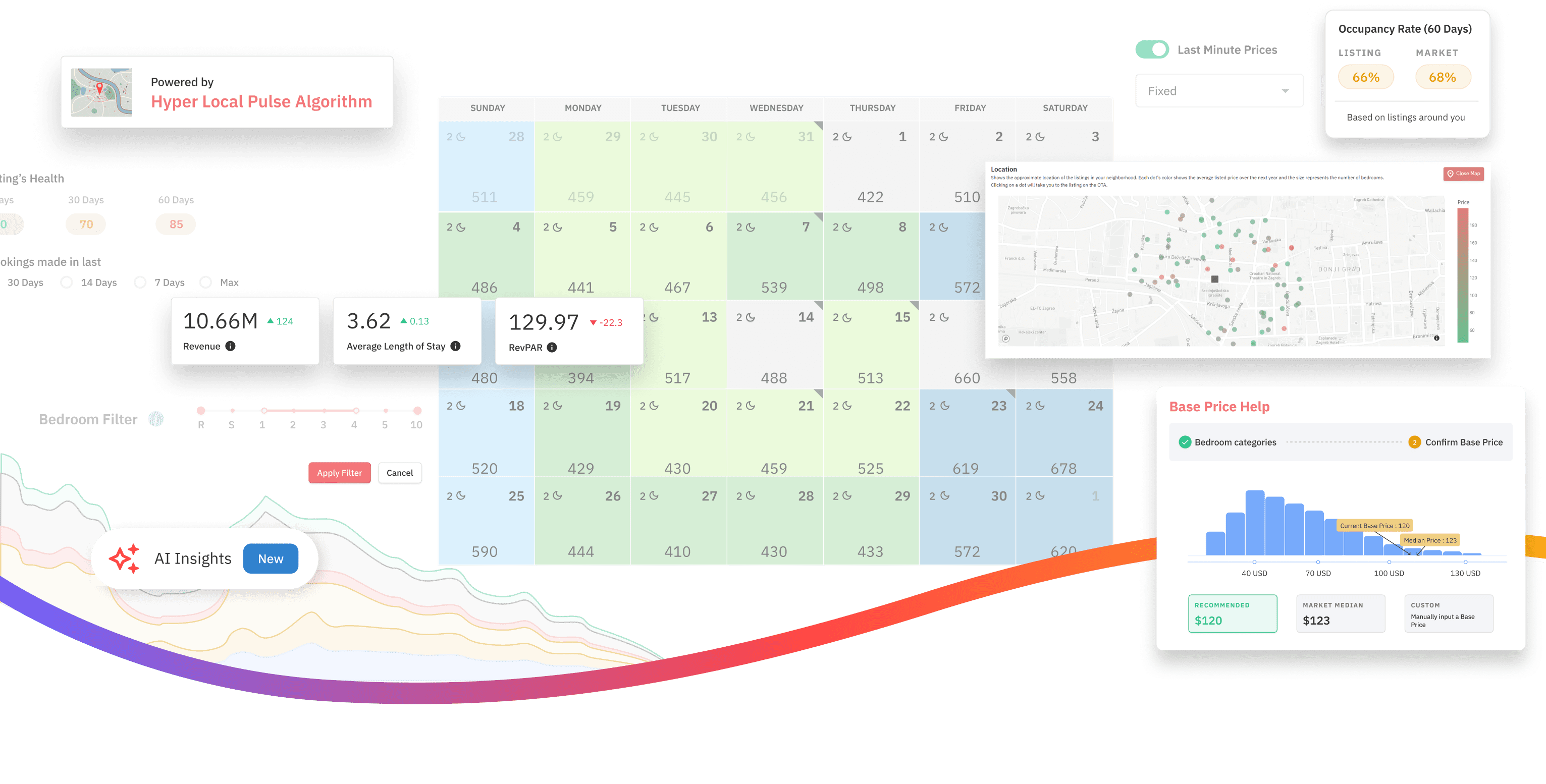
PriceLabs helps independent hotels automate pricing, stay ahead of competitors, and optimize revenue all the while generating automated reports—without the complexity of an enterprise RMS.
Here’s how:
- Rates update automatically based on your hotel’s occupancy, competitor pricing, and market demand—no guesswork needed.
- See the latest competitor pricing, booking trends, and seasonal demand shifts without manual tracking.
- Set pricing by room type, season, and booking window to match your strategy.
- Automatically apply discounts for last-minute bookings, early reservations, or peak demand without lifting a finger.
- Works with over 150 property management systems and Channel Managers to update rates across all platforms.
- Get real-time updates on occupancy, revenue, and pricing performance – delivered straight to your dashboard.
Transform your hospitality approach today
Discover actionable strategies tailored for small hotel owners and managers creating unforgettable stays for your guests & expanding revenues for your hotel!
Start your 30-day FREE trial now!Challenges in Adopting AI for Hotel Pricing
While the potential benefits are significant, several challenges must be considered.
Data Quality Matters: Bad Data = Wrong Predictions
The accuracy of your AI predictions hinges on the quality of your data. Poor data can lead to incorrect pricing strategies that harm your revenue rather than help it. It’s crucial to ensure your data sources are reliable and up-to-date. This requires a commitment to continuous monitoring and refinement of data inputs.
Staff Training and Trust in AI Are Essential
Integrating AI into your operations isn’t just about technology; it’s also about people. Your team requires comprehensive training to grasp how AI operates and its benefits. Building trust in these systems is essential for successful implementation. Encourage open dialogue about concerns and provide ongoing support as your staff adjusts to these new tools.
The Future Ahead
Imagine a world where AI gets even smarter, continuously learning from real-time market trends. This isn’t just a distant possibility—it’s an imminent reality. As AI technology evolves, you’ll find yourself equipped with tools that provide even more accurate insights, allowing you to adjust hotel pricing with unprecedented precision. This means you can anticipate changes in demand and adapt swiftly, keeping your occupancy rates high and your guests satisfied.
But it’s not just about crunching numbers. The focus will increasingly shift toward enhancing guest experience alongside pricing optimization. With AI’s ability to analyze guest preferences and behaviors, you’ll be able to offer personalized experiences that resonate with each visitor. This not only boosts satisfaction but also encourages repeat bookings and positive reviews.
Wrapping Up
By integrating artificial intelligence (AI) into your hotel’s pricing strategy, you’re not only adapting to the future of the industry but also positioning yourself for success. You’ll find that AI offers powerful solutions that enhance decision-making, improve guest satisfaction, and ultimately drive your bottom line. So why not consider leveraging this technology to revolutionize your hotel’s pricing approach today?
Frequently Asked Questions (FAQs)
1. How does AI enhance revenue optimization in the hotel industry?
AI revolutionizes revenue optimization by analyzing vast amounts of data to predict demand, set competitive prices, and maximize occupancy rates. By leveraging machine learning algorithms, AI can identify patterns and trends that traditional methods might overlook, enabling hotel owners and managers to make informed pricing decisions.
2. What role does dynamic pricing play in hotel pricing strategies?
Dynamic pricing is a key component of modern hotel pricing strategies, allowing hotels to adjust their rates in real-time based on current market demand, competitor pricing, and other relevant factors. By implementing dynamic pricing, hotels can optimize revenue by ensuring their prices reflect the most up-to-date market conditions, ultimately leading to higher profitability.
3. How is AI transforming the hotel industry beyond revenue optimization?
AI is making significant strides beyond revenue optimization in the hotel industry by enhancing guest experiences, streamlining operations, and improving marketing efforts. From personalized guest interactions and automated check-ins to predictive maintenance and targeted marketing campaigns, AI helps hotel owners and managers deliver superior service while optimizing costs.
The post How AI is Changing the Game for Hotel Pricing & Revenue Optimization appeared first on PriceLabs .
]]>The post List Property on Expedia: A Guide for Hosts appeared first on PriceLabs .
]]>As one of the most popular online travel agencies (OTAs), Expedia offers a massive audience of travelers seeking short-term rental accommodations. Whether you own a beachfront vacation rental or a boutique guesthouse, you can increase your visibility, bookings, and revenue by listing your property on the platform.
In this guide, we will
- Walk you through how to list a property on Expedia step by step, what you need before you get started, and how to make the most of your listing to maximize returns.
- Include a checklist that you can use to tick the boxes when first adding your STR to the website.
- Show you how PriceLabs can help you reach optimal ROI.
Download Our Free Checklist To List Your Property On Expedia Effectively!
A ready-to-use checklist that will help you assign tasks, track responsibilities, and keep operations consistent across every stay.
Download It NowWhy Should You List Your Property on Expedia
Listing your property on Expedia comes with important advantages that allow you to boost your vacation rental marketing strategy and enhance income.
Key Benefits of Listing on Expedia
- Global Exposure: Reach millions of potential guests worldwide. In 2024, 383.9 million rooms were booked on Expedia.
- Multi-Platform Visibility: Get seen on Expedia’s partner websites, including Vrbo, Orbitz, Travelocity, and others.
Check out Vrbo listing requirements.
- Diverse Guest Personas: Attract a broad audience, including leisure and business travelers.
- Reliable Payments: Have your payments handled by Expedia, reducing friction.
- More Income: Maximize your vacation rental revenue with a higher occupancy rate and dynamic pricing (more on this shortly).
Requirements Before Listing Your Property on Expedia
Before you start the listing process, make sure that you have the following documentation and information ready:

- Business or Personal Information: Legal name, contact info, and tax details.
- Property Details: Property type, size, number of bedrooms and bathrooms, amenities, and house rules.
- High-Quality Photos: High-resolution, well-lit professional photos of the outside and the inside of the property, showcasing the house.
- Pricing and Availability Calendar: Manual or connected with a property management system (PMS) or channel manager.
- Cancellation and Guest Policies: Flexible or strict vacation rental cancellation policy and guest rules in line with your comfort and strategy.
- Banking Information: For secure payouts.
Maximize Your Vacation Rental Return with Dynamic Pricing!
Boost occupancy & optimize revenue with PriceLabs’ Dynamic Pricing & Revenue Management tool. Implement a smart pricing strategy based on market conditions, seasonality & competition for excellent ROI.
Get Started NowHow to List Property on Expedia in 6 Steps
Step 1: Create an Account on Expedia Group Partner Central
Go to Expedia Group Partner Central. Choose your property type (Private Residence) and complete the registration process.
Step 2: Enter Your Property Info
Fill in the property name, address, and type. Add key amenities such as Wi-Fi, kitchen, swimming pool, and others.
Step 3: Upload Photos
Use at least 5 high-quality photos. Include images of the exterior, kitchen, bedrooms, bathrooms, and living areas. Highlight amenities in the photos.
Follow the same rules as for Airbnb photos.
Step 4: Set Rates and Availability
Add daily rates manually or connect your Expedia listing to your PMS or channel manager for automatic pricing updates. Use PriceLabs to automate optimal rates based on demand and seasonality as well as length of stay and day of the week.
Step 5: Add House Rules and Policies
Explain check-in and check-out times, smoking and pet policies, and cancellation terms. Use clear language to avoid confusion. Adjust your policies to be flexible enough to attract more bookings but also strict enough to be comfortable with them.
Step 6: Review Your Listing and Publish
Double-check all details. Publish your listing when ready. Expedia will review your listing before it goes live.
How Do I List My Property on Expedia for Maximum ROI?
1. Write an Optimized Headline and Description
Conduct keyword research to see what’s trending in the area. Use clear and engaging language. Strategically place keywords throughout. Take advantage of bullet points and emojis (within reason).
Get inspired by the best Airbnb titles. The rules are similar.
You can use PriceLabs STRings to generate good and effective descriptions for your Airbnb property.

2. Use Dynamic Pricing
Automate nightly rate adjustments with PriceLabs to reflect local demand, seasonality trends, and major events in the area. Set up pricing rules based on lead time, length of stay, and day of the week. Achieve the right balance between occupancy and price to maximize revenue and return.

Note that you can easily connect PriceLabs to your listing on Expedia via a PMS, such as Hostaway, to enjoy the benefits of dynamic pricing.
3. Keep Availability Up-to-Date
Avoid double bookings and missed opportunities when listing your vacation rental on multiple platforms. Sync your booking calendars across different websites.
4. Highlight Unique Selling Points
In your listing on Expedia, emphasize what makes your property special and different from comps in the area. Focus on things such as a private garden, city view, or free parking.
5. Encourage Guest Reviews
Once you start getting reservations, communicate effectively with guests and be there to answer their questions. Follow up with them upon check-out to leave reviews, which helps boost credibility, enhance ranking, and get more bookings.
Making More Money by Listing Your Property on Expedia
This is how to list a property on Expedia in 6 easy steps. Adding your vacation rental to Expedia doesn’t just enhance visibility; it opens the door to smarter hosting. By combining Expedia’s global reach with PriceLabs’ automated pricing tools, you can attract the right guests at the right rate to maximize your revenue with less manual effort.
Frequently Asked Questions
Can I List My Property on Expedia Without a PMS or Channel Manager?
Yes, you can list your property on Expedia directly, without a PMS or channel manager, through the Expedia Partner Central platform. However, using a PMS helps you sync your calendar, eliminate double bookings, and – most importantly – apply smart pricing.
How Long Does It Take for a Listing to Be Approved on Expedia?
Once submitted, listings are typically reviewed within 24-48 hours. Expedia might reach out for additional verification before your listing goes live.
How Much Are Expedia Fees for Hosts?
Expedia usually charges a commission of 15-25% per booking, depending on location and property type. You can see the exact rate during setup.
The post List Property on Expedia: A Guide for Hosts appeared first on PriceLabs .
]]>The post Top 10 Questions Property Managers Ask About PriceLabs Customizations (And Their Answers) appeared first on PriceLabs .
]]>In the dynamic world of short-term rentals, success isn’t just about having a great property; it’s about mastering the art of pricing strategy. For property managers juggling dozens or even hundreds of listings, this can feel less like an art and more like an impossible puzzle. You’re constantly asking yourself, ‘Are my rates too high?’ Am I missing out on bookings? How can I possibly keep up with every market shift? The good news is, you don’t have to go it alone. PriceLabs is designed to take the guesswork out of pricing, but even the most powerful tool can feel overwhelming without a clear guide. This post dives into the top 10 questions property managers ask about PriceLabs customizations, offering direct, actionable solutions to help you unlock your portfolio’s full potential.
1. How Do I Know My Prices Are Set Correctly?
Property managers often worry if their pricing is truly optimal. PriceLabs addresses this with transparency and data-driven tools. The platform helps you establish these rules:
- The base price is based on market data and provides a “REC/Base Price Ratio” to indicate if it needs adjustment. A ratio of 1.0 indicates no change is recommended, while a number like 0.98 suggests you might need to lower your base price slightly. You can also use

- Using Neighborhood Data to compare your property’s rates with competitors, see how your pricing stacks up, and make data-backed decisions. We recommend using the neighborhood data tab to visualize market rates and the property’s position within them.

2. How Can I Handle Last-Minute and Off-Season Bookings?
Dealing with last-minute vacancies and periods of low demand is a constant challenge. One of the most essential PriceLabs customizations is the automated solution to fill gaps, eliminating the need for manual price slashing at the last minute.
- Last-Minute Pricing: The platform automatically adjusts rates or applies last-minute booking discounts closer to the booking date, which is crucial for markets with short booking windows. This automation helps you secure bookings in competitive markets, such as Miami.

- Occupancy-Based Adjustments: The occupancy-based adjustment customization feature automatically adjusts rates according to your property’s occupancy level, lowering them when occupancy is low and increasing them when occupancy’s high, ensuring you stay competitive and maximize revenue. For example, if occupancy is low 15 days out, the rate can be lowered by 15%.

- Orphan Day Pricing: You can create custom pricing for orphan gaps. This tool is designed to fill small gaps between bookings by automatically adjusting pricing and minimum stay restrictions.

Unlock Your Property's Earning Potential
Tired of manual pricing and missed opportunities? Our dynamic pricing engine uses real-time market data to automatically adjust your rates, helping you maximize revenue and occupancy. See the difference for yourself.
Start Your Free Trial3. My Properties Have Different Strategies. Can PriceLabs Customizations Handle This?
Managing a diverse portfolio requires a flexible system. PriceLabs customizations enable you to apply various pricing strategies at different levels to suit your needs.
- Account, Group, and Listing Levels: You can set general rules for your entire portfolio at the account level, and then create groups for properties with similar characteristics, such as mid-term rentals or high-end units. This approach saves time by letting you make bulk changes to specific segments of your portfolio.

- Custom Seasonal Profiles: You can create custom seasonal profiles with customizations for specific seasons. For markets with specific seasonal events, you can create non-repeating seasonal profiles for a particular year, which will override your standard pricing settings. This is perfect for adapting to holidays like Thanksgiving or local festivals, which change dates each year.

4. How Does PriceLabs Help With Portfolio Management?
For large portfolios, identifying which properties need attention can feel overwhelming. The
PriceLabs Report Builder simplify this process by allowing you to create, customize, and save reports tailored to your business needs.
- Leaderboard Report: This report gives you a quick overview of all your listings sorted by metrics like occupancy or revenue, so you can easily spot your top performers and those that are underperforming.
- Opportunities Report: This report helps you find potential revenue by highlighting unbooked, unavailable, or blocked dates. This is useful for identifying dates that are open due to minimum stay restrictions or owner blocks, which can then be addressed.
- Customizable Metrics: You can add various metrics, such as “last booked date,” to your calendar view to quickly identify properties that haven’t received a booking in a while, allowing you to take action immediately.

5. Can I See How My Pricing Compares to the Market?
PriceLabs provides robust data analysis tools to help you analyze market trends and stay competitive.
- Competitive Sets: You can build particular custom comp-sets to benchmark your properties against others with similar characteristics, such as the number of bedrooms, amenities, or star ratings. This allows you to go beyond a broad market view and see how properties with similar features (e.g., three bedrooms with a pool and a 4.5-star rating) are performing.
- Market Dashboards: PriceLabs Market Dashboard offers detailed insights into local market trends, including pricing, occupancy rates, and booking windows. You can use filters to narrow down your view to only compare against properties that match your specific criteria, such as “full house” or “at least 10 reviews”.
- Pickup Metrics: These metrics display recent booking activity, enabling you to understand how far in advance guests are booking in your market.

6. How Does PriceLabs Handle My PMS and Other Channels?
PriceLabs integrates with numerous Property Management Systems (PMS), including Guesty, Track, and Streamline.
- Seamless Syncing: Once integrated, PriceLabs sends rates, minimum stays, and other restrictions directly to your PMS, which then pushes the information to your booking channels.
- Discount Hierarchy: PriceLabs’ rates are considered the standard or “hierarchy” of pricing. Any weekly or monthly discounts you set directly on a channel like Airbnb will override the rates sent by PriceLabs, as Airbnb’s algorithm will use an average of the last 30 days. We recommend setting discounts directly on the channel to leverage the platform’s algorithms.
- Data Consistency: PriceLabs standardizes revenue allocation by spreading the booking amount across each day of the stay, which may differ from how some PMSs report revenue, but provides a more accurate view of performance.
7. My Rates are Too High/Low. How Can I Adjust Them?
PriceLabs offers several options to adjust your pricing to better align with your goals and market conditions. You can also use Smart Presets, which simplify the customization process by providing tailored recommendations based on property type and dynamic pricing experience.
- Maximum/Minimum Prices: You can set price caps or floors to prevent rates from exceeding a certain level or falling too low, especially on special dates. This is particularly useful for new or luxury properties.
- PriceLabs’ Smart Presets: This feature simplifies the customization process by providing tailored recommendations based on your property type and dynamic pricing experience. When setting up, you can indicate if you’ve used dynamic pricing before and choose your property type (e.g., short-term, mid-term, multi-unit). This enables the tool to recommend a set of core PriceLabs customizations without requiring manual configuration of each setting. You can then access these presets at the account, group, or listing level to apply them and preview how they affect your rates before committing to the changes.
- Manual Overrides: For specific dates or properties, you can manually override the algorithm’s recommendations. While the goal is automation, having the ability to make manual adjustments is key to maintaining control.

8. How Can I Find New Leads for My Property Management Business?
Property management lead generation can be a challenging task for property managers. The Market Dashboards tool can be a powerful resource for business development.
- Filtering by Host: You can filter the dashboard to find listings that aren’t using dynamic pricing or are professionally managed but have low ratings or bad reviews.
- Identifying Opportunities: By sorting by metrics such as estimated revenue and host ID, you can locate individual property owners or small-scale managers who may be struggling and would benefit from your services.
Get More Leads For Your Property Management Business
Stop guessing where your next client will come from. Use our Market Dashboard to identify underperforming listings and pinpoint owners who need your help—backed by real-time data on occupancy, pricing, and more.
Start Your Free Trial9. How Do I Deal with Minimum Stay Restrictions?
Minimum stay restrictions can be a significant factor in securing bookings, and PriceLabs provides you with fine-grained control over them.
- Dynamic Minimum Stay: PriceLabs can automatically adjust the minimum stay for a property as the booking date approaches. For example, you can set a rule with a five-night minimum far in advance and then gradually reduce it to a two-night minimum to fill in gaps closer to the date.
- Adjacent Day Factor: This customization offers a discount on days adjacent to an existing booking, helping to fill in “orphan” days that would otherwise go unbooked.

10. What About My Owners Who Don’t Want to Discount?
For owners who are hesitant about aggressive pricing, PriceLabs offers a solution to protect their rates while still improving conversion.
- Safety Minimum Price: This new PriceLabs customization enables you to set a minimum price that will be enforced for a specified time period, such as 180 days. If an owner has a strict price floor, this tool ensures the rate doesn’t drop below that threshold, giving them peace of mind while still allowing PriceLabs to optimize rates closer to the booking date.

- Using Flat Rates for High-Value Days: For high-value events or dates, a property manager might set a high, flat rate and then manually adjust it down if it doesn’t book. This allows them to test the market’s willingness to pay a premium without the risk of the price dropping too low.
Conclusion
Ultimately, success with dynamic pricing hinges on a mix of robust technology and strategic human oversight. PriceLabs provides the tools to automate complex tasks, from adjusting rates based on market demand to setting dynamic minimum stay requirements. This automation frees up property managers to focus on higher-level strategies, such as creating targeted marketing campaigns for low-demand periods or utilizing market data to identify new leads. By leveraging PriceLabs customizations and features such as the customizable Report Builder and detailed Market Dashboards, property managers can move beyond simply reacting to the market and instead proactively shape their business for increased revenue and efficiency. The key is to see the software not just as a pricing engine, but as a comprehensive partner in revenue management.
The post Top 10 Questions Property Managers Ask About PriceLabs Customizations (And Their Answers) appeared first on PriceLabs .
]]>The post How to Choose the Best Pricing Tool for Airbnb: Host’s 2025 Guide appeared first on PriceLabs .
]]>Getting your Airbnb pricing right is the single most important factor in maximizing bookings and profits. Yet, with shifting demand, local events, and constant competition, manual pricing is a guessing game, one that often leaves money on the table or your calendar half-empty.
That’s where dynamic pricing tools come in. These platforms utilize data and automation to help you adjust rates in real-time, ensuring your property remains competitive, your occupancy rates increase, and your income grows, all while saving you hours each week.
But not every pricing tool is created equal. For hosts managing one to five listings, the right solution should offer more than just automation; it should give you control, reliable data, and a clear path to higher earnings.
In this guide, you’ll discover what makes PriceLabs the best dynamic pricing tool for Airbnb, which features matter most, and how PriceLabs stands out as the preferred choice for successful hosts.
Audit Multiple Tools Before Finalizing One Revenue Management Software For Your Property!
Choosing the right tool is the most important step of your dynamic pricing journey. Audit multiple tools and compare features before finalising one.
Download The Checklist NOW!Why Every Airbnb Host Needs a Dynamic Pricing Tool
Before you dive into the features and comparisons, it’s worth asking—why bother with dynamic pricing at all? Understanding the “why” behind these tools makes it easier to see just how much you could be leaving on the table.
Manual pricing is a challenging game for Airbnb hosts, especially if you’re managing multiple listings or juggling a busy schedule. Market trends shift quickly: local events pop up, demand spikes, competitors tweak their rates overnight, and seasons change faster than you can update your calendar. Without up-to-date data, you’re forced to rely on gut feelings or outdated pricing strategies, risking both overpricing (which means fewer bookings) and underpricing (leaving revenue on the table).
Dynamic pricing tools change the game. Instead of guesswork, these tools use real-time data—like booking trends, market occupancy, local events, and competitor prices—to set and update your nightly rates automatically. This means your prices always reflect the true market value, day after day.
For Airbnb hosts, the benefits are immediate and measurable:
- Higher Occupancy: Automated rate adjustments help fill your calendar, even during slow periods.
- Increased Revenue: By capturing peak demand and avoiding missed opportunities for special events, you can earn up to 10–40% more* compared to static pricing.
- Time Savings: No more daily spreadsheet updates or late-night pricing decisions.
- Peace of Mind: Know your property is always competitive, even when you’re not watching.

What Makes a Dynamic Pricing Tool the “Best” for Airbnb Hosts?
With dozens of pricing tools promising more bookings and higher revenue, it can be tough to know what really matters. The “best” dynamic pricing tool isn’t just the one with the fanciest dashboard—it’s the one that fits your goals, style, and the realities of managing 1–5 listings.

When comparing dynamic pricing tools, keep these essential criteria in mind. The best tool should give you a blend of automation and control—empowering you to make data-driven decisions, without locking you into a “one size fits all” approach.
Below, let’s break down each must-have feature to help you separate real value from the marketing fluff.
1. Accuracy & Data Sources:
Dynamic pricing lives and dies by the quality of its data. A tool that updates rates using stale or limited information won’t help you compete. Look for solutions that tap into real-time booking trends, local demand signals, event calendars, and competitive listings—not just generic, city-wide averages.
PriceLabs, for example, combines Market Dashboards and Neighborhood Data to surface insights right down to your street or building.
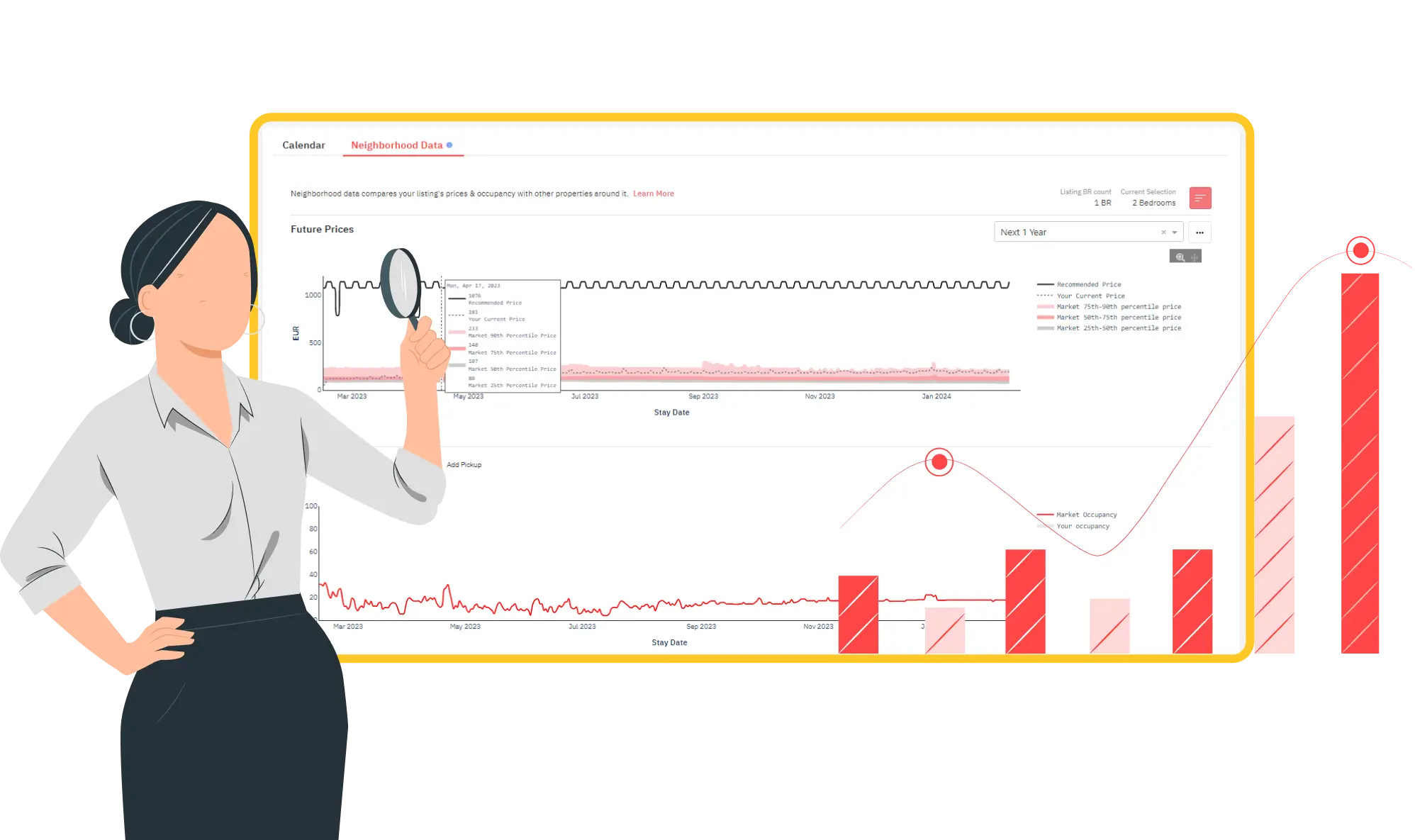
Stay Ahead of the Market and Find the Right Amenities that Your Potential Guests Want Using PriceLabs Market Dashboard.
Use PriceLabs Market Dashboard and Neighborhood Data to track competitor pricing and demand shifts and analyze past performance to set a strong pricing strategy for your property.
Create your Market Dashboard Now2. Customization & Control:
Every listing is unique—so your pricing strategy should be, too. The best dynamic pricing tools allow you to set your own rules, minimum stays, pricing floors/ceilings, and even customize rates for special dates or seasons. Whether you prefer full automation or hands-on tweaking, flexibility is essential.
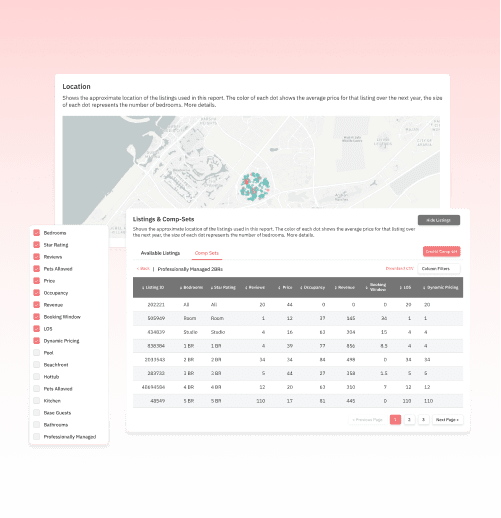
With PriceLabs, you get powerful rule engines and “Comp Sets” that let you fine-tune pricing for each property.
3. Ease of Use & Integrations:
If a tool takes hours to set up—or doesn’t sync smoothly with Airbnb and your property management systems—it quickly becomes more trouble than it’s worth. Prioritize solutions that make onboarding simple, offer intuitive dashboards, and integrate seamlessly with the platforms you already use.
PriceLabs is known for its quick Airbnb connection and user-friendly interface.

4. Transparent Pricing & ROI:
Be cautious of tools that hide extra fees or only reveal the actual cost after signing up. As a host, you need to understand your expenses up front, with no surprises. Look for pricing models that are clear, predictable, and scale fairly with your business.
PriceLabs charges a flat, per-listing fee with no hidden costs—making it easy to track your ROI from day one.
Maximize Your Vacation Rental Return with Dynamic Pricing and Understand Your Portfolio Performance With Portfolio Analytics!
Boost occupancy & optimize revenue with PriceLabs’ Dynamic Pricing & Revenue Management tool. Implement a smart pricing strategy based on market conditions, seasonality & competition for excellent ROI.
Start Your FREE Trial Now5. Support & Community
Responsive support isn’t a bonus—it’s a necessity, especially when you’re starting. Whether you prefer live chat, help articles, or hands-on onboarding, choose a platform known for fast, reliable support and an active community of fellow hosts.
PriceLabs offers live onboarding, an extensive help center, and real people to help troubleshoot when you need it most.

When comparing tools, demo each one with your real Airbnb data. This lets you see how features and pricing will work for your specific listings—before you commit.
How to Compare the Best Airbnb Pricing Tools
Choosing a dynamic pricing tool isn’t just about picking the first name you find on Google. To find the best fit for your Airbnb business, you need to go beyond the sales pitches and look for proof—both in features and in results.

Before committing, review the tool’s feature pages, browse host reviews, and take advantage of free trials or demos. This process helps you experience how the platform works with your listings—and whether it delivers on its promises.
Some tools offer “set it and forget it” simplicity but lack deeper customization or local intelligence. Others provide advanced analytics but are overwhelmed by complexity or hidden costs. As you compare, look for solutions that:
- Empower you with control and automation, not just one or the other
- Back up their claims with real host case studies (not just generic testimonials) {Look at our case studies}
- Offer transparent, honest pricing with no strings attached
PriceLabs is built specifically to help individual hosts succeed, with a proven blend of automation, transparency, and hands-on support—making it a natural fit for anyone serious about maximizing their Airbnb income.
Step-by-Step: How to Set Up Dynamic Pricing With PriceLabs
You don’t need to be a tech expert to start earning more with PriceLabs. In just a few simple steps, you can connect your Airbnb listing, customize your pricing strategy, and watch your calendar fill up—no spreadsheets, no guesswork.

Getting Started: A Quick Walkthrough
- Sign Up for PriceLabs: Visit PriceLabs and create your free account. No credit card required to start.
- Connect Your Airbnb Account: Authorize PriceLabs to access your Airbnb listing. The process is secure, quick, and takes less than two minutes.
- Import Your Listings: Once connected, PriceLabs automatically pulls in your properties and displays them on your dashboard.
- Set Your Base Price: Use PriceLabs’ guidance or set your own base price. This anchors your pricing strategy, and you can update it anytime.
- Customize Your Pricing Rules: Adjust minimum and maximum rates, minimum stays, and create custom rules for weekends, events, seasons, or last-minute bookings.
- Review the Recommendations: PriceLabs generates daily pricing suggestions using real-time market data and your custom rules—review and adjust as needed.
- Sync & Go Live: Once you’re happy, turn on sync. PriceLabs will automatically update your Airbnb rates every day.
Pro-Tip: Don’t set it and forget it! Log in every few weeks to check performance, adjust your base price if the market shifts, and explore new features like Comp Sets or Neighborhood Data for extra competitive edge.
PriceLabs’ setup is built for speed and confidence. Even if you’re new to dynamic pricing, the intuitive dashboard and guided onboarding make it easy to start pricing smarter—right away.
Final Thoughts on the Best Pricing Tool for Airbnb
Choosing the best pricing tool for Airbnb isn’t just about finding the latest feature or trend—it’s about gaining the control, insight, and automation you need to run a more profitable, less stressful hosting business. With dynamic pricing, you stop leaving money on the table and start capturing the full value of your listing, every night.
Not all pricing tools are created equal. The best solution empowers you with local data, flexible controls, transparent pricing, and support that helps you grow. That’s why thousands of hosts trust PriceLabs—not just for the technology, but for the results and peace of mind it brings.
Ready to see the difference for yourself? Try PriceLabs, set your strategy in minutes, and unlock a smarter, more rewarding way to manage your Airbnb pricing.
Frequently Asked Questions About the Best Pricing Tool for Airbnb
Q1: How does dynamic pricing work for Airbnb?
Dynamic pricing tools analyze real-time market data, seasonal trends, local events, and competitor rates to adjust your nightly prices automatically. This helps maximize bookings and revenue by ensuring your property is always priced competitively.
Q2: Can I set minimum and maximum prices with a dynamic pricing tool?
Yes! The best Airbnb pricing tools—including PriceLabs—let you set your own minimum and maximum rates, control rules for special dates, and adjust strategies for weekends, events, or last-minute bookings. You’re always in charge of your price limits.
Q3: Is it safe to let a tool set my Airbnb prices automatically?
Absolutely. Top dynamic pricing platforms update prices using accurate, transparent data and proven algorithms. Plus, you can review, tweak, or override any recommendations—so you keep complete control over your listings and never lose sight of your business goals.
Q4: What if I manage more than one listing?
Dynamic pricing tools, such as PriceLabs, are designed for both single hosts and small portfolios. You can manage multiple listings in one dashboard, apply custom rules per property, and save hours every week by automating price updates across your entire portfolio.
Q5: How long does it take to see results with dynamic pricing?
Most hosts notice higher occupancy and better earnings within the first month. Results depend on your market and listing quality, but automated pricing typically delivers quick wins—especially if you regularly review and optimize your base price and settings.
The post How to Choose the Best Pricing Tool for Airbnb: Host’s 2025 Guide appeared first on PriceLabs .
]]>The post How Storytelling Transforms Short-Term Rental Marketing into Guest Bookings? appeared first on PriceLabs .
]]>Imagine scrolling through endless vacation rental listings. One boasts a king-size bed, high-speed WiFi, and a sparkling pool just like dozens of others. Another, however, invites you into the story of a family lakehouse where generations have gathered to watch fireflies, roast marshmallows, and create lifelong memories. Which one draws you in? Simply listing amenities isn’t enough anymore. Travelers crave experiences and connections, not just a place to sleep. That’s where storytelling comes in. By weaving authentic, compelling stories into your short-term rental marketing, you transform your property from “just another listing” into a guest magnet to a place guests can picture themselves belonging. In this guide, you’ll discover why storytelling works, how to craft your unique narrative, and practical ways to use it across every touchpoint to attract more bookings.
Why Storytelling Matters in Short-Term Rental Marketing?
Storytelling isn’t just for novels or movies—it’s one of the most powerful tools in modern marketing. For vacation rental hosts, it’s the secret ingredient that transforms a list of amenities into a memorable experience.

- Building Trust and Aspiration: A great story invites guests to imagine themselves in your space. Instead of seeing your listing as just another rental, they picture mornings with coffee on your sunlit balcony, or evenings spent by the fire. This emotional connection not only boosts engagement but often drives guests to book faster and at higher rates.
- Standing Out in a Crowded Market: With thousands of similar listings on Airbnb and Vrbo, a compelling narrative is your chance to stand out. Guests don’t remember listings—they remember stories. And the properties that stick in their minds are the ones that feel personal, inviting, and real.
Maximize Your Vacation Rental Return with Dynamic Pricing and Understand Your Portfolio Performance With Portfolio Analytics!
Boost occupancy & optimize revenue with PriceLabs’ Dynamic Pricing & Revenue Management tool. Implement a smart pricing strategy based on market conditions, seasonality & competition for excellent ROI.
Start Your FREE Trial NowThe Foundations of Storytelling for Hosts
Before you can start using storytelling in your short-term rental marketing, it’s essential to lay a strong foundation. This involves identifying your property’s unique aspects, understanding your ideal guest, and shifting your focus from listing features to sharing experiences.
1. Identify Your Vacation Rental’s Unique Narrative
Every property has a story—sometimes you just need to dig a little to find it.
Is your home a restored heritage villa, a modern apartment with city views, or a cozy mountain cabin passed down through generations? Maybe your journey as a host is itself compelling—did you start hosting to share your love of surfing, or to preserve a family retreat?
Write down three things that set your property apart: history, location, or even the quirks you love. Example: “Our lakeside cottage was built in the 1950s by my grandparents, and every summer since, our family has gathered here to celebrate togetherness and sunsets.”
2. Know Your Target Guest
Not all stories will resonate with everyone. Are you aiming to attract families, couples, solo travelers, or digital nomads? Knowing your audience helps tailor your story so it feels personal and relevant.
Example Persona:
- “Imagine waking up here as a remote worker—coffee on the balcony, strong WiFi for video calls, and a sunset swim to end your day
- “For families, our backyard treehouse and s’mores-ready firepit make for unforgettable evenings.”
3. Highlight Experiences, Not Just Features
The features of your rental (bedrooms, WiFi, pool) matter—but what truly draws guests in are the experiences those features enable. Rather than simply stating “3 bedrooms, fast WiFi, and a grill,” paint a picture:
“Gather your loved ones for a barbecue on the deck while the kids play in the garden. Share stories around the firepit after a day exploring nearby trails.”
This approach helps guests envision themselves making memories at your property, not just occupying space.
Pro-Tip: By shifting your focus from things to experiences, you unlock the emotional appeal that makes your listing unforgettable.
Practical Ways to Use Storytelling in Your Short-Term Rental Marketing
Storytelling can and should be embedded into every guest touchpoint, both online and offline. Here’s how to apply it across your entire marketing strategy:
1. Listing Descriptions: Make Every Word Count
Your listing is your first (and sometimes only) chance to make an impression. Storytelling transforms generic descriptions into vivid invitations.
- Start with a scene: Open with a “moment” rather than a list.
Example: “Step into a sunlit kitchen where you can sip fresh coffee as the city wakes up outside your window.” - Highlight transformation: Describe how guests might feel before and after their stay.
Example: “Arrive as strangers—leave as friends, with memories of bonfires, laughter, and starlit evenings.” - Weave in your property’s personality: Is it quirky, modern, tranquil, or historic? Let that flavor show in your language.
- Connect amenities to experiences: Example: “Enjoy a movie night in our cozy living room with plush throws and an old-school popcorn maker.”
Pro-Tip: Use the “Show, Don’t Tell” approach. Instead of saying “romantic getaway,” describe the candlelit dinners on the terrace or the secluded garden bench perfect for two.
STRings: Airbnb Description Generator is a powerful tool that employs Artificial Intelligence to generate compelling, relevant, and best Airbnb descriptions for your listing within seconds.
2. Visual Storytelling: Photos, Videos & Captions
A single Airbnb photo can tell an entire story, but only if you curate intentionally.

- Sequence your photos: Arrange images to mirror the guest journey: arrival, first impressions, communal spaces, cozy corners, outdoor adventures.
- Add captions: Brief, sensory captions help guests imagine moments.
Example: “Sink into the hammock with a good book as the breeze rustles the palms.” - Show experiences in action: Feature guests (with permission), families at dinner, kids playing, a dog curled by the fireplace, a picnic set up in the garden.
- Leverage short-form video: Create 30-second “day-in-the-life” reels or room tours, highlighting moments (e.g., “Morning coffee with sunrise views”).
- Use user-generated content: Repost guests’ stories, reviews, or photos on your listing and social channels.
Pro-Tip: Photos of people enjoying your space create an instant emotional hook—far more than empty rooms.
3. Social Media: Build Your Property’s Ongoing Narrative

Social media isn’t just for advertising availability; it’s a place to cultivate your brand and community.
- Tell micro-stories: Share snippets—“The first snow of the season at our mountain cabin,” or “The story behind our hand-painted mural.
- Highlight local stories: Post about nearby festivals, local legends, or must-visit cafés.
- Run guest spotlights: Feature stories or testimonials from past guests (“Meet the Smiths, who celebrated their anniversary here…”).
- Behind-the-scenes: Show your hosting process, preparations, or little upgrades—humanizing the brand.
Pro-Tip: Don’t just post photos—use Instagram Stories, Facebook Live, or TikTok to narrate your day, answer questions, or walk viewers through the property in real-time.
4. Direct Booking Website & Email: Reinforce Your Story Everywhere
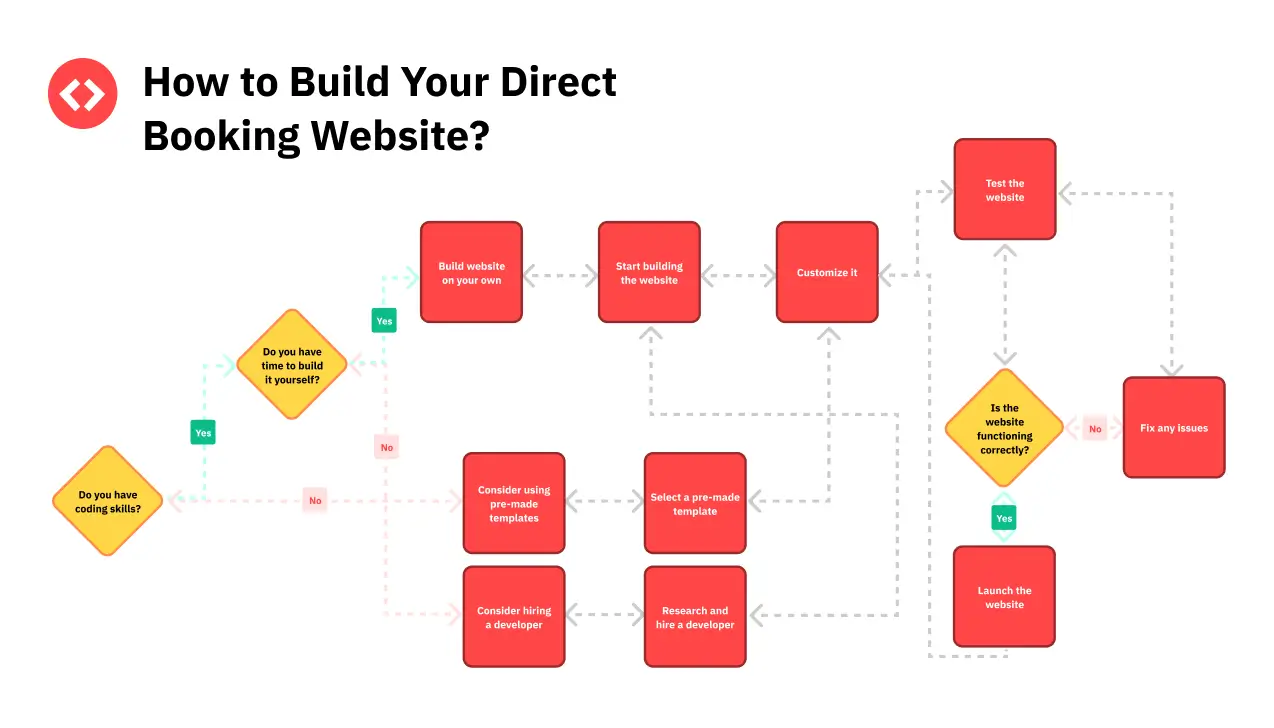
Your direct booking website and guest emails offer more room to tell your story in depth and maintain consistency.
- “Meet the Host” pages: Share your journey, values, and why you started hosting.
- Story-driven blogs: Write about how your home came to be, renovation tales, or memorable guest experiences (with consent).
- Email nurture sequences: Welcome emails can include a brief personal story, a favorite local memory, or a tip tied to your property’s theme (e.g., “Our favorite sunrise spot is just a five-minute walk away”).
- Brand voice: Carry your unique tone into every guest interaction—confirmation emails, FAQs, guidebooks.
Pro-Tip: Add downloadable guides, such as “Our Family’s Favorite Hiking Trails,” to further anchor your story in the local context.
5. Offline Touchpoints: Make Storytelling Part of the Guest Experience
- Welcome notes & guidebooks: Open with a story or anecdote—why you love the home, a fun fact about the area, or a “hidden gem” you discovered.
- In-property signage: Frame instructions or tips with personality (“This old oak tree is where our kids built their first treehouse!”).
- Guestbooks: Encourage guests to share their own stories, which can be highlighted (with permission) in future marketing.
Pro-Tip: Storytelling continues during and after the stay. Guests who feel connected to your property’s story are more likely to leave heartfelt reviews and return for future visits.
Every part of your marketing—from the listing and photos to emails and in-person touches—can be infused with story. Start small, be authentic, and build layer by layer for a brand guests will remember.
Storytelling Across the Guest Journey
Great storytelling doesn’t end with your listing—it can be woven through every step of the guest’s experience, creating deeper connections and higher satisfaction. Here’s how to embed your narrative before, during, and after each booking:
Pre-Booking: Attraction and Inspiration
- Listings, ads, and social media: Make your story the reason guests choose your property. Instead of “Book now!”—inspire them with “Create your own lakehouse memories,” or “Experience the town’s best sunrise from our balcony.”
- Personal responses to inquiries: When replying to guest questions, use the opportunity to reinforce your narrative. For example, if someone asks about local restaurants, share a personal favorite or a story about a memorable meal you had nearby.
Booking Stage: Personalized Confirmation
- Confirmation emails: Don’t just send a receipt—send a welcome message rooted in your story. Example: “We’re thrilled you chose our mountain retreat, where our family has gathered for winter holidays for decades. You’ll find hot cocoa in the kitchen—a family tradition we hope you’ll enjoy.”
- Share anticipation: Build excitement with a preview of what’s to come, such as a story about the area, a favorite trail, or a tradition guests can experience during their stay.
During the Stay: Immersive Touchpoints
- Welcome letters and house manuals: Open with a warm note about the property’s history, your hosting philosophy, or a local legend. Example: “This fireplace was built with stones from the original cottage. On cold evenings, we love to curl up here with a book—please help yourself to our little library.”
- Local guides and tips: Frame recommendations as stories: “This bakery has been family-run for three generations—try the almond croissants, just like we do every Sunday.”
- Small surprises: If you provide a treat or a special amenity, tie it back to your story (e.g., “The homemade jam in your welcome basket comes from the apple trees in our backyard.”)
Post-Stay: Encouraging Connection and Loyalty
- Thank-you emails: Reference their unique stay and invite them to return (“We hope your family enjoyed the board game collection—it’s brought us many rainy-day laughs!”)
- Review requests: Ask guests to “share their story” in their review, encouraging richer and more detailed feedback.
- Stay-in-touch campaigns: Send occasional updates: “This spring, we added a hammock by the lake—can’t wait for you to try it on your next visit!”
Final Thoughts: Turning Your Property into a Guest Magnet
In a world where travelers have endless choices, the difference between a forgettable listing and a guest magnet often comes down to one thing: story. By weaving storytelling into every aspect of your short-term rental marketing—from your online listings and social media to the welcome notes your guests find on arrival—you create a property that feels alive, memorable, and inviting.
Storytelling isn’t about inventing tales or making empty promises. It’s about revealing the real experiences, values, and personal touches that make your space special. Start small: rewrite a listing intro, add a heartfelt caption, or share a favorite local tip. Over time, these authentic stories build a brand guests want to be a part of—and return to.
So, embrace your property’s narrative. Share it boldly, consistently, and across every channel. In doing so, you’ll transform not only how guests see your space, but also how you see your own journey as a host.
FAQs on Storytelling & Short-Term Rental Marketing
1. How can I market my vacation rental property effectively?
The most effective short-term rental marketing combines compelling storytelling with professional photos, optimized listings on platforms like Airbnb and Vrbo, and consistent branding across social media, email, and direct booking websites. Focus on sharing your property’s unique story and guest experiences—not just amenities—to stand out and attract bookings.
2. Where should I share my vacation rental’s story?
Share your story everywhere guests interact with your business: listing descriptions (Airbnb, Vrbo, etc.), photos and captions, social media posts, your direct website, pre-arrival emails, in-house welcome materials, and even in guest review requests. Consistent storytelling across these channels creates a memorable and cohesive brand.
3. What are some easy storytelling ideas for my short-term rental marketing?
Start with these quick wins:
- Open your listing with a guest-centered moment.
- Add captions to photos that evoke emotion or describe experiences.
- Include a personal welcome note.
- Share a favorite local legend or tip in your guidebook.
- Highlight guest stories in your marketing (with permission).
4. Can I market my vacation rental home on multiple sites?
Yes! You can (and should) market your vacation rental on platforms like Airbnb, Vrbo, Booking.com, and your own direct site. Just ensure your core story and brand remain consistent, even as you adapt your narrative and photos to fit each platform’s style and requirements.
5. How does storytelling increase bookings for my vacation rental?
Storytelling creates an emotional connection that makes your property memorable and desirable. According to marketing research, stories are up to 22 times more memorable than facts alone. When guests can picture themselves making memories at your property, they’re more likely to book—and more likely to return.
The post How Storytelling Transforms Short-Term Rental Marketing into Guest Bookings? appeared first on PriceLabs .
]]>The post Hotel Technology Trends 2025: What You Need to Stay Competitive appeared first on PriceLabs .
]]>In an era where digital transformation is reshaping industries, staying competitive in the hospitality sector increasingly relies on embracing the latest hotel technology. According to a report by Statista, global hotel technology spending is projected to reach $8.8 billion by 2025, highlighting the growing investment in digital solutions. This surge underscores the significance of hotel technology trends 2025 as hoteliers strive to enhance guest experience and operational efficiency. Findings from Hospitality Technology’s 2023 Lodging Technology Study reveal that 54% of hotels are prioritizing mobile solutions and 47% are investing in enhanced cybersecurity measures, emphasizing the importance of keeping pace with hotel tech trends 2025.
What Do We Mean by Hotel Technology?
Hotel technology refers to the innovative tools and systems that enhance the guest experience and streamline hotel operations. In today’s fast-paced world, staying competitive in the hospitality industry requires adopting the latest hotel technology. This includes everything from advanced booking systems to smart room controls, which not only improve efficiency but also cater to modern travelers’ expectations.
For example, consider the implementation of mobile check-in and check-out systems. These allow guests to bypass the front desk, offering a seamless and efficient experience. Another example is the use of AI-driven chatbots for customer service, providing instant responses to guest inquiries around the clock.
Looking ahead to hotel technology trends 2025, we anticipate further advancements in personalized guest experiences through data analytics. Hotels will leverage big data to tailor services to individual preferences, enhancing guest satisfaction. Additionally, contactless payment systems and virtual reality tours are set to become standard offerings.
Hotel Technology Trends in 2025

In the rapidly evolving hospitality industry, staying competitive requires being at the forefront of the latest hotel technology trends. By 2025, several key advancements will redefine guest experiences and operational efficiencies. Here’s what you should pay attention to:
1. AI and Automation
AI and automation are revolutionizing hotel operations by streamlining processes and enhancing guest interactions. From chatbots handling reservations to AI-driven analytics predicting customer preferences, automation is becoming indispensable.
For example, platforms like Zingle use AI to personalize guest communications, improving satisfaction and loyalty.
2. Mobile/Contactless Technology
The demand for mobile and contactless technology continues to rise, providing guests with seamless check-ins, room access, and payments through their smartphones. This trend not only enhances convenience but also aligns with health and safety protocols that were put in place during COVID.
For Example, OpenKey offers a mobile key solution that allows guests to bypass the front desk entirely.
3. Smart/IoT Rooms
Smart rooms equipped with IoT devices offer personalized experiences through voice-activated controls and automated settings for lighting, temperature, and entertainment. This technology elevates comfort and efficiency in managing energy usage.
For Example, Roomie is a tool that enables hoteliers to integrate smart room features effortlessly.
4. Core Platforms (PMS/RMS)
Property Management Systems (PMS) and Revenue Management Systems (RMS) are critical for optimizing hotel operations and maximizing revenue.
Especially when it comes to revenue management, there are specific pain points that hoteliers face:
- Uncertainty about pricing decisions – Sets rates based on intuition, risking underpricing or lost revenue opportunities.
- Missing peak demand opportunities – Lacks the ability to adapt pricing for high-demand events and seasons quickly.
- Balancing guest loyalty & revenue – Long-time guests expect consistent pricing, making it hard to raise rates.
- No clear competitive benchmarking – Struggles to track nearby hotel rates and adjust accordingly.
- Lack of forecasting insights – Needs better tools to predict demand and plan room rates proactively.
How Pricelabs Pitches In

PriceLabs helps independent hotels optimize pricing with data-driven automation. With easy setup, seamless PMS integration, and full pricing control, you get more revenue with less effort.
Here’s how:
- See what competitors are charging so you can price smarter.
- Automate rate updates based on demand, seasonality, and occupancy.
- Easily adjust prices in bulk across all units in seconds.
5. Enhanced Security Measures
As digital transactions increase, robust security measures become paramount in protecting guest information and maintaining trust. Enhanced cybersecurity protocols and biometric authentication are essential components of modern hotel security systems.
For Example, Beekeeper offers secure communication tools that safeguard sensitive data.
6. Virtual Reality (VR) and Augmented Reality (AR)
VR and AR technologies offer immersive experiences that enhance marketing efforts and guest engagement. From virtual tours of hotel facilities to augmented reality guides for local attractions, these technologies captivate potential guests from the comfort of their homes.
For Example, platforms like Oculus Quest are being used by hotels to create virtual walkthroughs.
7. Advanced Payments/Biometrics
Biometric payment systems are gaining popularity due to their speed and security, offering a frictionless transaction experience for guests. This trend not only expedites the payment process but also reduces fraud risks significantly.
For Example, Clear is a tool that integrates biometric technology into payment gateways.
8. Sustainability Initiatives
Sustainability is no longer optional; it has become a core component of hotel operations as eco-conscious travelers demand greener practices. Implementing energy-efficient systems and reducing waste through technology can appeal to this growing market segment.
For Example, Green Key Global helps hotels assess and improve their sustainability efforts.
Transform your hospitality approach today
Discover actionable strategies tailored for small hotel owners and managers creating unforgettable stays for your guests & expanding revenues for your hotel!
Start your 30-day FREE trial now!Hotel Technology 2025 & PriceLabs
The hotel industry is evolving rapidly, and staying competitive requires adapting to new trends, particularly in revenue streams.
1️. Dynamic Pricing is No Longer Optional – Static rates = lost revenue. Hotels using AI-powered pricing strategies see higher ADRs and better occupancy.
2. Direct Bookings Are on the Rise – OTA commissions are eating into profits. Hotels focusing on website bookings + smart pricing see better margins.
3. AI-Powered Revenue Management is the Future – Revenue managers who embrace automation + real-time data will outpace competitors.
4. Hyper-Local Demand Trends Matter More Than Ever – Post-pandemic travel is shifting. Real-time competitor tracking + market demand insights are key.
5. Hotels Must Balance Tech + Personalization – Smart tech should enhance guest experiences, not replace them.
Start using AI-driven pricing with PriceLabs
- Hotels using dynamic pricing see up to 18% higher RevPAR in their first year.
- Smart automation adjusts prices daily based on demand and competition.
- Stay ahead of the market with real-time competitor insights.
Way Forward
As we look toward 2025, hoteliers must prioritize integrating cutting-edge solutions that enhance guest experiences, streamline operations, and ensure sustainability. By investing in advanced systems like IoT-enabled devices, AI-driven customer service tools, and innovative booking platforms, hotels can meet evolving guest expectations and maintain a strong competitive edge. The way forward involves continuous adaptation to hotel tech trends 2025, ensuring your establishment remains at the forefront of the industry’s technological evolution. Embracing these advancements not only improves efficiency but also positions your hotel as a leader in offering exceptional service and modern amenities.
Frequently Asked Questions
How AI improves hotel operations?
AI technology is revolutionizing hotel operations by automating routine tasks and enhancing guest experiences. With AI, hotels can streamline check-ins, optimize room assignments, and offer personalized recommendations, ensuring guests have a seamless stay. By analyzing vast amounts of data, AI also helps in predicting guest preferences and improving service quality.
What are the benefits of mobile check-in for hotels?
Mobile check-in is transforming the hospitality industry by providing guests with a quick and efficient way to access their rooms. This technology reduces wait times at the front desk, allowing guests to enjoy a more personalized experience. Additionally, mobile check-in minimizes physical contact, addressing health and safety concerns while enhancing overall guest satisfaction.
Talk about some hotel chatbot examples and rOI
Hotel chatbots are increasingly popular for providing instant customer service around the clock. Examples include chatbots that handle booking inquiries, answer frequently asked questions, and offer concierge services. The ROI of implementing chatbots is significant: they reduce staffing costs, increase booking conversions, and improve guest engagement by providing immediate responses to queries.
The post Hotel Technology Trends 2025: What You Need to Stay Competitive appeared first on PriceLabs .
]]>The post Portugal Vacation Rental Market 2025: A Complete Guide appeared first on PriceLabs .
]]>Portugal vacation rental market remains one of Europe’s strongest short-term rental (STR) markets, drawing international tourists, digital nomads, and extended-stay travelers alike. Its year-round appeal ensures steady demand, but property managers in 2025 face a market defined by pronounced seasonality, stricter regulations, and growing competition.
At the same time, dynamic pricing (DP) has emerged as a decisive factor in maximizing both occupancy and revenue. This article explores the latest trends in occupancy, ADR (average daily rate), RevPAR (revenue per available room), booking behavior, and regulations—while showing how dynamic pricing continues to give STR operators a measurable competitive advantage.
Portugal Vacation Rental Market Trends 2025
Tools like the World STR Index and PriceLabs Market Dashboard enable property managers in Portugal and beyond to analyze market trends, monitor demand, and optimize revenue strategies. Using these insights, we’ve outlined the key vacation rental trends shaping Portugal’s short-term rental market in 2025.
1. Occupancy Trends

Summer Peaks Dominate the Market
Portugal vacation rental market trends in 2025 continue to be highly seasonal, with the summer months carrying most of the weight. August stands out as the busiest month, reaching an impressive 85% occupancy, followed closely by July (76%) and June (69%). The shoulder months also show solid performance—May (66%) and September (74%)—thanks to cultural tourism and the growing presence of digital nomads.
Winter Remains the Weak Spot
On the flip side, winter still represents the quietest period. January (42%) and February (48%) record the lowest occupancy levels of the year. That said, Lisbon and Porto manage to keep demand relatively steady compared to coastal regions that rely heavily on summer tourism.
Annual Performance Snapshot
Looking at the year as a whole, Portugal’s vacation rentals average around 61% occupancy. Year-on-year, the market remains stable, with a small boost in spring occupancy largely driven by longer-term stays from digital nomads.
The Big Takeaway for Property Managers
Portugal is still heavily reliant on peak summer months, but the steady demand in urban centers and the rise of digital nomads are helping soften those winter dips. For property managers, this creates a clear opportunity: target mid- to long-term bookings in the off-season to smooth out revenue and reduce reliance on just the summer rush.
Read More: Seasonality in DACH Vacation Rentals: How to Maximize Revenue Year-Round
2. ADR (Average Daily Rate) Trends

ADR levels in Portugal show strong seasonality, with peaks in summer and softer performance in the winter months. July records the highest ADR at €246, followed by June (€216) and August (€161). On the other hand, February (€104) and January (€113) represent the weakest months for pricing resilience.
- Annual Average ADR: €125
- High Season ADRs: €161–€246
- Low Season ADRs: €80–€113
Insight: Portugal’s coastal and leisure markets continue to draw high-paying travelers during peak summer months, with July and June commanding the strongest ADRs. However, in winter, ADRs drop to nearly one-third of summer highs, underlining the importance of using flexible, market-based pricing strategies to sustain revenue performance during low-demand periods.
Read More: Italy Vacation Rentals: Prepare Your Rental For the Summer Surge
3. RevPAR Trends

RevPAR (Revenue per Available Rental) reflects the sharp seasonality of Portugal’s short-term rental market. August dominates at €138, while January and February dip to just €41–€43, showing the steep winter slowdown.
- Annual Average RevPAR: €75
- Peak RevPAR: €138
- Low RevPAR: €69
Insight: RevPAR fluctuations reveal the risks of relying on static pricing. While ADRs stay relatively stable in peak months, off-season occupancy collapses, dragging performance down. Property managers leveraging dynamic pricing strategies can smooth revenue swings, often achieving significantly higher RevPAR compared to those sticking with flat seasonal rates.
Unlock Market Insights with PriceLabs Market Dashboards
Want to stay ahead of the competition? With PriceLabs Market Dashboards, you can track local demand patterns, benchmark against competitors, and spot booking trends before anyone else. From occupancy rates to ADR shifts, get the data you need to set the right pricing strategy and maximize revenue.
Explore PriceLabs Market Dashboards4. Booking Window Trends

Travelers in Portugal are booking closer to their trips, showing a clear shift toward flexibility and last-minute planning.
- Summer Peak: August remains the longest booking window, with reservations made 82 days in advance on average, followed by July at 58 days and June at 43 days. This reflects the high demand and competition for summer stays.
- Shoulder Months: May (42 days) and April (36 days) also show relatively longer booking windows as travelers secure spring trips earlier.
- Winter Lows: The shortest booking windows are in January and February (just 19 days), highlighting the dominance of last-minute trips in the off-season. November (19 days) and December (25 days) also follow this trend.
- Annual Trend: The average booking window is 36.7 days, down from 38 days last year, a modest 3% decline year-over-year.
Insight: This steady shortening of booking windows shows how much more spontaneous and flexible travel has become. For property managers, it means that real-time pricing adjustments and dynamic availability settings are now essential to capture demand—especially in the off-season, where bookings often happen just weeks (or even days) before arrival.
Read More: Vacation Rental Trends in Croatia: Insights from 2025
5. Length of Stay Trends

Portugal’s length of stay (LOS) trends remain steady in 2025, showing only a slight uptick compared to last year (5.13 nights vs. 5). The market continues to be shaped by digital nomads, leisure travelers, and seasonal holiday patterns.
- Summer holidays lead the way – In July and August, guests stay the longest, averaging 6 nights, driven by family trips and extended vacations.
- Shoulder months stay balanced – From September to November, as well as in spring (March–June), the average LOS holds steady at 5 nights, often tied to cultural city breaks or remote workers mixing leisure and work.
- Winter shows variety – January and February average 5–5.5 nights, slightly longer than typical short breaks, while December sits at 5 nights—likely boosted by festive travel.
Insight: Portugal’s annual average LOS is holding firm at just over 5 nights, confirming its pull as a leisure-heavy destination. For property managers, this means:
- Setting longer minimum stays in peak summer to maximize revenue.
- Offering shorter stays in the shoulder and winter months to capture weekend city travelers and last-minute domestic bookings.
This flexible approach can help smooth occupancy across the year while catering to different traveler types.
6. Listing Growth in Portugal

Portugal’s short-term rental market has seen consistent growth over the past five years, despite regulatory headwinds in urban hubs like Lisbon and Porto.
- Back in April 2020, there were just under 80,000 active listings.
- By mid-2023, supply had passed the 100,000 mark, reaching over 100,900 in September 2023.
- Growth continued steadily into 2024, peaking at around 107,000 listings in August.
- As of July 2025, Portugal counts more than 111,000 active rentals—the highest on record.
While expansion slowed in early 2025 due to seasonal churn and tighter licensing rules in Lisbon and Porto, the coastal and leisure-heavy regions continued to drive supply growth.
Key Insight: With supply now exceeding 111,000 listings, competition in popular markets—especially coastal destinations—is intensifying. Property managers who differentiate through dynamic pricing, compliance readiness, and tailored guest experiences will be best positioned to stand out in this crowded market.
The Impact of Regulation
Portugal’s vacation rental market is shaped not only by traveler demand but also by evolving regulations that directly impact how property managers operate and plan for the future.
The Mais Habitação Package (2023–2024)
The government temporarily suspended new short-term rental (STR) licenses in high-demand areas such as Lisbon, Porto, and the Algarve. Existing licenses, however, remained valid and transferable during property sales. The primary goal was to protect affordable housing for locals while balancing tourism activity.
Market Effects of the Suspension
The suspension led to a decline in property prices, particularly for small apartments in restricted areas, as STR investments became less attractive. The policy also created uncertainty among property owners and investors, slowing down sector growth.
Decree-Law 76/2024: Adjustments and Flexibility
In late 2024, Decree-Law 76/2024 revised the earlier restrictions. It lifted the blanket ban on new STR registrations in some areas and returned licensing authority to local municipalities, allowing for more tailored decision-making. It also limited automatic license cancellations and reduced the ability of condominium associations to block STR operations—bringing greater stability and flexibility for owners and investors.
EU Regulation (EU) 2024/1028: Single Rental Registry
From mid-2025, EU-wide rules require property owners to obtain a unique registration number for all listings and contracts under the new Single Rental Registry. A digital one-stop shop has also been introduced to streamline compliance. These measures aim to increase transparency, ensure tax and safety compliance, reduce fraud, and ease housing pressures in tourist-heavy areas.
Overall Market Impact
Portugal’s combination of national reforms and EU-wide regulations reflects a clear shift toward balancing tourism growth with housing protection. With decentralized licensing and an EU-backed registration framework, the STR market is moving toward greater sustainability, transparency, and long-term stability.
The Role of Dynamic Pricing
The most striking insights from the Portugal market lie in the comparison between properties using dynamic pricing and those that do not.

The data highlights three clear advantages:
- Occupancy improves dramatically for vacation rentals that heavily utilize dynamic pricing, with 30 percent more filled nights than static-priced listings.
- ADR is stronger for dynamic pricing users, averaging 19 percent higher than non-dynamic pricing users.
- RevPAR nearly doubles with dynamic pricing, growing by 93 percent compared to static-priced properties.
Dynamic pricing not only boosts revenue during peak periods but also cushions operators during off-season troughs by helping them capture last-minute demand at competitive rates.
Boost Your Bookings with Dynamic Pricing
Portugal’s vacation rental trends show just how much occupancy, rates, and booking behavior can improve with Dynamic Pricing. With PriceLabs Dynamic Pricing, you’ll always stay one step ahead—automatically adjusting your prices to capture demand, boost RevPAR, and keep your calendar full, no matter the season.
Sign Up For Free trialHow Property Managers Can Maximize Revenue in Portugal’s 2025 Market
Portugal’s short-term rental market in 2025 is more competitive and regulated than ever before. To thrive, property managers need to go beyond standard pricing tactics and actively position their rentals to capture demand across seasons. Here are the strategies that can make the most significant impact:
1. Embrace Dynamic Pricing for Every Season
Static pricing leaves money on the table. With ADR swings from €104 in winter to €246 in summer, dynamic pricing ensures rates are optimized daily based on demand, competition, and events. Adjusting your pricing strategy according to seasons protects occupancy during slow months while maximizing revenue in peak season.
Action: Utilize automated pricing tools, such as PriceLabs’ Dynamic Pricing tool, to adjust nightly rates in real-time and apply last-minute discounts when demand softens.
2. Target Long-Stay Guests in the Off-Season
Digital nomads and remote workers are filling the seasonal gaps. With an average LOS of 5+ nights, offering attractive weekly and monthly discounts can lock in consistent income during low-demand months. You also need to dynamically adjust your minimum stay restrictions according to changing seasonal trends.
Action: Develop “work-from-anywhere” packages that include Wi-Fi upgrades, ergonomic desks, and flexible check-in options to attract longer bookings in January–March.
3. Optimize Minimum Stay Policies by Season
Summer demand justifies more extended minimum stays (5–7 nights), but strict rules in winter may block shorter weekend bookings. Adapting stay policies seasonally improves occupancy and turnover.
Action: Set more extended minimum stays in July–August to maximize revenue per booking, and shorter stays in winter to capture spontaneous city breaks.
4. Differentiate Listings with Experience-Led Positioning
With over 111,000 active listings in Portugal, standing out is critical. Properties with strong vacation rental marketing and optimized listings with professional photos, curated descriptions, and unique amenities (pools, workspace setups, eco-friendly features) consistently outperform generic listings.
Action: Invest in professional photography and highlight experiences (beach holidays, wine tours, cultural city stays) instead of just the property features.
5. Leverage Early-Bird and Last-Minute Promotions
Booking windows are shortening (36 days on average), but summer trips are still reserved months ahead. Capturing both early planners and last-minute bookers ensures year-round demand.
Action: Offer early-bird discounts for summer 2026 while using last-minute deals (up to 20% off) to fill winter gaps.
6. Stay Ahead of Regulatory Compliance
With new EU registration rules and Portugal’s evolving STR licensing framework, compliance is not optional. Short-term rentals that are licensed, transparent, and professionally managed are more appealing to both guests and platforms. Keeping a close eye on regulatory changes and staying compliant will also safeguard your business from crises.
Action: Promote your compliance status in listings to build trust and avoid costly penalties.
Conclusion
The Portugal vacation rental market in 2025 presents both opportunities and challenges. Demand remains strong, particularly in summer, but heavy seasonality requires careful management to avoid revenue gaps in the winter months. Regulations are adding pressure, especially with the introduction of the EU’s Single Rental Registry, making compliance more critical than ever.
Above all, the data underscores the critical role of dynamic pricing. Properties using dynamic pricing consistently outperform static-priced listings across every key performance metric—occupancy, ADR, and RevPAR. For property managers looking to stay competitive and profitable in Portugal’s evolving STR landscape, adopting dynamic pricing is no longer optional but essential.
Frequently Asked Questions
1. What are the peak vacation rental seasons in Portugal?
Portugal’s peak season is in July and August, when international tourists and domestic travelers flock to the beaches and coastal towns. Demand is also high during Easter and spring holidays.
2. How does seasonality affect vacation rental pricing in Portugal?
Pricing in Portugal is heavily influenced by seasonality—rates are highest in summer, moderate in shoulder months like September and October, and drop in winter when city breaks dominate.
3. What is the average length of stay (LOS) in Portugal vacation rentals?
The annual average LOS is 5.1 nights, with 6 nights in summer, 5 nights in spring and fall, and 3–4 nights in winter. Longer summer stays are often linked to holidays, while shorter ones are tied to city breaks.
4. Who are the main travelers driving Portugal’s rental market?
Portugal attracts a mix of international tourists, digital nomads, leisure travelers, and domestic visitors. Summer stays are led by families and beachgoers, while winter months see weekend city breaks.
5. How can property managers maximize occupancy in Portugal?
Property managers can optimize performance by:
- Using dynamic pricing to adjust rates to seasonality.
- Setting longer minimum stays in summer and shorter stays in winter.
- Catering to digital nomads with discounts for monthly stays.
6. Is Portugal’s vacation rental market still growing in 2025?
Yes. Despite new regulations and competition, Portugal continues to see strong demand. The average LOS increased by 1% YoY, and international interest in coastal and urban rentals remains high.
The post Portugal Vacation Rental Market 2025: A Complete Guide appeared first on PriceLabs .
]]>